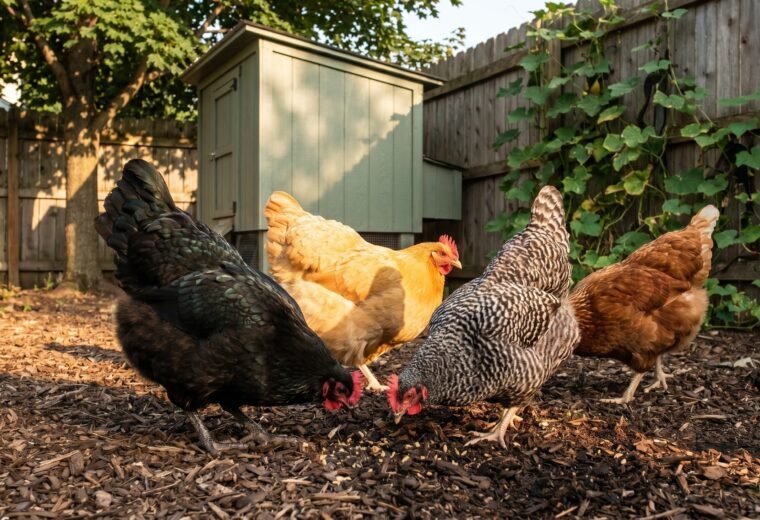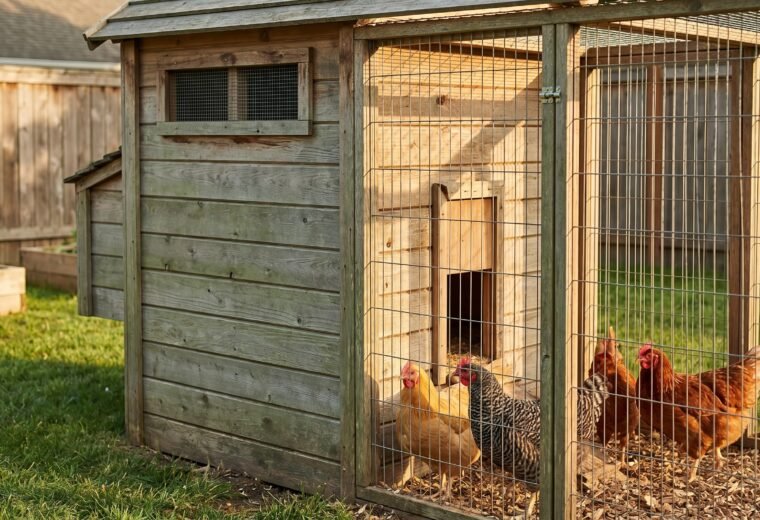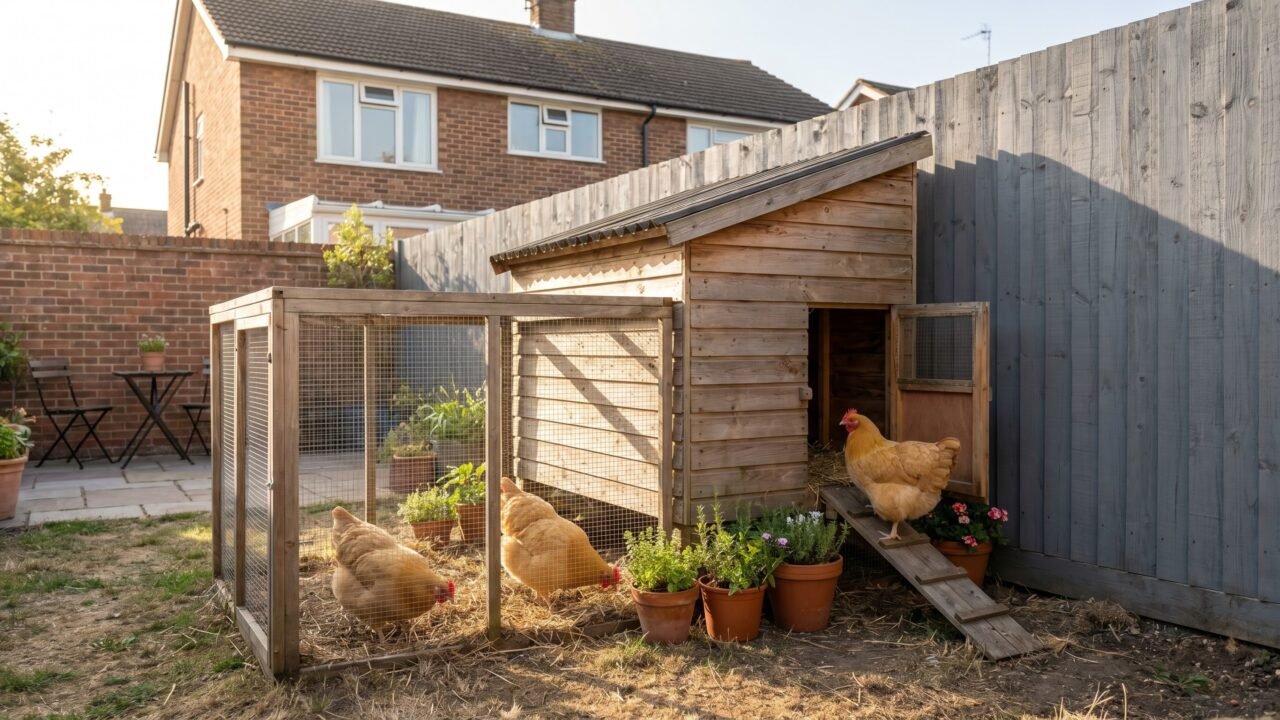
Four hens fit into a surprisingly small city backyard, and most urban ordinances are written with exactly that flock size in mind. Raising chickens in the city is not a workaround or a loophole - thousands of municipalities across the US and UK have updated their codes to permit it, and the management demands are modest once you build the right setup. The biggest mistakes people make are sizing the coop wrong, picking the wrong breed, or skipping the ordinance check until after they have chicks in hand. This guide covers all three, plus the smell and pest realities no one wants to talk about.
Check your local rules first - before you buy a single chick
Local ordinances vary more than most people expect. A city on one side of a county line may allow four hens with no permit; the city directly across may ban all poultry outright. According to NC State Extension, the right first move is a call to your local animal control or zoning office before you order birds - that one call can save you from having to rehome a flock you have already bonded with.
Most ordinances that do allow chickens share a common shape. The full picture on local permit research is worth reading before you commit, but the typical rules look like this:
- Flock size: 4 to 6 hens per property is the most common limit (poultry.extension.org).
- Roosters: Nearly always banned. Urban codes prohibit them because crowing cannot be trained or suppressed - a rooster crows throughout the day and often before dawn.
- Setbacks: MSU Extension recommends coops sit 5-10 ft from any property line and at least 10-20 ft from a neighboring residence. Some cities go stricter; almost none go looser.
- Permits: Roughly half of municipalities require one. Fees are usually nominal, but some cities require neighbor approval or an inspection before the permit issues.
- HOA rules: These override city rules. If you have an HOA, check its covenants separately - even where chickens are municipally legal, an HOA can and often does prohibit them.
The rooster ban is worth emphasizing because it trips up beginners. You do not need a rooster to get eggs - hens lay regardless. If you buy straight-run chicks (unsexed), plan on roughly half being male. In a city context, order pullets only, or buy started hens.
How much space a city flock actually needs
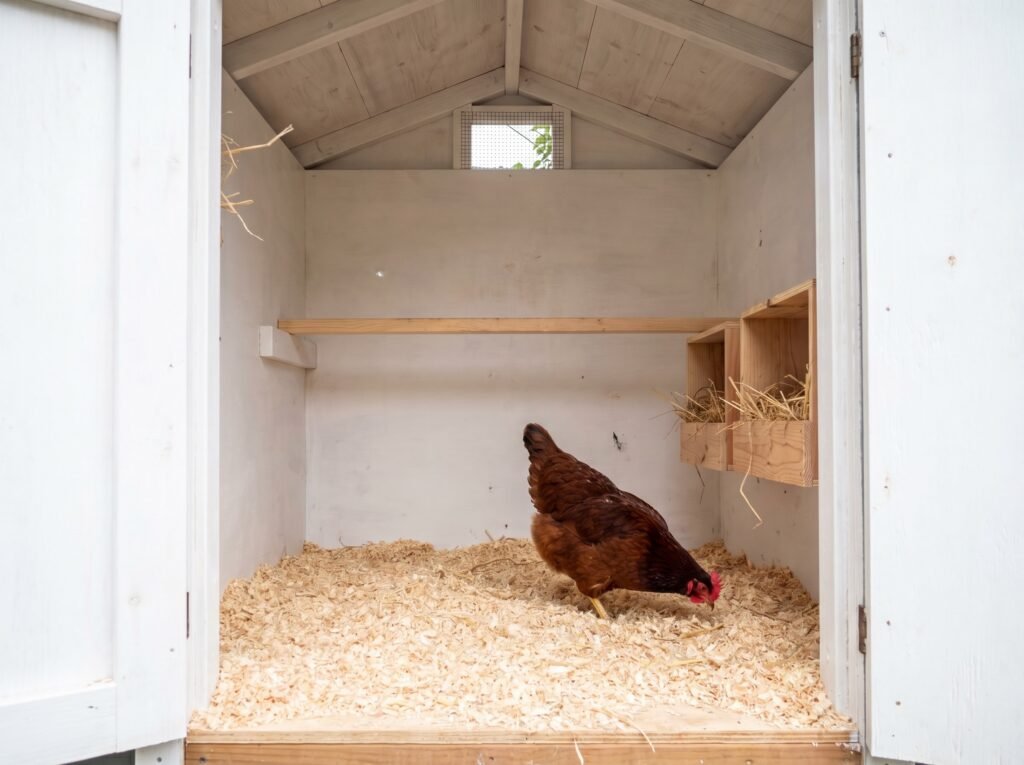
Space math in urban keeping is not optional. Overcrowding is the single most common setup failure: it causes stress, feather pecking, disease spread, and ammonia buildup that shortens hen lives and creates the smell problems that anger neighbors.
The widely-cited floor for indoor space is 3-4 sq ft per standard hen inside the coop (poultry.extension.org). For the attached run, the recommended target is 10 sq ft per hen - though as the same source notes, that figure is not practical in many urban situations. A run managed as an exercise yard rather than a pasture can work at tighter densities if you keep it clean, but do not go below 8 sq ft per bird without accepting that the ground will be bare dirt within weeks.
Bantams change the arithmetic entirely. Because bantam breeds are roughly one-quarter the size of a standard chicken, they need about half the floor space - closer to 2 sq ft per bird indoors (Colorado State Extension). Four bantam hens can fit into a coop that would be tight for two standard birds. That trade-off is real: bantam eggs are noticeably smaller than a standard large egg, so you need more hens for the same output. But for a 200-sq-ft backyard, bantams may be the only practical path to a working flock.
The table below lets you size your setup at a glance.
| Flock size | Min. indoor coop (standard hens) | Min. indoor coop (bantams) | Run target (standard, 8 sq ft/bird) | Run target (bantams, 4 sq ft/bird) |
|---|---|---|---|---|
| 2 hens | 8 sq ft | 4 sq ft | 16 sq ft | 8 sq ft |
| 3 hens | 12 sq ft | 6 sq ft | 24 sq ft | 12 sq ft |
| 4 hens | 16 sq ft | 8 sq ft | 32 sq ft | 16 sq ft |
| 6 hens | 24 sq ft | 12 sq ft | 48 sq ft | 24 sq ft |
A few other fixed requirements do not scale by flock size but matter for city coops:
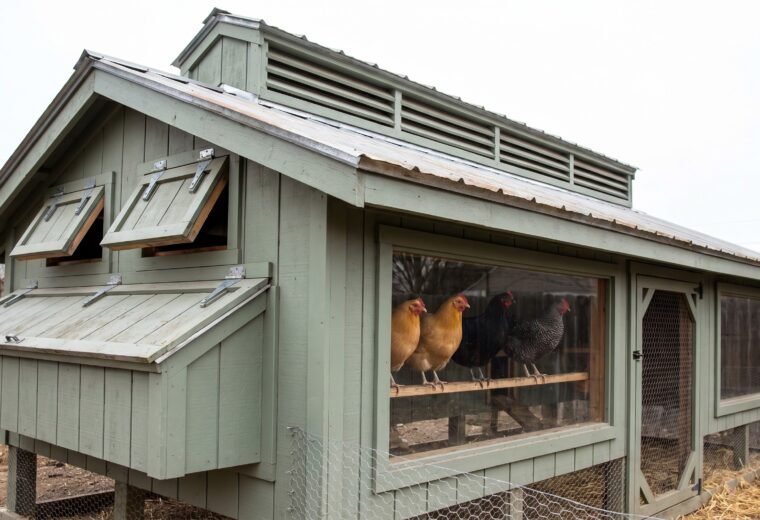
- Roost bars: Allow 8-10 in of bar length per bird; a flat 2x4 placed wide-side-up is comfortable and lets hens cover their feet on cold nights. Position roosts higher than the nest boxes so hens do not sleep in the nests.
- Nest boxes: One box per 3-4 hens, roughly 12x12 in each. More hens share boxes than you expect.
- Ventilation: Aim for roughly 1 sq ft of vent opening per bird. Fresh airflow controls ammonia and moisture - both of which will ruin a coop faster than cold air will. A well-vented coop at 20 degrees Fahrenheit is healthier than a sealed coop at 35. Most urban flocks do not need supplemental heat; proper coop ventilation is far more important.
For deeper guidance on how to build a coop that hits these numbers in a compact city lot, the small-flock coop guide walks through construction decisions and footprint options.
The right breeds for a city backyard
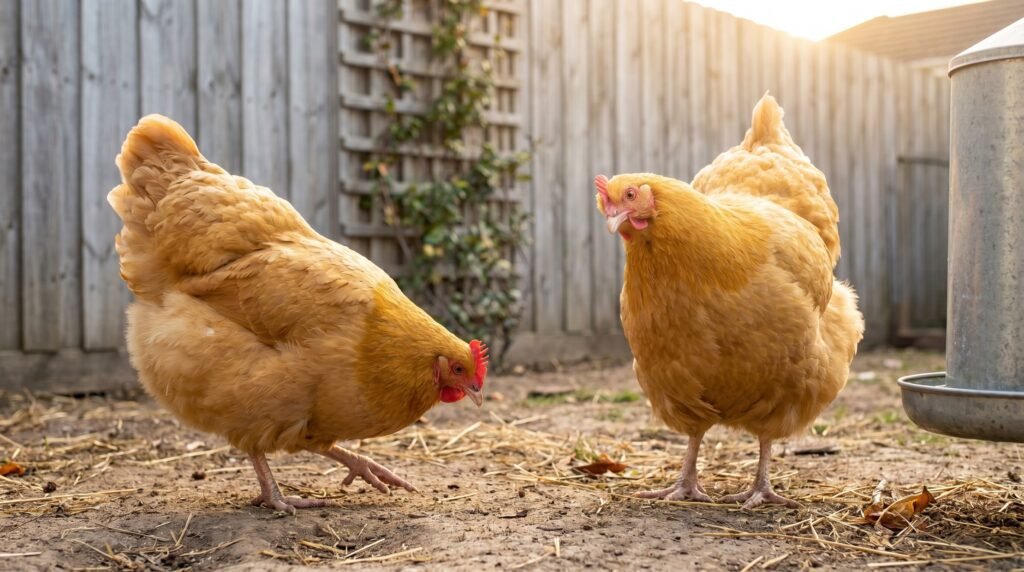
Breed choice in an urban flock comes down to three things: noise, temperament, and laying reliability. You want hens that are calm enough not to startle at every passing car, quiet enough that the neighbors do not complain, and productive enough to justify the setup cost.
According to Ask Extension, hens are already "relatively quiet animals" compared to roosters - and even cackling from a hen laying an egg typically lasts only a few minutes per day. Experienced keepers note that barking dogs are more of a nuisance than cackling hens. That said, some breeds are calmer and less given to alarm calls than others.
The breeds below perform well in urban conditions. Ranges are approximate; individual hens vary by flock management and season.
| Breed | Size | Temperament | Eggs/year (approx.) | Notes |
|---|---|---|---|---|
| Buff Orpington | Standard (7-8 lb, hen) | Calm, docile | 180-220 | Very gentle; tolerates confinement well |
| Rhode Island Red | Standard (6-8 lb) | Docile, friendly | 200-280 | Hardy; strong layer; widely available |
| Delaware | Standard (6-7 lb) | Calm, friendly | 200-280 | Good dual-purpose; gentle with children |
| Australorp | Standard (5-8 lb) | Calm, good mothering | 250-300 | Excellent layer; easygoing disposition |
| Easter Egger | Standard/medium | Friendly, curious | 200-280 | Lays blue/green eggs; popular with kids |
| Dominique | Standard (4-7 lb) | Docile, hardy | 180-230 | Heritage breed; rose comb handles cold |
| Bantam Cochin | Bantam (~30 oz) | Gentle, calm | 100-150 (small eggs) | Ideal for very small yards; ornamental appeal |
| Silkie | Bantam (~3 lb) | Very gentle | Low (go broody often) | Excellent pets; poor layers; not for egg production |
Leghorns lay prolifically (280-320 eggs per year) but are noticeably flighty and vocal - a poor fit for a small city yard where any alarm-calling reaches neighbors quickly. Polish chickens are striking but their crests limit vision, making them anxious in busy environments. Stick with calm, heavy-bodied breeds for the most neighbor-friendly setup.
If you are deciding between two or three hens versus a larger group, the tradeoffs are spelled out plainly in our guide to choosing flock size. And if the flock will interact with children, breed temperament matters more than egg numbers - the family-friendly breed guide covers that angle in detail.
Smell, flies, and rodents: the real urban management work

Odor is the issue that ends most urban chicken experiments - and it is almost entirely preventable. UMN Extension is clear on the mechanism: smell happens when manure accumulates and moisture stays high. A four-hen flock producing manure in a well-managed coop with dry bedding barely registers. The same flock in a wet, infrequently cleaned coop will generate complaints within weeks.
The fly connection is direct. NC State Extension reports that reducing manure moisture from its natural 60-80% down to 30% or less "will virtually eliminate fly breeding." The practical steps:
- Use 4-6 in of dry pine shavings as bedding (never cedar - the oils irritate respiratory systems).
- Spot-clean wet patches daily, particularly around the waterer.
- Full litter change every 4-6 weeks, or sooner if ammonia smell becomes detectable at hen height.
- Position your waterer outside the coop footprint or use a nipple waterer to keep spills out of the bedding.
Rodents are the other urban-specific pressure. Chickens attract rats and mice through feed spillage, not through the birds themselves. UMN Extension notes that rodents play a significant role in spreading Salmonella Enteritidis by traveling between manure and feed troughs. Three habits eliminate most of the problem: use a metal, rodent-proof feed container; hang the feeder so it sits off the ground; and never leave spilled feed on the ground overnight. Lift the coop off the ground on legs or seal the base with hardware cloth so there is no void where rodents can den underneath.
Salmonella is worth a brief mention. UMN Extension data show 45% of salmonella cases linked to backyard poultry involved children handling chicks or ducklings. Simple handwashing with soap after any contact with birds, eggs, or coop surfaces breaks that transmission route almost entirely. Teach children this before the birds arrive, not after.
Managing the neighbor relationship

Neighbor friction is the most common reason urban flocks get shut down - not ordinance violations, but complaints that trigger code enforcement. A few proactive steps reduce that risk considerably.
Tell neighbors before the birds arrive, not after. Bring eggs. A steady supply of fresh eggs from the people next door reframes the situation from "nuisance" to "perk." The practical standard is straightforward: keep odors inoffensive and noise no louder than a normal conversation. With no rooster and a clean coop, that bar is easy to clear.
Position the coop at the back of the property, away from shared fence lines. Orient the coop door toward your house, not toward the neighbor's yard, so daily activity stays on your side. Dense plantings or a simple fence panel between the coop and the property line cut visual intrusion and dampen any ambient sound.
If your jurisdiction requires neighbor sign-off as part of a permit application, approach that conversation early and positively. Framing it as "I wanted to let you know what I am planning and see if you have any concerns" goes over far better than a form dropped in a mailbox.
The setup that actually works in a small city space
Start with three or four standard hens, or four to six bantams if space is genuinely tight. Three standard Buff Orpingtons, for instance, need a 12-sq-ft coop interior and a 24-sq-ft run - a 4x3 ft box and a 4x6 ft attached run, a footprint that fits in most urban backyards with room to spare. That flock will produce roughly 540-660 eggs per year combined at peak, covering egg needs for most households.
Build the coop with hardware cloth (not chicken wire) on all openings. Half-inch mesh stops raccoons; chicken wire does not. Bury or lay an L-shaped apron of mesh about 12 in out from the base of the run to stop digging predators - urban areas have raccoons, opossums, and in many cities, foxes.
An automatic coop door is worth the investment in an urban setting because it closes at dusk reliably, even when you are not home. Forgetting to close the coop one night is the leading cause of predator losses.
Feed from a hanging or mounted feeder with a cover to minimize spillage and rodent attraction. Fresh water daily. Collect eggs every day - unharvested eggs draw predators and can encourage egg eating if a hen discovers them.
The ongoing time commitment is real but not large: 10-15 minutes of daily feeding, watering, and egg collection; 30-60 minutes for a thorough weekly check; and a few hours for a full litter change once a month or so. You need a reliable plan for care when you travel. Chickens cannot be left unattended for more than a day or two.
Winter brings two urban-specific challenges worth planning for before they arrive. Shorter days reduce laying noticeably - hens need roughly 14 hours of light to maintain peak production, so expect a natural lull through the darker months. More practically, waterers freeze overnight in most northern climates. A heated waterer base or a simple rubber bowl that you can pop to break ice each morning prevents the daily chore of hauling warm water to the coop. Most cold-hardy breeds (Buff Orpingtons, Rhode Island Reds, Dominiques) handle a well-ventilated but draft-free coop without supplemental heat; what matters is dry bedding and airflow, not warmth.
Frequently asked questions
Do I need a permit to keep chickens in my city?
It depends entirely on your municipality. Some cities require a permit with a fee and inspection; many require nothing beyond complying with the ordinance. Call your local animal control or zoning office and ask specifically about backyard poultry. Always check HOA covenants separately from city code.
How many hens do I need for a family egg supply?
A good laying hen produces roughly 4-6 eggs per week at peak. Three to four hens covers most two-person households comfortably; four to six hens serves a family of four with some surplus. Production drops in fall molt and short winter days, so size slightly up if you want year-round reliability without gaps.
Will my neighbors complain about the noise?
Hens without a rooster are significantly quieter than most dogs. The egg-laying cackle lasts only a few minutes per day and is easily masked by ambient neighborhood sound. With the coop positioned sensibly and a no-rooster rule observed, noise complaints are uncommon. The bigger neighbor risk is smell from a poorly managed coop, which is why litter management is the true priority.
Is chicken keeping legal everywhere in the US?
No. Some municipalities still prohibit all backyard poultry. Others allow hens but not roosters, or require minimum lot sizes that exclude many city properties. Regulations change frequently - a city that banned chickens five years ago may have reversed course. Always verify current local code before purchasing birds.
Can I keep just one chicken?
Chickens are flock animals and suffer stress when kept alone. The practical and welfare minimum is two birds, and three gives more insurance because a single hen left after a loss is genuinely distressed. Most ordinances that allow chickens set a maximum (4-6), not a minimum, but starting with at least two is the right call for the birds' wellbeing.