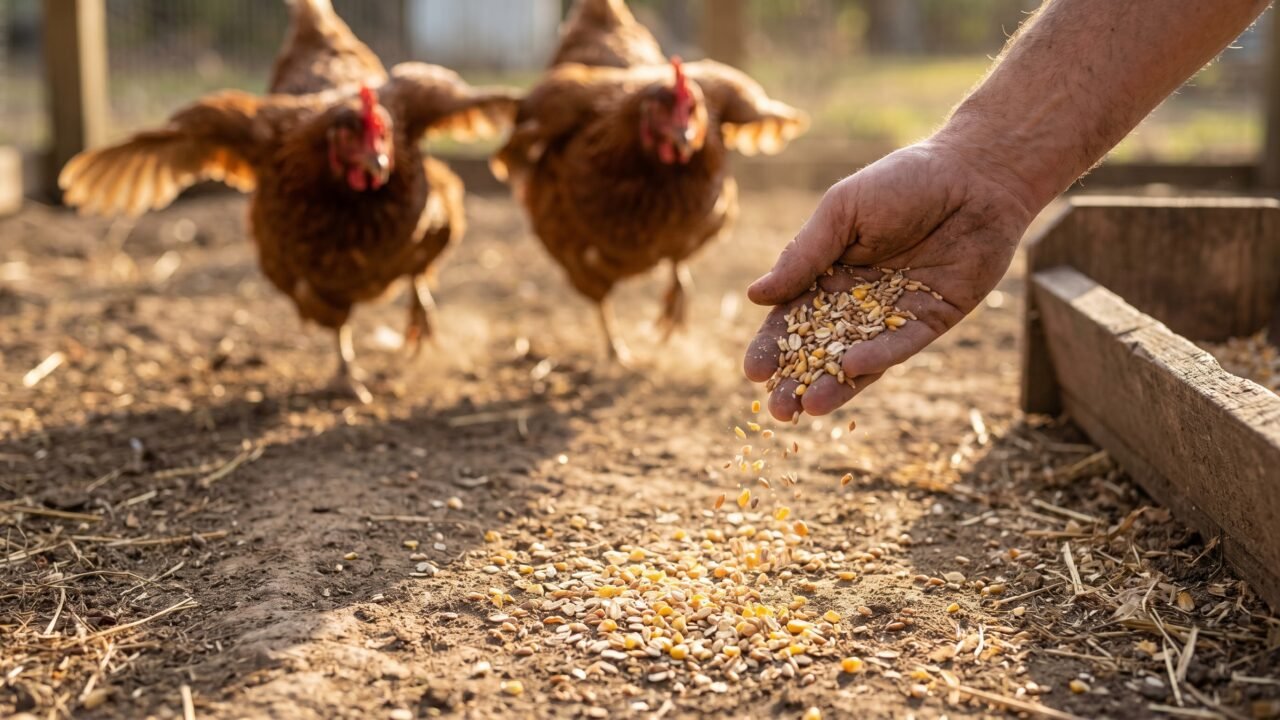
Pick up a bag of scratch grains and scatter a handful across the run. The scramble that follows is genuinely one of the best things about keeping chickens. But that enthusiastic response is also the trap. Scratch is an energy-dense snack with about 10% protein, compared to 16% or more in a balanced layer ration. Feed too much and you quietly dilute the diet those hens depend on for strong eggs, healthy feathers, and steady production.
This guide covers what scratch grains actually are, why the 90/10 rule exists, what the research actually says about their "winter warmth" effect, how to do the math for your own flock, and what happens when the treat bucket tips too far.
What scratch grains are (and what they are not)
Scratch grains are cracked, rolled, or whole cereal grains (most often corn, wheat, barley, and oats) blended and sold as a supplement. The name comes from the behavior: chickens scratch the ground to uncover food, and tossing loose grain encourages exactly that. University of Maryland Extension describes scratch grains as "low in protein and high in energy or fiber, depending on which grain is used." That framing matters. Scratch is calorie-rich and nutrient-light.
What scratch is not: a complete feed. University of Georgia Cooperative Extension is direct: "scratch grains are not something that should be fed as the sole source of feed to any poultry type." A complete layer ration is formulated to supply the right balance of protein, amino acids, calcium, phosphorus, vitamins, and trace minerals. Scratch delivers very little of those. University of Maine Cooperative Extension notes that most scratch-grain mixtures average 10% protein, against the 16% minimum a laying hen's ration requires. That gap is the whole problem.
Scratch also provides no meaningful calcium, the nutrient hens burn through to build eggshells. Layer feed carries 3-4% calcium; scratch essentially carries none. For the full picture on what belongs in a complete laying-hen diet, our guide to chicken feed breaks down every ingredient category and why it matters.
Why scratch dilutes nutrition (the numbers behind the 90/10 rule)
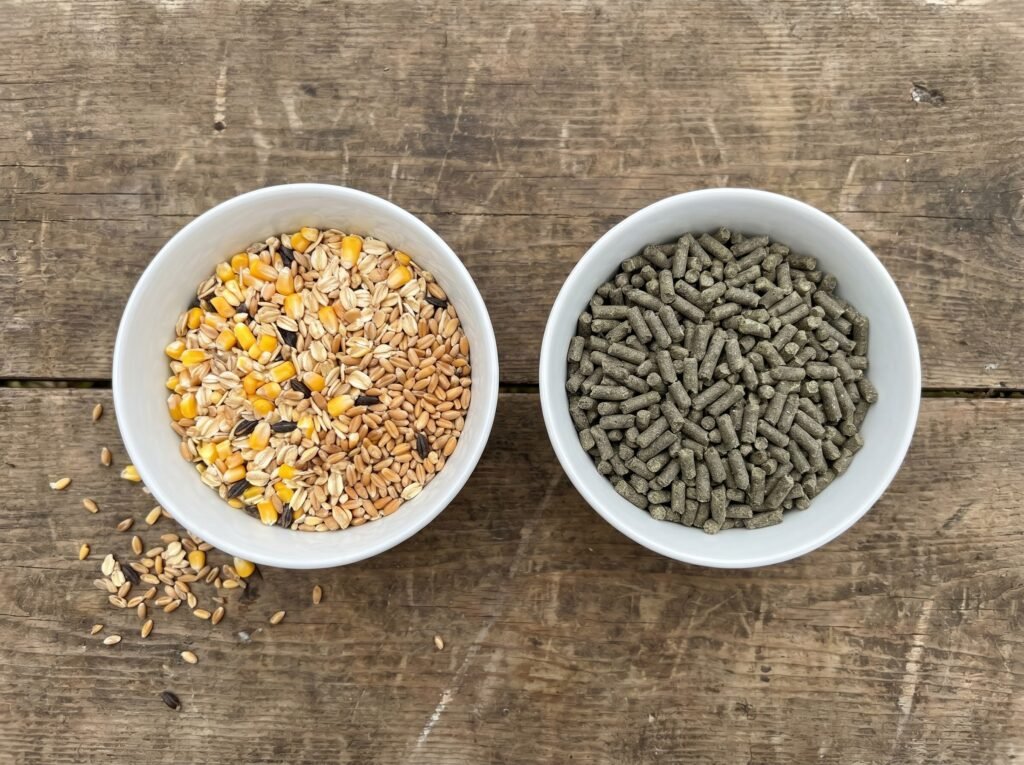
A formulated layer feed is designed as a complete package. The moment you add scratch to a hen's day, you replace some of that package with something far less nutritious. eXtension's feeding resource describes the effect directly: "When scratch grains are fed with complete feeds, they dilute the nutrition levels in the carefully formulated diets."
The dilution is real and measurable. If a flock gets 90% of its daily intake from 16% layer feed and 10% from scratch at 10% protein, the effective dietary protein drops to roughly 15.4%. That sounds small, but sustained over weeks during molt, winter stress, or peak laying, it shows up in slower shell development, softer shells, and reduced production. Feed more scratch than 10% and the math gets worse fast.
This is why extension services consistently frame scratch as a 10%-of-daily-intake ceiling, not as a flexible add-on. University of Maryland Extension states it directly: "Generally scratch grain should be about 10% of the birds total daily food consumption." The University of Illinois College of Veterinary Medicine echoes the same limit. Both sources are grounded in the same nutritional arithmetic.
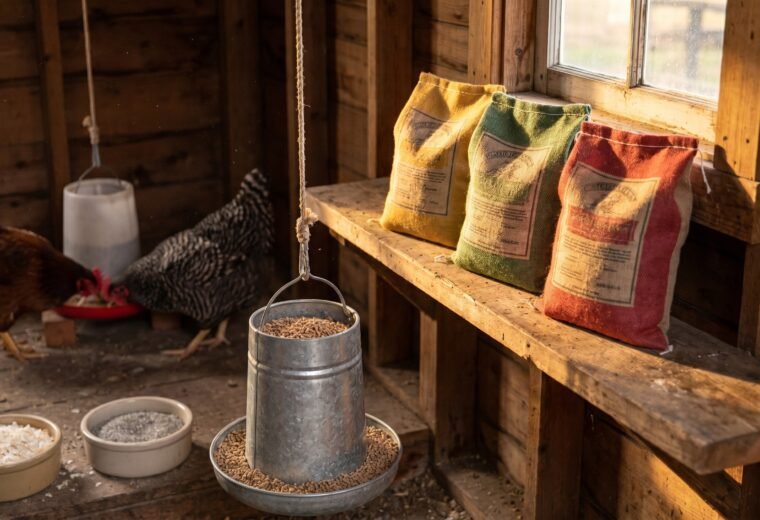
The practical translation for a flock of 20 hens: each hen consumes roughly 0.25-0.30 lb of feed per day, so the whole flock goes through about 5-6 lb. Ten percent of that is 8-10 oz of scratch total, scattered across the run rather than piled into a feeder. That quantity disappears quickly, which is exactly the point. eXtension recommends offering only as much scratch as the birds can clean up in 15 to 20 minutes, always in the afternoon after they have already filled up on complete feed. Afternoon timing matters because hens front-load their eating in the morning around egg formation. If scratch comes first, they eat less of what they actually need.
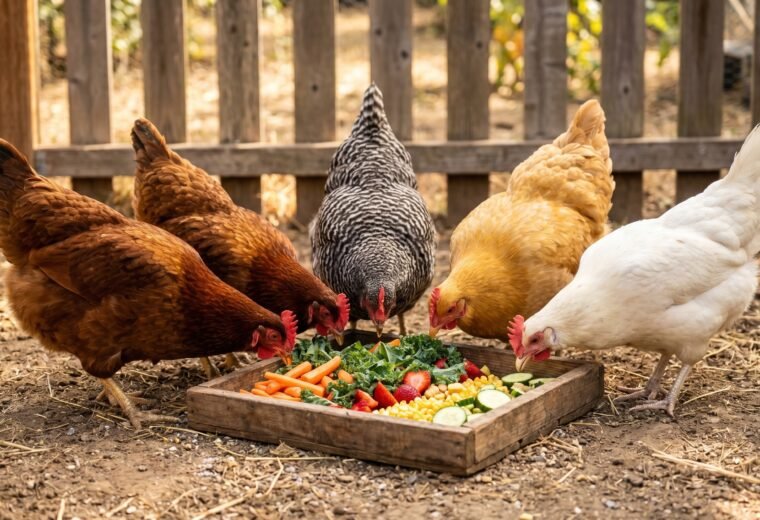
For more on safe treat quantities alongside other supplemental foods, our treats guide covers the full list of what chickens can and cannot eat, with amounts.
The winter warmth claim: what the evidence actually supports
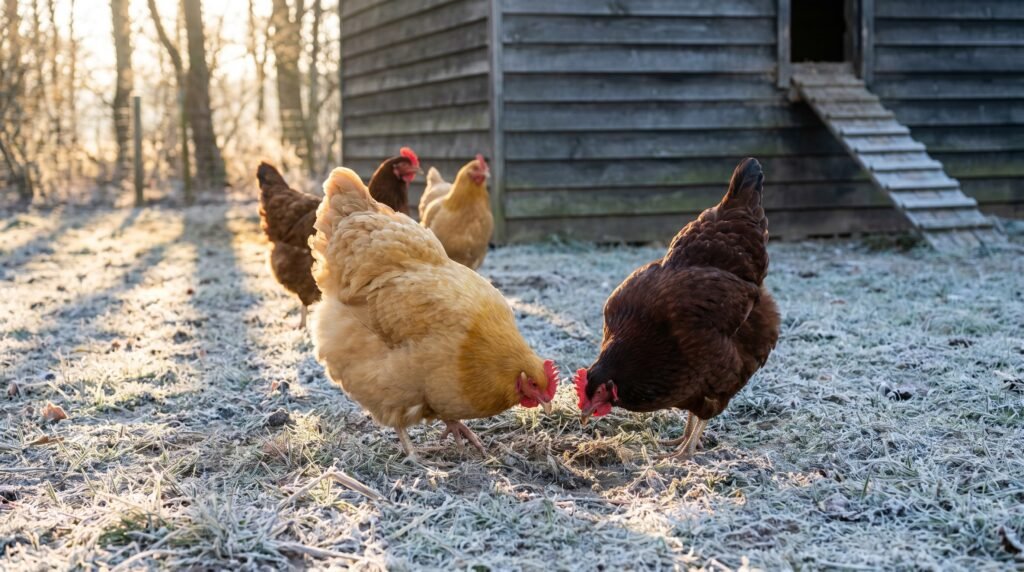
The idea that scratch "warms chickens in winter" is so common it has become conventional wisdom. There is a grain of truth in it, alongside a significant amount of overstatement.
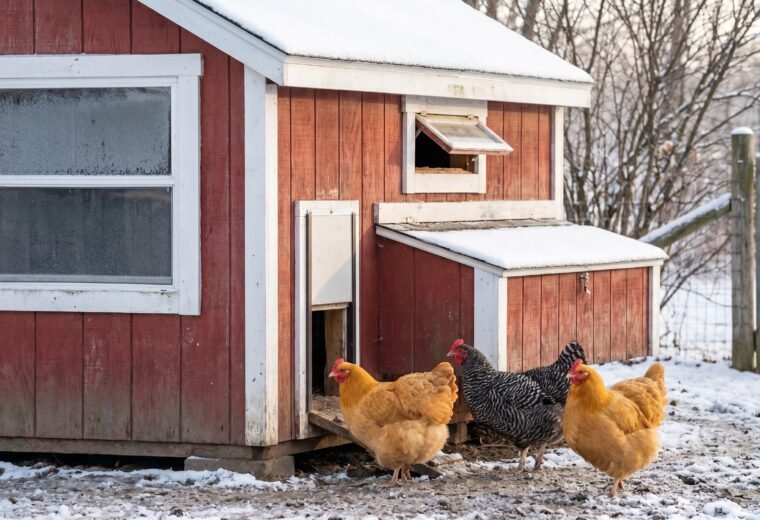
Digesting food does generate metabolic heat. University of Minnesota Extension acknowledges this directly: "Digestion of scratch grains also produces heat. So providing scratch grains before roosting can help chickens stay warm on cold nights." That is real. The same source also recommends keeping the amount to no more than a handful per 10 birds, a quantity that is therapeutic rather than a dietary shift.
Here is where it gets complicated. Digesting high-fiber feed (scratch with oats or barley) produces more fermentation-related heat in the gut than digesting a low-fiber ration. But the scale of that effect is modest. It does not replace a dry, well-ventilated coop, it does not offset inadequate calorie intake from complete feed, and it certainly does not justify bumping scratch past the 10% threshold. The practical takeaway: treats should not substitute for a balanced daily ration at any time of year, including winter.
The more meaningful winter nutrition story is total calorie intake. Extension services note that hens can eat noticeably more feed in cold weather to maintain body temperature. A little extra complete feed handles that far more effectively than an extra scoop of scratch, because complete feed delivers both calories and protein. High-fiber scratch does produce some gut warmth. But protein-dense complete feed keeps production up while providing that same thermogenic effect from digestion. Scratch alone does neither job well.
For the full cold-weather management picture, our article on keeping chickens warm in winter covers coop insulation, ventilation, and the real factors that protect your flock through hard freezes.
When too much scratch causes visible problems
Overfeeding scratch has predictable consequences, and most of them show up slowly enough that keepers miss the connection. University of Maine Cooperative Extension is direct: "Grains are high in energy and low in protein, minerals, and vitamins; therefore, excessive grain feeding in proportion to complete feed can result in severe nutritional deficiencies." Here is what that looks like in practice:
- Soft or thin eggshells. Calcium and phosphorus are diluted when scratch replaces layer feed. Hens cannot make up the deficit even with free-choice oyster shell if base nutrition is compromised. For more on this specific problem, the article on soft and thin-shelled eggs walks through every contributing cause.
- Reduced laying frequency. Protein is the raw material of both egg white and the yolk. A diet hovering below 15% protein shows up as fewer eggs per week before it shows up in any other visible way.
- Weight gain in hens. Scratch is calorie-dense. Hens that eat more of it than they burn become overweight, which increases the risk of internal laying and egg-binding.
- Feather quality decline. Protein deficiency during molt hits feather regrowth hardest. Hens that molt on a high-scratch diet take longer to re-feather and may come through molt in worse shape.
The most common beginner mistake is not understanding that chickens will always choose scratch over complete feed given the option. They do not self-regulate toward nutrition. They self-regulate toward palatability. eXtension frames it memorably: "Scratch grains are like french fries: chickens that eat too many have less appetite for more nutritious feed." That appetite displacement is the actual danger, not any toxicity.
The grit requirement most keepers overlook
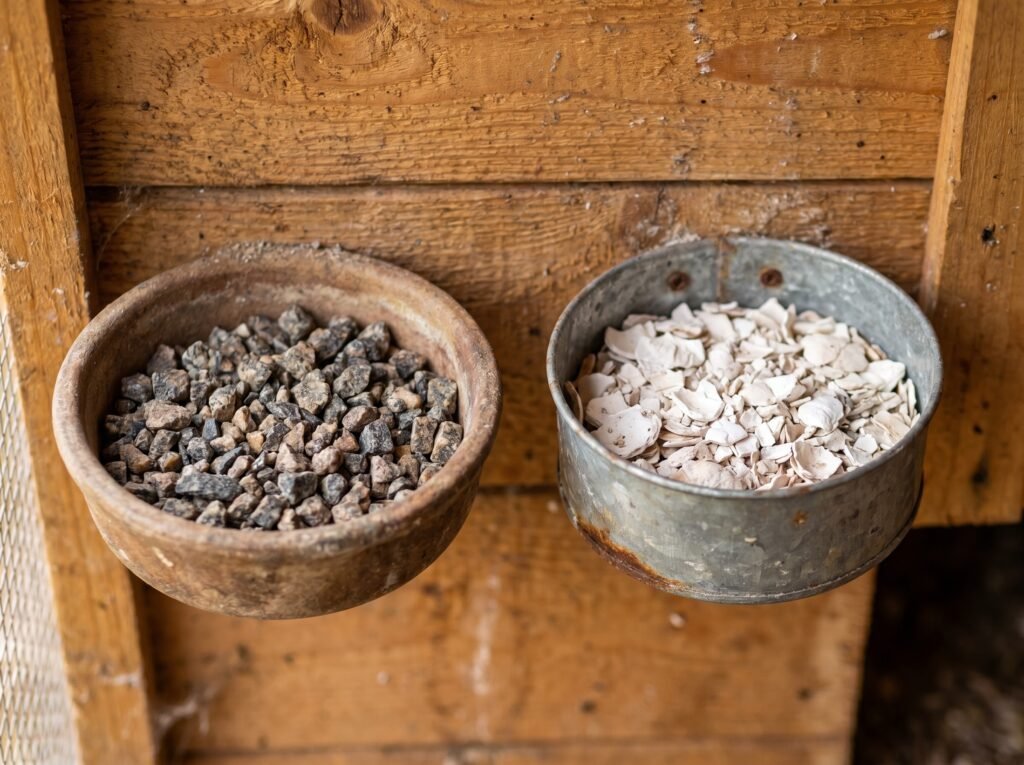
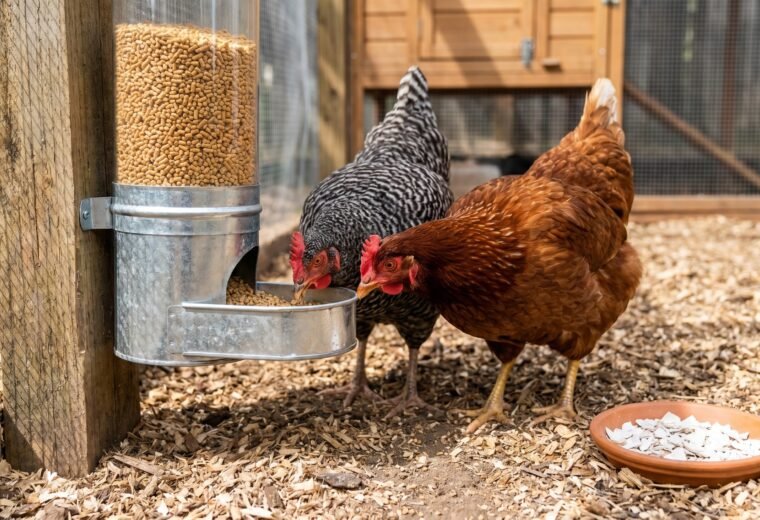
Chickens have no teeth. They grind whole and cracked grains in the gizzard using small stones called grit. Free-ranging birds pick up grit naturally. Confined birds do not have that option, and eXtension is specific: "When feeding scratch grains to chickens, it is also important to provide grit to help the chickens grind and digest the grains properly." Without adequate grit, whole or coarsely cracked grains pass through the gizzard improperly ground, reducing digestibility and potentially causing impaction.
Granite grit in the correct size (hen-sized, not chick-sized) offered free choice in a small dish does the job. One important distinction: oyster shell is not a substitute. It is too soft to function as grinding media and dissolves in stomach acid before reaching the gizzard. Keep grit and oyster shell in separate containers.
Safe scratch amounts at a glance
| Flock size | Total daily feed (approx.) | Max scratch (10% ceiling) | Practical serving |
|---|---|---|---|
| 4 hens | 1.0-1.2 lb | 1.5-2 oz (about 3-4 tbsp) | Small handful, once daily |
| 8 hens | 2.0-2.4 lb | 3-4 oz (about 6-8 tbsp) | Two generous handfuls, once daily |
| 15 hens | 3.75-4.5 lb | 6-7 oz (just under a cup) | Scatter in the afternoon run |
| 25 hens | 6.25-7.5 lb | 10-12 oz (about 1.25-1.5 cups) | Scattered in sections so birds move around |
These figures assume hens consume about 0.25-0.30 lb of feed per day (a typical range for standard-sized laying breeds). Bantams eat less; heavy breeds may eat slightly more. Adjust proportionally. The key point is that the right amount of scratch feels surprisingly small when you measure it. Far less than most keepers pour out by habit.
On timing: afternoon is the standard recommendation for good reason. Morning is when hens are most actively eating, and that window drives egg formation. Scratch in the morning competes directly with nutrient intake at the time it matters most. Afternoon scatter gives hens something to forage while they wind down, and if timed just before roosting in cold months, captures the modest thermogenic benefit of overnight digestion.
Our broader feeding reference at what to feed chickens covers how scratch fits alongside grit, oyster shell, fermented feed, and other common supplemental items in a complete feeding program.