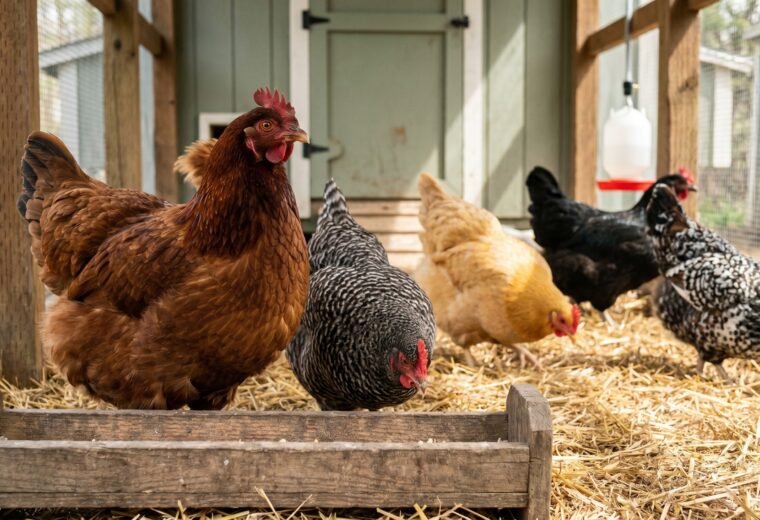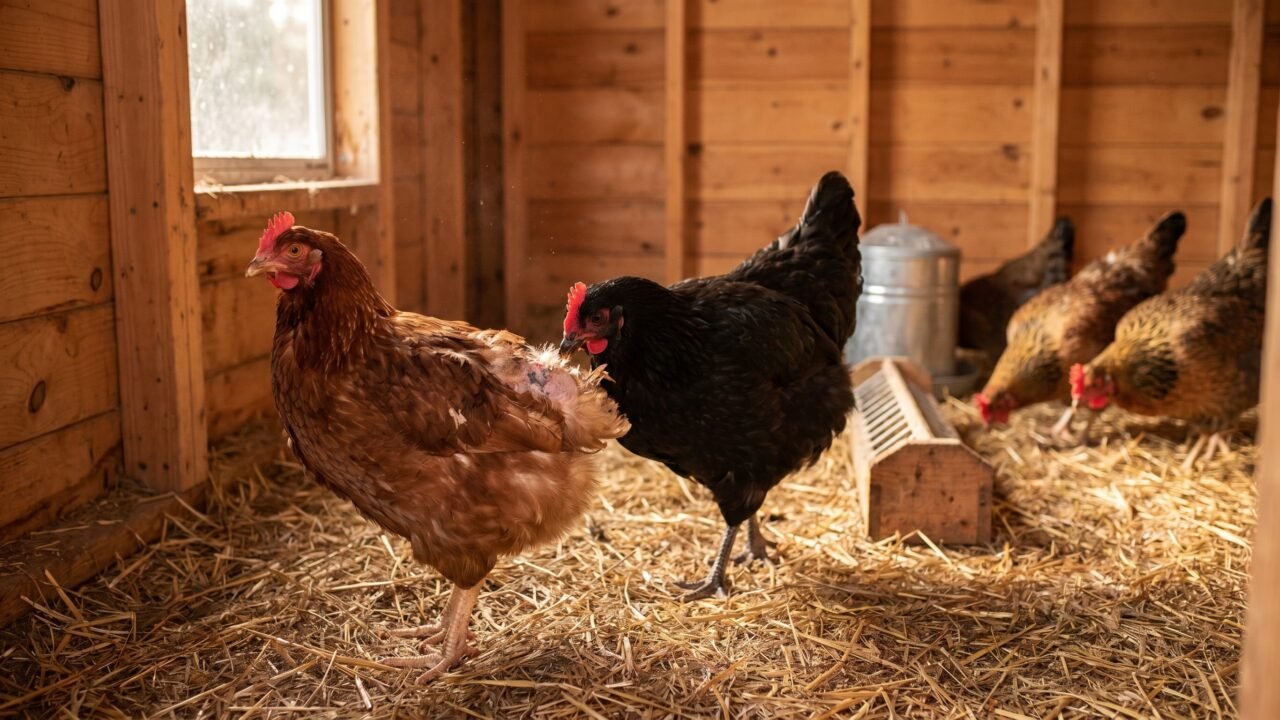
Blood draws more blood. A single small wound on a hen can spark a flock-wide attack within hours, because chickens are visually wired to peck at anything red and exposed. The good news is that most pecking starts long before things reach that point, and the triggers are almost always fixable management problems: not enough space, not enough to do, the wrong light, a protein gap, or a badly handled flock merger. Work backward from the cause and the behavior usually stops.
This guide covers each of the six main causes, what to do about it, and the point where you need to act fast before a habit sets in permanently. Understanding where pecking fits into normal flock dynamics is a useful backdrop too - our overview of the chicken pecking order explains how rank-setting works and what is normal versus what is a red flag.
The six causes behind most pecking problems
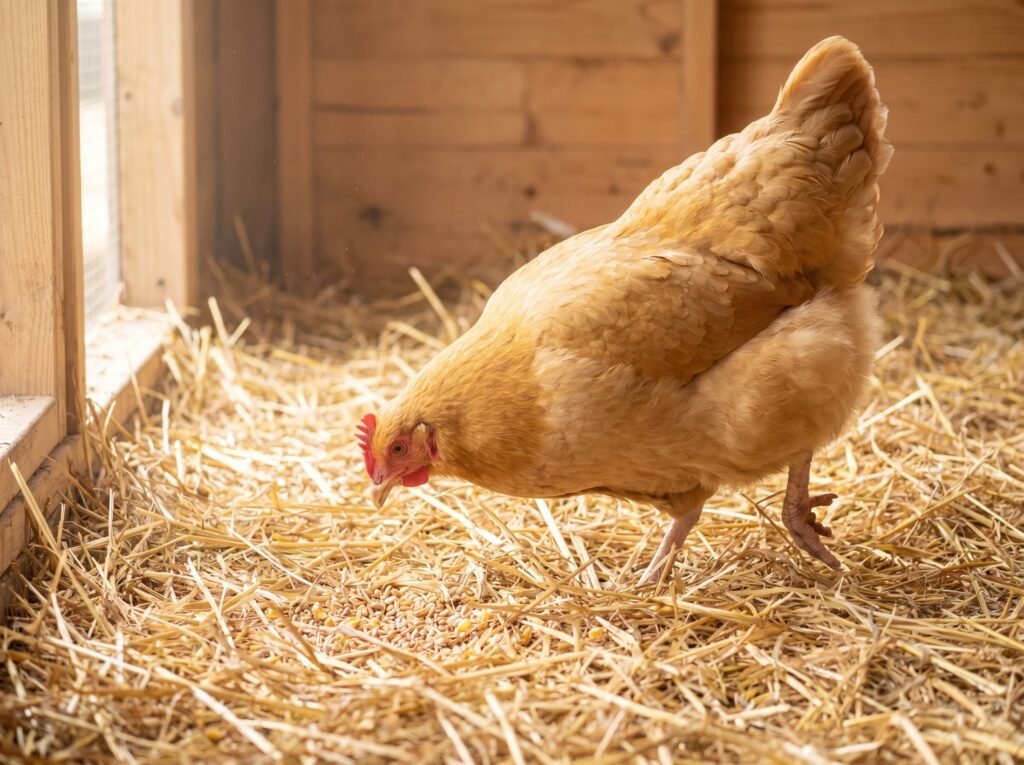
Pecking is almost never random. Extension research consistently points to the same cluster of triggers, and most flocks have more than one operating at once. Sorting them out takes about ten minutes of observation.
Not enough space
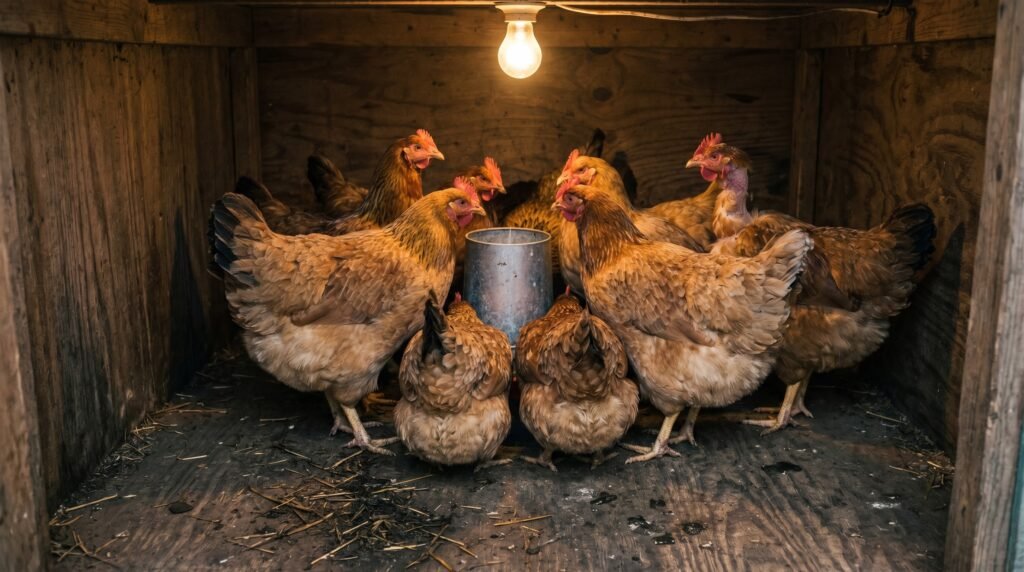
Cramped quarters are the single highest-frequency cause. Poultry extension guidance puts the minimum at 3-4 square feet per hen indoors and 10 square feet per hen in the run. Below those numbers, dominant birds start blocking feeders and waterers, lower-ranked hens fall behind on nutrition, and the whole flock becomes stressed and reactive. Poultry Extension puts it plainly: "If you do not provide adequate space per bird, behavioral problems such as pecking and cannibalism may result."
A flock of 15 standard hens, for example, needs at least 45-60 square feet of coop floor and ideally 150 square feet of run. A run that looked spacious when the chicks were small may be genuinely inadequate for the same birds at full size. Measure before assuming.
Perches help too. When lower-ranking hens can get up off the floor - ideally 18-24 inches up - they remove themselves from the reach of ground-level peckers. Aim for 8-10 linear inches per bird on the roost bar. Our article on coop size per chicken covers the full floor-and-perch math.
Boredom and nowhere to forage
Jungle fowl spend roughly 61% of their waking hours foraging, according to behavioral research cited by Poultry Extension. Domestic hens carry the same drive. When you hand them a full feeder and a bare concrete floor, that foraging energy has nowhere to go except toward flock mates. The result is feather pecking that looks obsessive because it is - the birds are practicing a behavior they are neurologically built for, aimed at the wrong target.
Virginia Tech Cooperative Extension, drawing on a systematic review of published studies on injurious feather pecking, found that foraging enrichments reduce feather damage more than any other single intervention. Dustbathing materials and hanging objects also helped. A few practical options:
- Deep litter (4-6 inches of loose wood shavings or straw) gives hens something to scratch in year-round.
- Scatter scratch grains or small whole grains into the litter rather than using a separate feeder for treats - birds spend much longer hunting through bedding than eating from a dish.
- Hang leafy branches, cabbage heads, or bundles of hay at beak height so hens have to work to eat.
- A loose pile of soil or fine sand doubles as a dustbath and scratch zone.
One important caveat from Poultry Extension research: access to a dust bath alone does not prevent feather pecking. It contributes to welfare but cannot substitute for genuine foraging opportunity and adequate space.
Our guide to setting up a proper dust bath for chickens covers materials, sizing, and placement.
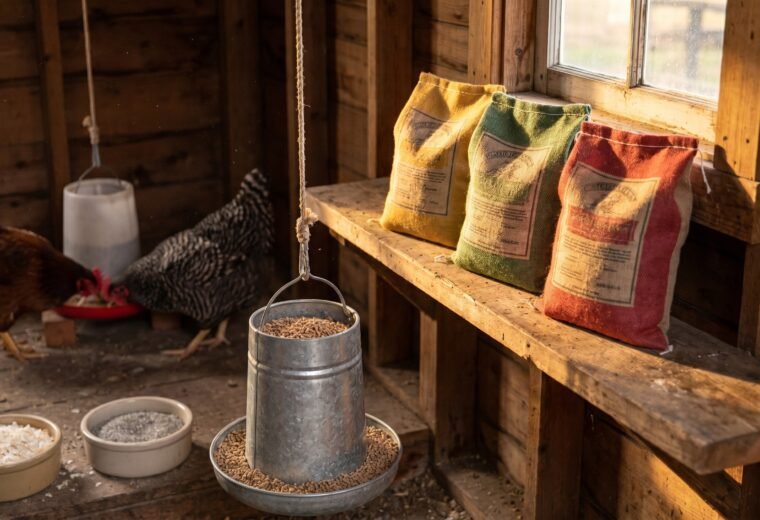
Protein and nutrition gaps
Feather is roughly 85% protein. When a hen's diet runs short on protein or specific amino acids - particularly methionine - feather quality deteriorates, and some birds begin eating feathers from flock mates to compensate. Poultry extension sources identify deficiencies in protein, sodium, and phosphorus as direct triggers for cannibalism, with methionine deficiency specifically linked to feather picking.
Layer feed is formulated at around 16% crude protein, which covers most situations. Problems surface when:
- Treats or scratch grains make up more than about 10% of the diet, diluting overall protein intake.
- Hens are fed a grower or chick starter diet past 18 weeks - protein levels vary by formula.
- A molt is underway and birds need extra protein to regrow feathers simultaneously.
- Feed has been stored too long and nutritional quality has degraded.
If you suspect a protein shortfall, switch to a higher-protein layer formula (18% rather than 16%) for four to six weeks and watch whether feather condition and pecking frequency change. Our breakdown of chicken feed types and protein levels has more detail.
Too much light
High light intensity makes chickens irritable and aggressive. The recommended level for laying hens is 0.5-1.0 foot-candles (about 5-10 lux) - just bright enough to see clearly, not so bright that every movement catches attention across the coop. Research summarized by Poultry Extension finds that strong light intensity "can, in fact, result in bird stress and increased incidences of feather pecking and cannibalism."
Common light problems in backyard setups:
- A single bright LED in a small coop, casting far more than 1 foot-candle at bird level.
- Supplemental lighting running more than 16 hours per day.
- Reflective white-painted interiors that amplify brightness.
- Bright nest boxes - laying hens prefer a dark, enclosed nest; a brightly lit box leaves the vent exposed at a stressful moment and invites vent pecking.
Switching from white to red bulbs, or simply reducing wattage, brings intensity down and has a calming effect on flock behavior. If you use supplemental lighting to extend laying through winter, a dimmer or a 25-watt bulb on a timer is usually plenty. More on that topic is in our piece on supplemental light for laying.
New birds entering the flock
Introducing strangers to an established flock is one of the most reliable ways to trigger aggressive pecking - and also one of the most commonly mishandled situations. The resident birds have a stable hierarchy; new arrivals have no rank, and established hens enforce their status aggressively until the new birds find their place.
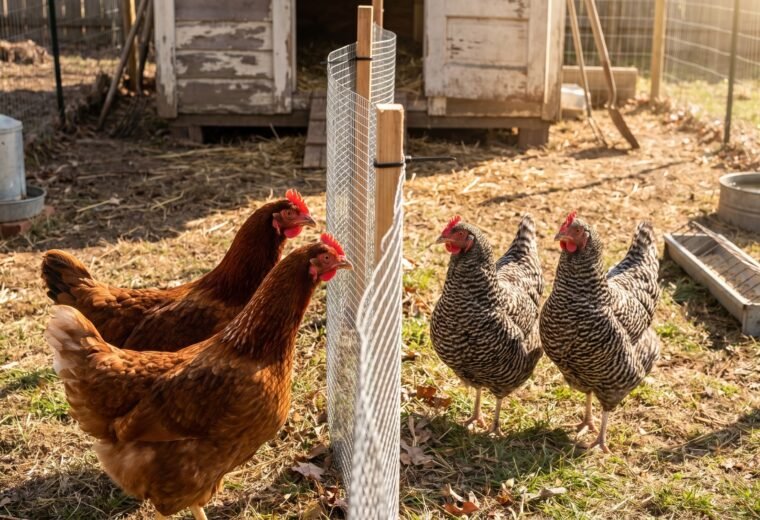
Two rules matter most here. First, quarantine new birds for at least two to four weeks away from the existing flock before any contact. This is primarily a biosecurity measure, but it also lets new birds recover from transport stress before they face social stress. Second, when you do introduce them, do it gradually: a week of side-by-side housing with a physical barrier, then supervised mixing, then full integration. Dumping strangers into the coop overnight usually produces a morning of bloodshed.
Size matching helps. Birds that are visibly smaller or differently colored tend to attract more pecking because they stand out. Mixing feather-footed breeds (Cochins, Brahmas) with clean-legged standards can trigger curiosity-driven feather picking at the leg feathers specifically.
The full step-by-step process is covered in our guide on introducing new chickens.
External parasites
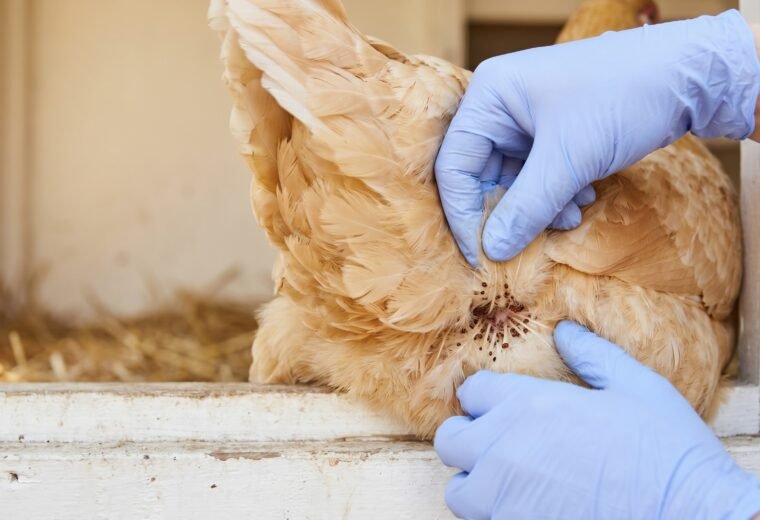
Mites and lice are a direct, independent trigger for feather pecking - not merely a background stressor. The mechanism is straightforward: northern fowl mites and red mites feed on skin and blood, causing intense itching. A bird that is constantly scratching and ruffling her feathers draws the attention of flock mates, who respond by pecking at the irritated area. The bird herself may also self-peck and pull her own feathers in an effort to relieve the irritation. What looks like a flock-wide behavior problem may have a single parasitic root cause.
A quick evening check reveals an active infestation: red mites hide in coop crevices during daylight and feed on roosting birds at night, so you may find them more easily after dark on the birds and under perch ends. Northern fowl mites live permanently on the bird and cluster around the vent and tail base. Either type calls for treating both the birds and the housing. Our guide on chicken mites covers the identification and treatment sequence.
How to diagnose which cause is driving your flock's pecking
Before treating anything, spend five minutes watching the flock. The pattern of who pecks whom, and where the feather loss appears on victims, gives you a reliable starting point.
| What you observe | Most likely cause | First fix |
|---|---|---|
| Feather loss on back and tail, one or two victim birds | Overcrowding or rank enforcement | Increase space; add a second feeder so subdominant birds get access |
| Widespread feather loss across multiple birds; feathers eaten, not just pulled | Protein deficiency | Switch to 18% protein layer feed; reduce treats below 10% of diet |
| Pecking concentrated on the vent area, especially after hens finish laying | Bright nest box or vent prolapse - remove bird and check for prolapse; see a vet | Darken nest boxes; reduce light intensity in coop |
| All birds pecking at everything, including the floor, walls, and each other | Boredom / barren environment | Add foraging enrichment: deep litter, scattered grains, hanging greens |
| Pecking only started after new birds arrived | Social disruption from flock merger | Separate and re-introduce gradually with a sight-only barrier first |
| Restless flock, worse in summer or with lights on late | Excessive light intensity or duration | Switch to dimmer bulb (0.5-1.0 foot-candle); cap photoperiod at 16 hours |
If the pattern does not match any single column clearly, consider whether more than one cause is active - crowding and protein deficiency together are common, as are boredom and excessive light. Also check for external parasites (see the section above), which can mimic or compound any of the patterns in this table.
When pecking crosses into a crisis
Most feather pecking is a management problem. Cannibalism - where birds actively tear tissue and consume flesh - is a medical emergency, and the Merck Veterinary Manual is explicit that "once this habit gets established it is difficult to eliminate." The window to stop it is narrow.
Act immediately when you see:
- Any open wound with exposed red tissue, especially at the vent, comb, or tail base.
- A hen being actively mobbed by multiple birds.
- Bloodstained feathers on birds other than the victim - the perpetrators have been eating.
- A dead bird with torn flesh, or a bird that has lost significant body mass due to repeated attack.
Remove the victim immediately and house her separately until all wounds have healed and color has returned to normal. Wounds should be cleaned; for surface wounds only, a tar-based antiseptic spray or salve can be applied - the dark color masks the red tissue and deters further pecking. Any wound that is deep, shows swelling, or does not begin to close within 24 hours warrants a call to a poultry vet rather than continued home treatment. Do not return a bird with any visible red tissue to the flock. Merck notes that tar-based products also have the useful side effect of staining the beaks of perpetrators, making identification easier.
Reduce light intensity in the main coop right away - dropping to 5-10 lux calms the flock and makes wounds less visually obvious. Add enrichments and check space the same day. If the behavior continues after you have removed victims and corrected obvious triggers, identify the primary aggressor (usually the bird with the cleanest, fullest plumage) and remove her temporarily. Reintroduce her after ten to fourteen days; returned birds often lose their dominant status and integrate without further aggression.
Any bird with deep wounds, difficulty standing, or signs of infection needs a poultry vet, not home treatment. Merck also flags that active cannibalism outbreaks are associated with a higher risk of disease transmission through open wounds.
Prevention: building a flock that stays calm
Fixing a pecking problem reactively is harder than building the right conditions from the start. A few habits make a measurable difference over the long term.
Keep space ahead of flock size. Build or size your coop for the number of birds you actually plan to have at peak, not the number you have today. Pullets grow fast; a coop that was comfortable in May can be dangerously tight by August.
Feed a complete layer ration as the base. Scratch, treats, and table scraps are fine in small amounts - no more than about 10% of total daily intake. Beyond that, protein dilution becomes a real risk, especially during molt when birds already need extra resources for feather regrowth.
Match your breeds to each other. Extension research notes that light breeds are generally more prone to feather pecking than heavier dual-purpose breeds. Mixing an excitable, fast-moving flock of White Leghorns with calm Orpingtons can create social friction. If you plan a mixed flock, choose breeds with similar temperament, similar feather type, and ideally similar age at first introduction.
Remove dead and injured birds the same day. A dead bird left in the coop overnight is a pecking incident in progress. An injured bird returned too soon is almost certain to be attacked again. Both situations also carry disease risk.
Introduce new birds in groups, not singles. A single new hen has no allies and no social rank. Two or three new birds introduced together can form a small coalition, which speeds up integration and distributes the social pressure.
The foundational dynamics - how ranks are set and maintained - are worth understanding in depth. Our piece on the chicken pecking order explains what normal rank-setting looks like and when to intervene.