A flock of 14 hens in peak spring lay can push you past 80 eggs a week before you know it. The question of how to store eggs long-term becomes very practical, very fast. Refrigeration buys you the most time with the least effort, freezing extends your supply for months, and water glassing is a genuinely contested option worth understanding before you try it.
Each method has a real shelf-life ceiling backed by food-science research. Knowing those ceilings - and the one prep step that separates good frozen eggs from rubbery ones - lets you match the method to how fast you actually burn through eggs, rather than guessing.
What the refrigerator actually does for egg quality
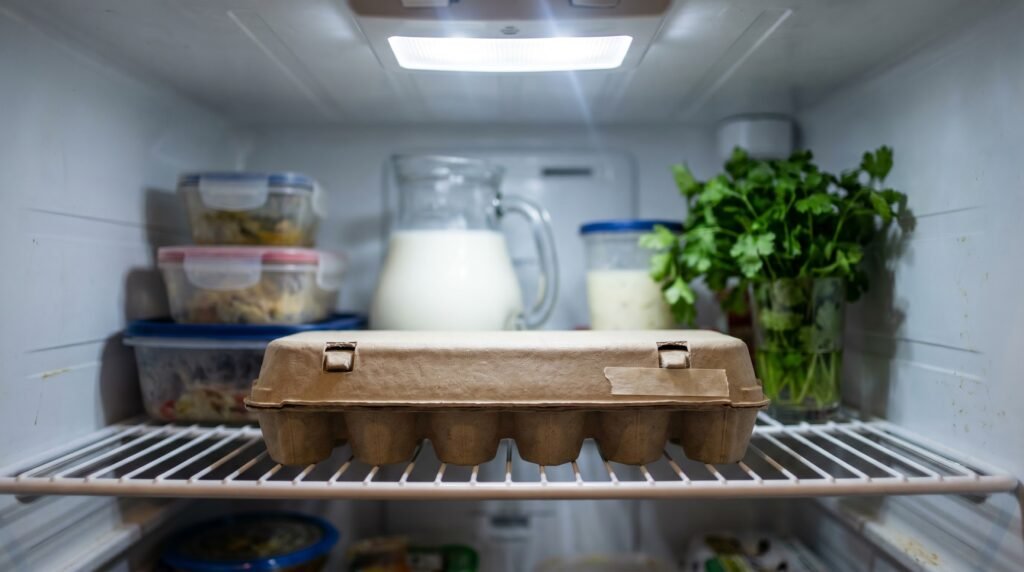
Temperature is the single biggest lever in egg storage. USDA Agricultural Research Service researchers found that refrigerated eggs - washed or not - held Grade A quality for an average of 15 weeks. Unwashed eggs left at room temperature dropped from Grade AA to Grade B in roughly one week. That is a 10-fold difference in usable window, just from keeping eggs cold.
The practical number: USDA ARS research documents eggs staying fresh up to 90 days under proper U.S. refrigeration conditions (at or below 40°F, which the FDA requires egg producers to maintain beginning 36 hours after lay). For a home keeper, that means a carton bought today is typically good for three to five weeks - but eggs laid fresh by your own hens and refrigerated promptly can reasonably hold quality for up to 45 days from wash date.
Two refrigerator habits matter more than most people realize. First, keep eggs in their carton on a shelf, not in the door - the door sees the most temperature swings. Second, once refrigerated eggs come out, they should not sit at room temperature more than two hours. Cold eggs sweat when brought into warm air, and that moisture can carry bacteria through the shell.
Hard-boiled eggs are a separate category: cook, refrigerate within two hours, and use within one week. The cooked shell no longer seals the way a raw one does, and quality drops quickly.
For more on how washing affects the protective bloom and when refrigeration becomes mandatory, our article on whether to wash fresh eggs covers that decision in full. And if you have noticed a recent drop in production that is piling up your backlog, why chickens stop laying walks through the main causes.
Unwashed eggs and the bloom question
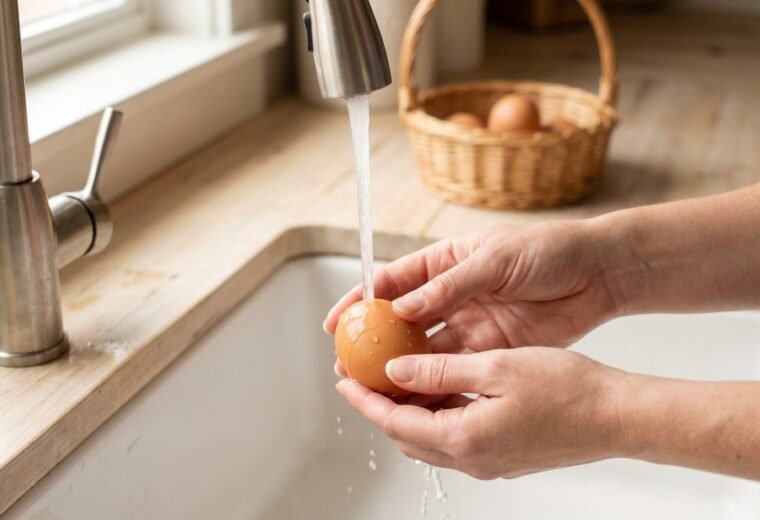
Unwashed eggs from your own flock carry a thin outer layer called the cuticle (or bloom). It slows bacterial entry and allows the egg to breathe. Michigan State University Extension notes that unwashed eggs are safe unrefrigerated for up to three weeks after harvest, provided they have never been washed. Once you wash an egg, that protection is gone and refrigeration becomes non-negotiable.
Worth being direct here: USDA research shows the cuticle evolved to control gas exchange during incubation, not to defend against Salmonella. The cuticle also dries and flakes off over time. Three weeks at room temperature is a guideline for a clean, intact, truly unwashed egg collected the same day - not a blanket excuse to leave a basket of mixed-date eggs on the counter for a month.
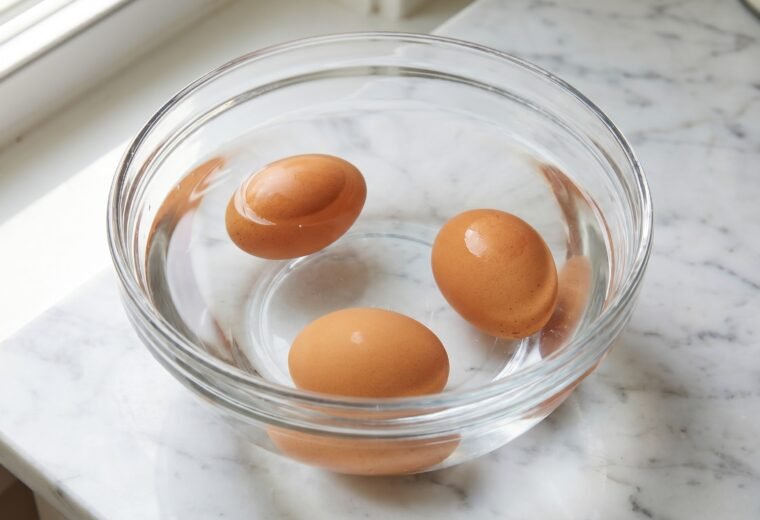
Unsure whether an egg from the back of your fridge is still good? The float test is a quick check: how to tell if an egg is fresh explains what sinking, tilting, and floating actually mean.
Freezing eggs: the method that actually works
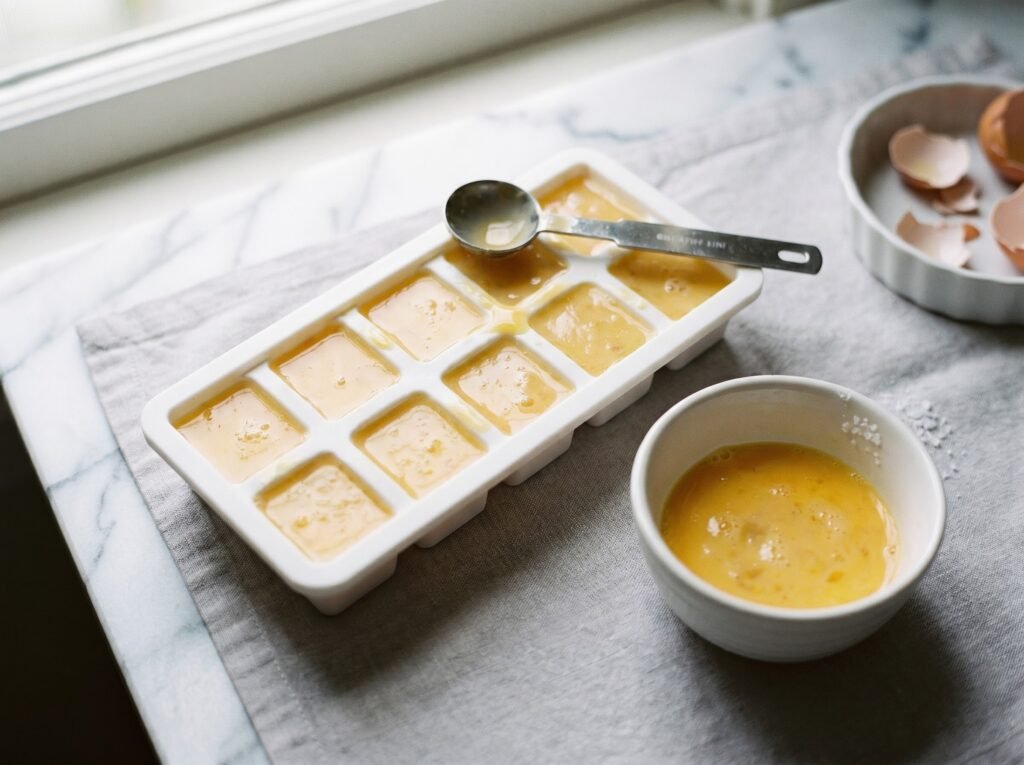
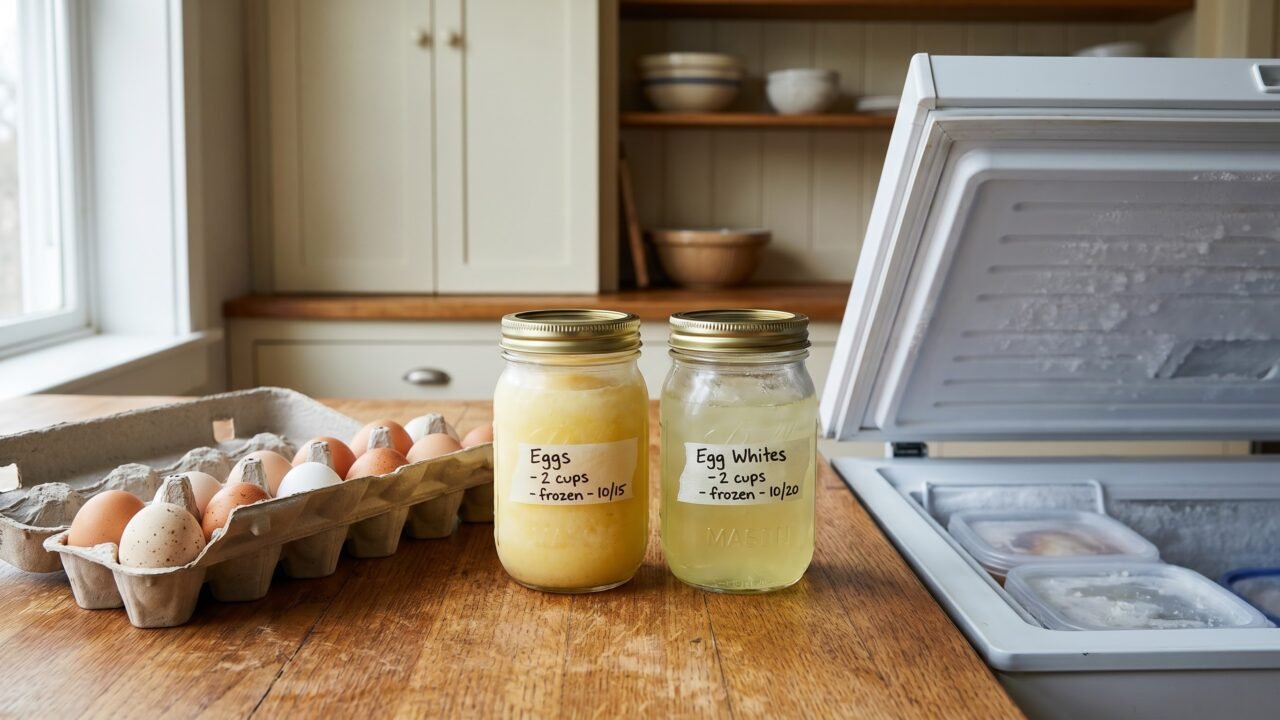
Freezing is the most practical long-term storage option, and it is endorsed by the National Center for Home Food Preservation (NCHFP). The one rule that separates success from failure: eggs must go into the freezer out of the shell. A whole raw egg in its shell will expand, crack the shell, and create both a mess and a food-safety risk. Always crack first.
Egg whites are forgiving - just mix gently without whipping, strain through a fine sieve, and pack with a half-inch of headspace. No additives needed. Two tablespoons of frozen white equals one egg white.
Yolks and whole eggs require one extra step: adding a stabilizer before freezing. Without it, the yolk proteins gel irreversibly during freezing and the thawed egg turns grainy and difficult to blend. Per NCHFP guidance, add one of the following per cup of egg:
- 1.5 tablespoons sugar (for sweet uses: baking, custards)
- 1.5 tablespoons corn syrup (sweet uses)
- 0.5 teaspoon salt (savory uses: scrambles, quiches, omelets)
Label every container with the date, the count, and whether you added salt or sugar - you will not remember six months later. Three tablespoons of the whole-egg mixture equals one whole egg; one tablespoon of yolk mixture equals one yolk.
Frozen eggs stored continuously at 0°F are safe indefinitely, but quality peaks within the first year. Colorado State University Extension, along with USDA food-safety guidance, puts best quality at up to one year for frozen eggs. After thawing in the refrigerator - never on the counter - use within three to five days and cook thoroughly. Salmonella is not destroyed by freezing, so the same thorough-cooking rule applies to thawed eggs as to fresh ones.
The water-glassing debate: what food scientists say
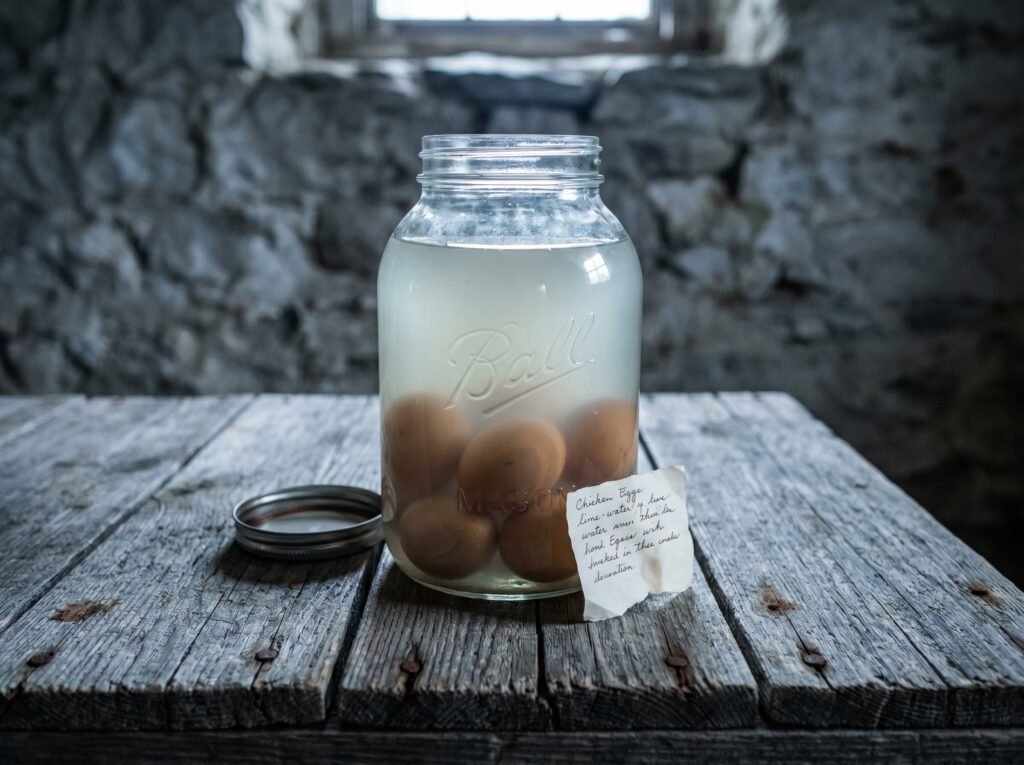
Water glassing - submerging unwashed fresh eggs in a diluted pickling-lime (calcium hydroxide) solution - was a common preservation technique in the early 1900s, used because refrigeration was unavailable. It is back in circulation among homesteaders, and the honest assessment is: extension food safety specialists do not recommend it.
Ohio State University Extension's position, on record as of 2021, is that the USDA does not consider water glassing a safe preservation method. The core concern: Salmonella enteritidis can contaminate an egg as it forms inside the hen, before the shell even closes. Lime water raises the alkalinity around the shell but cannot neutralize bacteria already inside the egg. Colorado State University Extension notes that lime water can also seep through the shell and alter egg flavor, and that eggs stored long-term by this method lose nutrients and undergo oxidative reactions.
The historical assumption behind water glassing - that the inside of a freshly laid egg is sterile - turned out to be wrong. That changes the risk calculus considerably.
The table below maps the three main long-term options against each other so you can pick the one that fits your situation:
| Method | Practical shelf life | Equipment needed | Safety status | Best for |
|---|---|---|---|---|
| Refrigeration (washed or unwashed) | Up to 45 days from wash / up to 90 days fresh under ideal conditions | Refrigerator at 40°F or below | USDA-recommended | Most keepers, moderate surplus |
| Freezing (out-of-shell) | Up to 12 months best quality; safe indefinitely at 0°F | Freezer, airtight containers, stabilizer (salt or sugar) | NCHFP-approved method | Large spring/fall surplus, baking stock |
| Water glassing (lime solution) | Claimed several months by proponents | Food-safe container, pickling lime, cold storage space | Not recommended by USDA/extension specialists | Not recommended; freezing is the safer alternative |
If you are attracted to water glassing because it preserves whole, uncooked eggs without electricity, the practical substitute is a chest freezer with a backup power plan - or simply rotating refrigerated eggs more aggressively by tracking lay dates per hen. Our guide on collecting and storing eggs covers the daily rotation habits that keep your supply moving.
Labeling and rotation: the steps most people skip
Long-term storage only works if you actually use the oldest eggs first. That requires two things: a label with enough information to act on, and a physical arrangement that puts oldest stock within reach first.
A useful label for frozen eggs contains four fields. Here is the format that covers everything you need without overthinking it:
Eggs - whole (salted)
Frozen: 2026-06-18
Count: 6 eggs (18 tbsp)
Use by: 2027-06-18
Swap "whole (salted)" for "whites" or "yolks (sweet)" depending on what you packed. The use-by date is one year from the freeze date - write it on the label at the same time so you never have to do the math later.
Three habits lock in FIFO (first-in, first-out) rotation:
- Fridge: when you add a new carton, slide existing cartons toward the front and put the new one at the back. Pull from the front.
- Freezer: stack oldest containers on top or at the front of a basket; new batches go under or behind them. A chest freezer benefits from a simple wire basket divider - old batch in the front basket, new batch in the rear.
- Labels face out: orient every container so the date is visible without moving anything. A quick scan of the shelf tells you exactly what needs to go next.
A masking-tape label and permanent marker take ten seconds to write. Unlabeled containers in a deep freeze are effectively unusable after a few months because a three-month-old batch and a fourteen-month-old one look identical by appearance alone.