Your neighbor does not care that fresh eggs taste better. What she cares about is whether your coop is going to wake her up at 5 a.m., draw rats, or make her yard smell like a farm. Starting with that reality - and addressing it directly - is what keeps a flock of four hens from becoming a neighborhood dispute. Most of the friction around backyard chickens comes not from the birds themselves but from poor preparation, and that is almost entirely preventable.
The short version: a well-managed, rooster-free flock of hens is quieter than a dog, nearly odorless when the coop is kept clean, and far less likely to attract pests than an unsecured trash can. What follows is how to communicate that - and back it up with actual practice.
Why neighbors worry, and what the real numbers say
Three things come up every time: noise, smell, and rodents. All three are legitimate concerns. None of them is as serious as the worst-case story your neighbor might be imagining.
Noise. A laying hen squawks when she is excited about her egg. That cackle lasts a few minutes per day per bird, with occasional shorter clucks in between. When researchers in Pleasanton, California, measured an actively squawking hen at a two-foot distance, they recorded 63 dBA, roughly the level of a normal conversation. For context, a barking dog clears 100 dBA before it is considered a noise disturbance under most local codes (poultry.extension.org, Developing Regulations for Keeping Urban Chickens). The math favors hens. Roosters are a different story entirely: their crowing is persistent, unpredictable, and genuinely disruptive. Most urban areas prohibit them, and for good practical reasons. With hens only, the noise comparison to a family with an average dog almost always lands in your favor.
Smell. A well-managed coop does not smell. Full stop. The condition that creates odor is wet, accumulated manure: a management failure, not an inherent chicken trait. Ask Extension's poultry specialists put it plainly: "Well managed chickens do not pose an odor problem. With regular cleaning, odor from urban chickens is not a problem." That is the baseline your neighbor needs to hear, and the standard you need to actually meet. (More on cleaning cadence below.)
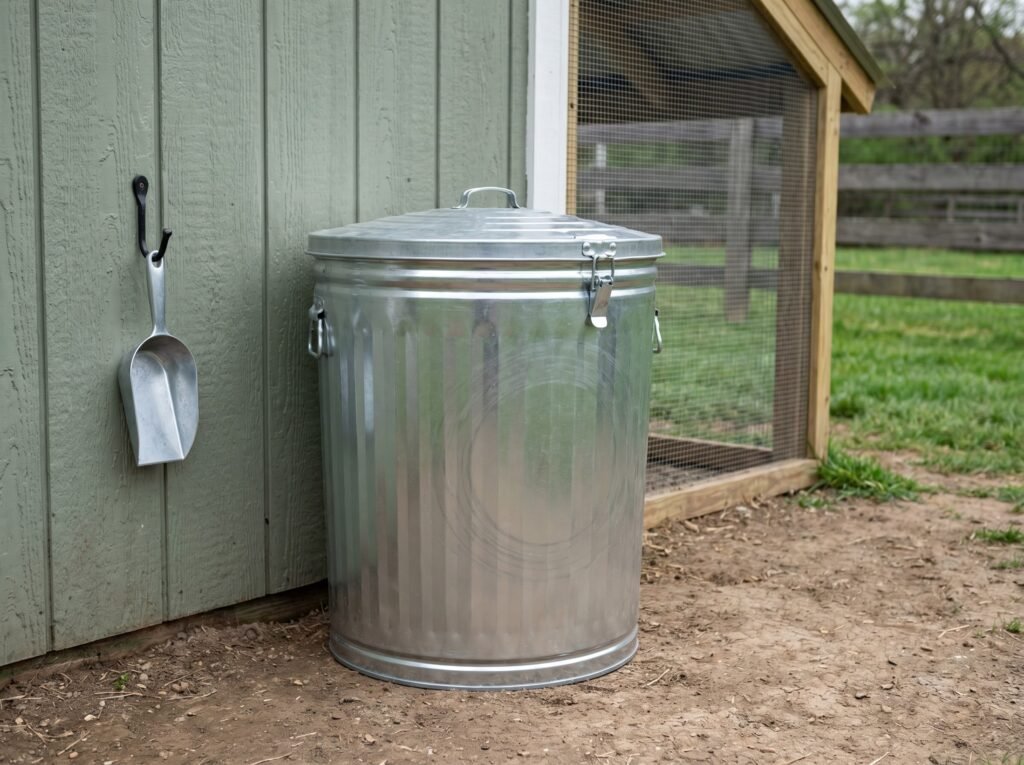
Pests. Feed and manure management drive the rodent risk. Exposed feed brings mice; mice find gaps in coops; mice contaminate feed and carry disease. Rodents "will eat feed and contaminate it with salmonella," according to eXtension's urban poultry guidance. Stored feed in a sealed metal can and a tight, secure coop address the problem at the source. The secondary pest concern is flies, and that too comes down to manure moisture - dry bedding gives flies nowhere to breed.
The conversation worth having before you bring birds home
Telling your neighbor about your chickens after they arrive is damage control. Telling them before is an invitation. The difference in reception is significant.
Keep the first conversation short. You are not asking for permission (unless your city requires neighbor approval for a permit - some do). You are extending a courtesy that most people appreciate. A few minutes at the fence or a knock on the door works. Say you are planning to keep three or four hens, no rooster, and that you wanted them to know before the birds arrived. Ask if they have any questions or concerns.
Most of the time, the immediate response is curiosity rather than alarm. People ask where the coop will go, how big it is, and whether they will hear the hens. Honest answers to those questions - with the 63 dBA figure in your back pocket if needed - tend to defuse the image of a barnyard next door.
If your neighbor IS worried, listen rather than defend. Understanding which concern is driving their reaction lets you respond to that specific thing. Noise worries call for a different answer than rodent fears. A neighbor who is concerned about property values wants reassurance about coop appearance; UF/IFAS Extension notes that a coop visible from outside your property should be built and maintained with that impression in mind. Treat each concern as a real question, not an objection to overcome.
A no-rooster flock: the single most effective goodwill move
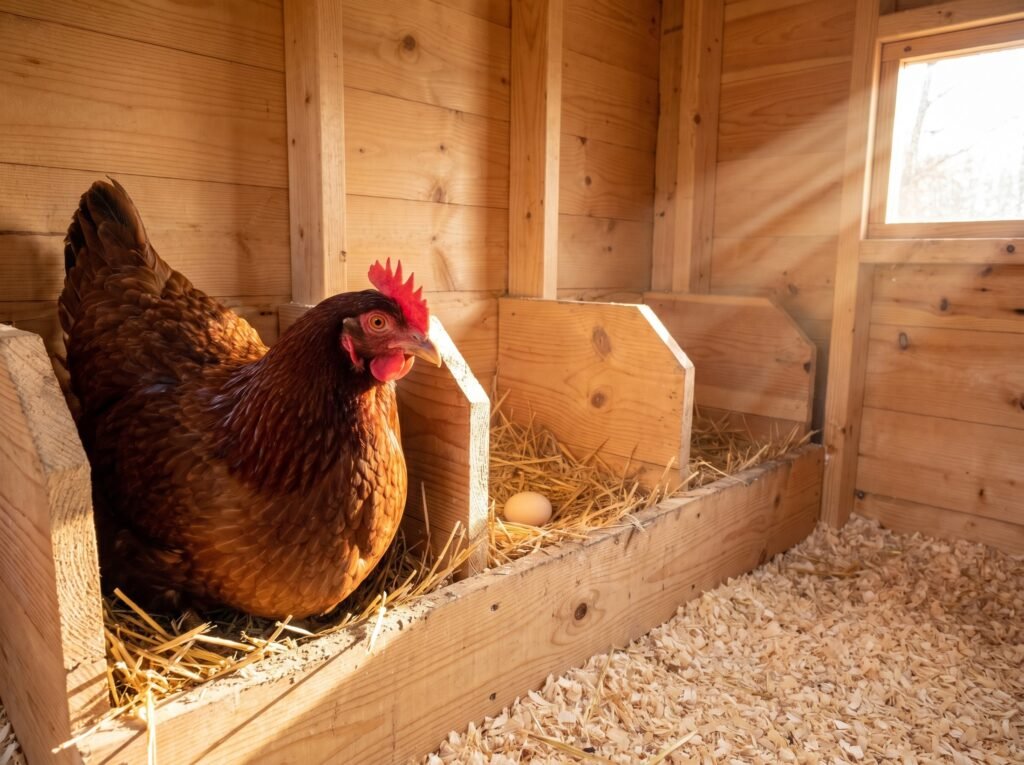
Hens do not need a rooster to lay eggs. This surprises a lot of people. The biology is simple: hens ovulate on their own cycle regardless of whether a male is present. Every egg in your carton at the grocery store was laid by a rooster-free flock. If a neighbor's first question is "will there be a rooster?" the answer "no, and hens don't need one to lay" handles two concerns at once - it reassures them about noise and corrects a common misconception at the same time.
Our article on whether hens need a rooster to lay covers the biology in full if you want to send a neighbor a quick explainer link.
The practical upside of a rooster-free setup extends beyond noise. Hens kept together without a rooster tend to have a calmer pecking order, lower stress, and fewer management complications. For an urban or suburban flock, it is the right choice by almost every measure.
What good management actually looks like (the neighbor-facing version)
Saying your chickens will be well managed is easy. Here is what that commitment translates to in practice - and why each item directly addresses a neighbor concern.
| Management habit | Neighbor concern it addresses | How often |
|---|---|---|
| Clean out wet or soiled bedding; replace with dry litter | Odor, flies | Spot-check daily; full change weekly or as needed |
| Store all feed in a sealed metal container | Rodents | Every time you refill |
| Pick up spilled feed daily | Rodents, flies | Daily |
| Inspect and fix waterer leaks | Flies (wet manure is the primary fly-breeding site) | Daily check |
| Collect eggs at least once daily | Smell, pest attraction | Daily |
| Keep the area around the coop clear of clutter, tall grass, brush | Rodent harborage, general appearance | Weekly |
| Compost bedding and manure in a covered pile or bin | Odor, appearance | Ongoing |
| Site the coop as far from property lines as your yard allows | Noise, odor reaching neighbors | One-time decision, permanent benefit |
The fly line in that table deserves a closer look. Penn State Extension's poultry pest specialists identify leaking waterers as "the major source of wet manure conditions" - a daily waterer check prevents the moisture buildup that makes manure a fly-breeding site. Dry bedding is itself a form of fly control, because hens scratching through it will consume larvae before they can mature.
Coop placement matters more than many first-time keepers expect. Setback requirements from neighboring property lines are common in urban ordinances - some municipalities specify 10 to 25 feet. Even where there is no legal requirement, positioning the coop at the far corner of your yard puts natural distance between any odor or sound and your neighbor's windows. It also keeps the aesthetic impact away from shared fence lines.
For the full coop-cleaning routine and what to use for bedding, the complete coop-cleaning guide lays out the process step by step. Your chicken supplies checklist also covers the bins, scoops, and storage containers that make the daily habits stick.
The egg carton as diplomacy

Fresh eggs are genuinely good. Hens at peak production will often lay faster than a small household can eat them - three hens producing well can average a dozen or more eggs per week. Sharing that surplus is one of the most effective goodwill moves available, and eXtension's urban poultry resource specifically recommends it: "If your hens produce more eggs than you can use, consider sharing them with neighbors as part of a 'good neighbor' program."
A few practical points before you start sharing:
- Collect eggs at least once daily. The shorter the time between laying and pickup, the cleaner and fresher the egg.
- If you wash eggs before giving them away, refrigerate them promptly at or below 40°F. Washing removes the protective bloom, and washed eggs need cold storage to stay safe. Unwashed eggs can sit at room temperature for one to two weeks if your recipient knows that - but most people expect refrigerated eggs, so refrigerating is the simpler default.
- Give eggs you would eat yourself. Do not use the neighbor carton as a place for cracked, soiled, or questionable eggs.
- Label the carton with a marker: date collected, your name or address. It adds a personal touch and makes the eggs feel like a real gift, not an afterthought.
People who receive a carton of fresh eggs are not going to file a noise complaint that week. Over the course of a season, a neighbor who gets eggs regularly shifts from a potential adversary to someone with a small stake in the flock's success. That dynamic is harder to quantify than decibels, but it is just as real.
If a complaint does come in
Handle it the same day. Delay reads as indifference. A neighbor willing to come to you directly rather than going to animal control is giving you an opportunity - use it.
Ask what specifically is bothering them. A vague "the chickens are a problem" needs a follow-up question: is it the morning noise? Did they see a mouse near the fence? Does something smell? The specific complaint tells you exactly where your management has a gap.
Then fix the gap, and tell them you did. "You were right that the compost pile was too close to your fence - I moved it last weekend" closes the loop and demonstrates that the conversation was worth having. Most neighbor concerns about backyard chickens resolve this way, without involving any official process.
If the situation does reach a city or HOA process, knowing your local ordinance cold is your best asset. Many cities that allow chickens also have permit requirements, flock-size limits (five or six birds is common), and setback rules. Compliance is not just a legal matter - it is the most credible signal you can send that you take the management responsibility seriously. Our guide on whether you can keep chickens in your backyard walks through the ordinance and permit landscape by type of municipality.
A tidy, quiet flock managed by someone who engages honestly with concerns is rarely a neighborhood flashpoint. The friction almost always comes from neglect or from hiding birds rather than communicating openly. Keep the coop clean, skip the rooster, share the eggs, and the conversation most people dread having rarely needs to happen more than once.