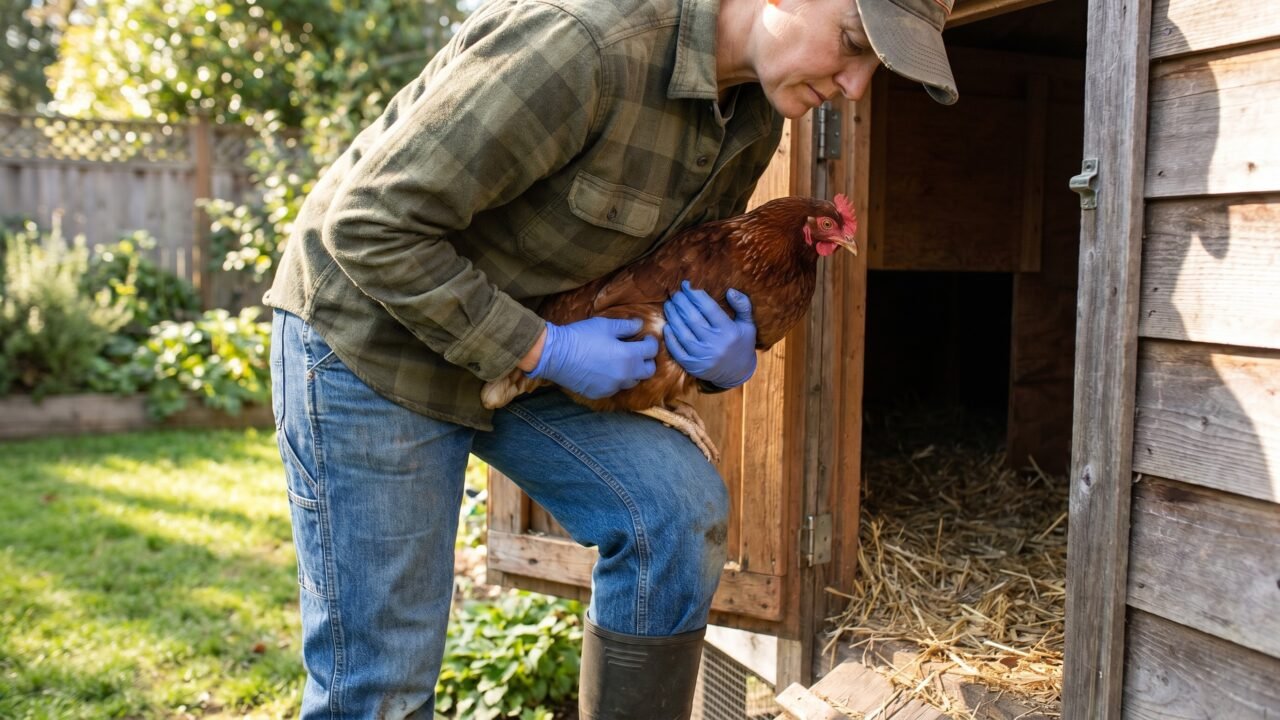
Yes, chicken mites can and do bite humans - but they cannot live on you, breed on you, or stay. That distinction matters a lot, and it is the piece of information that sends most panicked coop-keepers straight to the right solution: treat the birds and the coop, and the bites stop.
Both species that plague backyard flocks - the northern fowl mite (Ornithonyssus sylviarum) and the poultry red mite (Dermanyssus gallinae) - are obligate parasites of birds. Human blood does not let them reproduce, so they cannot establish an ongoing infestation on a person or in a home (University of Minnesota Extension). They bite because they are wandering and searching, not because they have chosen you as a host.
The two mites that bite backyard keepers, and why they behave differently
Knowing which mite you are dealing with shapes when and how you will encounter it - and how exposed you are likely to be.
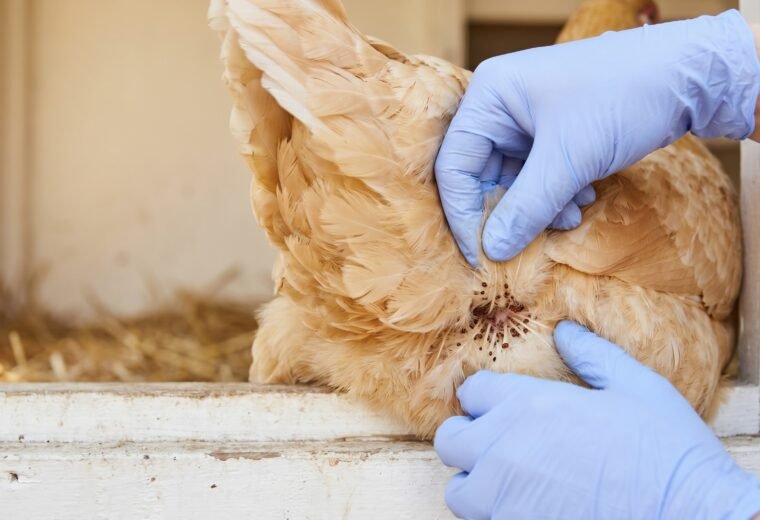
Northern fowl mite spends its entire life cycle on the bird. It feeds day and night, completes a generation in as little as five days, and can build to enormous numbers in the vent feathers before you notice anything is wrong. Because it lives on the chicken, you meet it mostly when you handle birds: picking up a hen, checking eggs under a broody, or catching a bird for inspection. Virginia Tech Extension notes that these mites "will move onto humans and will bite if trapped (for instance, in tight clothing)." Off a host, the northern fowl mite survives up to about four weeks (roughly a month), so a treated, cleaned coop is not where the hazard lives - the birds themselves are.
Poultry red mite (also called the roost mite or chicken mite) hides in cracks and crevices near the nest during the day and feeds at night. You will rarely find it on a bird in daylight. The Illinois Department of Public Health describes it this way: it "hides in cracks and crevices near bird nests during the day and feeds by night." This is the mite that bites the keeper who goes into the coop at dusk or dawn, or who leans against a wall or roost beam while working. It is also the mite that can persist in an empty coop for up to nine months without feeding (Merck Veterinary Manual), which is why treating just the birds without treating the environment fails every time.
Which mite is present shapes the whole treatment approach - from what product to use to where to apply it.
What a bite actually feels like, and what to look for on your skin
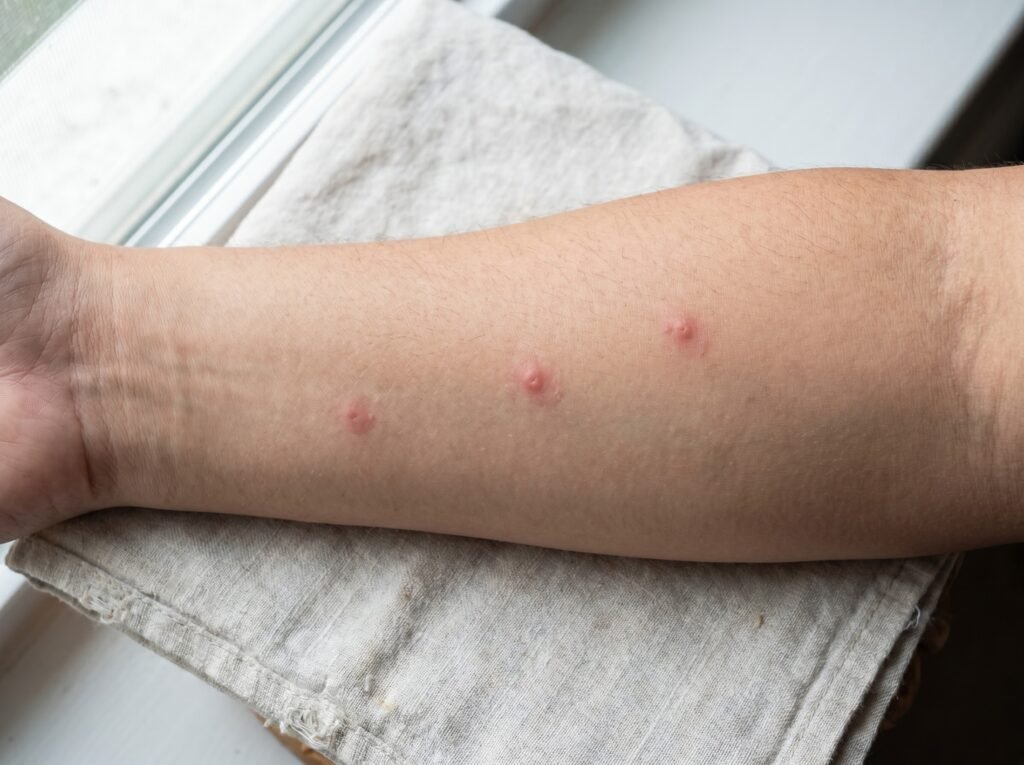
Bites from either species produce small, red, intensely itchy papules - sometimes with a tiny central puncture, sometimes as a cluster of raised red bumps. DermNet NZ describes the presentation as "numerous small red papules and vesicles" accompanied by a "crawling sensation that is caused by the mites injecting saliva when feeding." The itch tends to be worst at night or in the early morning, which is when roost mites are actively feeding and when the sensation of wandering mites is most noticeable.
You will usually find bites on exposed areas: forearms, wrists, neck, and ankles - wherever skin was near the birds or a coop surface. The reaction can look a lot like mosquito bites or a mild allergic rash. Scratching breaks the skin and opens the door to a secondary bacterial infection, which is the main medical complication worth watching for.
One clinical note that surprises many keepers: mite bites are sometimes misdiagnosed as scabies. The two conditions look similar on casual inspection, but avian mites do not burrow into skin, and bites typically spare the interdigital spaces, armpits, and groin - the areas scabies favors. If a doctor treats for scabies and the rash does not improve, tell them about your chickens. A peer-reviewed case series in the medical literature documents exactly this pattern: patients diagnosed and treated for scabies who did not improve until the bird source was identified and removed (PMC6201615).
Protecting yourself while you treat the coop


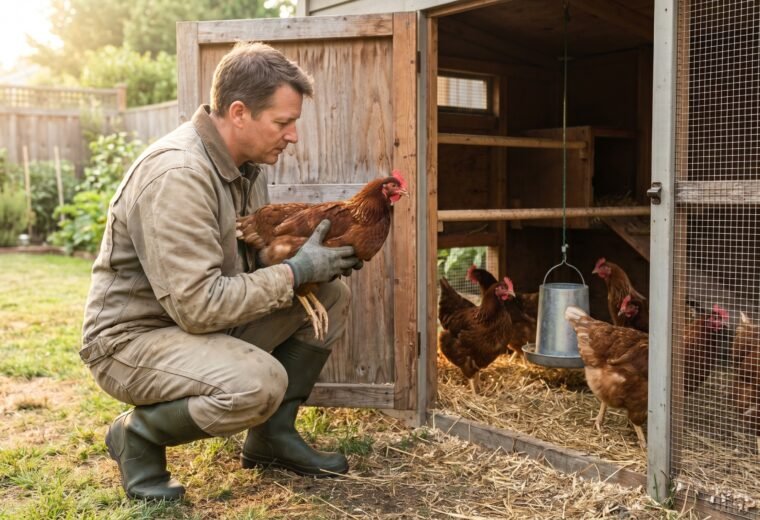
Wear dedicated coop clothes, long sleeves, and gloves every time you enter during an active infestation, and shower promptly after coop work. A few simple habits cut contact dramatically. Personal exposure actually peaks not when the infestation is at its worst, but during the treatment period itself - when mites are disturbed from their hiding places and searching for a blood meal.
- Dedicated coop clothes. Virginia Tech Extension recommends "designated clothing and shoes" as a primary biosecurity measure against mite transfer. Keep a pair of old long-sleeved shirts, old trousers, and slip-on boots at the coop door. Strip them off before entering the house and launder them in hot water (the hottest your machine allows) after a treatment day.
- Long sleeves and tuck-in. Northern fowl mites bite when trapped against skin, so minimizing bare skin and tucking trousers into socks or boot tops removes most of the opportunity.
- Gloves. Nitrile gloves for handling birds during treatment, especially when applying dusts or sprays to the vent area.
- Shower promptly. Mites that land on you are looking for a bird, not you. A thorough shower with soap and warm water after coop work removes them before they bite.
- Wash hands before touching your face. Mites rarely transfer via hands, but keeping hands away from eyes and mouth is good practice any time you have been in the coop.
If you are dealing with a heavy red-mite infestation, consider going into the coop only in daylight (when the mites are hiding) for routine tasks. Save the deep-clean sessions for a full protective kit.
The full coop-cleaning process - litter removal, surface scrubbing, and permethrin application timing - is the next step once you have protective gear on and birds temporarily out.
After the bites: what helps and when to see a doctor
For most people, mite bites resolve on their own within a few days once the source is eliminated. In the meantime, a topical steroid cream can reduce inflammation and an oral antihistamine can ease the itch - a pharmacist can recommend a suitable over-the-counter option for both (DermNet NZ). A cold compress applied for 10-15 minutes calms swelling and gives immediate relief.
See a doctor or urgent-care provider if:
- The rash does not improve within a week after the mite source is treated and removed.
- Any bites become warm, swollen, or start weeping - signs of a secondary bacterial skin infection that needs antibiotics.
- You develop hives, widespread swelling, or any breathing difficulty after exposure - a rare allergic response that warrants same-day medical attention.
- A child in the household is bitten and the reaction seems more severe than expected, or spreads.
- Symptoms closely resemble scabies (burrows, involvement of web spaces between fingers) and do not improve with standard treatment - tell the doctor you keep chickens.
No prescription pest treatment is needed for you personally. The mites leave or die within days once the bird source is removed or treated. Medical care for humans addresses the skin reaction, not an infestation.
The mite-to-human exposure table: at a glance
| Feature | Northern fowl mite | Poultry red mite |
|---|---|---|
| Where it lives | On the bird, 24/7 | In coop crevices and roosts during the day |
| Feeds at what time | Day and night | Night only |
| When keeper is most at risk | Handling birds (any time of day) | Entering coop at dusk/dawn or during disturbance |
| Can it survive off a bird? | Up to ~4 weeks (about one month) off the host | Up to 9 months in a coop without feeding |
| Can it infest a human? | No - bites only, cannot reproduce on human blood | No - bites only, cannot survive on humans |
| Bite appearance on skin | Red itchy papules, often arms and neck | Red itchy papules, often exposed skin near coop surfaces |
| Primary treatment target | The birds | The coop environment (and birds) |
| Human bites stop when | Birds treated and mite population collapses | Coop treated and mite population eliminated |
Why the bites stop once you treat the flock
Chicken mites do not choose humans voluntarily. They wander onto a person because they have detected a warm-blooded animal nearby - and since they cannot reproduce on human blood, a mite that bites you is in a dead end. Poultry mites "cannot survive on humans or infest them" (Merck Veterinary Manual). Eliminating the source - treating the birds for northern fowl mite, deep-cleaning and treating the coop for red mite - removes the population. With no birds to sustain them, any mites that reached you or your clothing die off within days to weeks, and biting stops.
For anyone in the middle of an outbreak, this is the reassuring upshot: the discomfort is real, but it is temporary and tied entirely to the coop situation. Fix the coop, fix the problem. Parasite monitoring and routine flock health checks keep infestations from reaching this point in the first place.