Food-grade diatomaceous earth is about as low-tech as pest control gets: fossilized algae shells, ground to a powder, sold in bags at the feed store. Whether it actually earns a place in your coop routine is a fair question, and the science gives a more complicated answer than most product labels suggest. Here is what we know, what is genuinely uncertain, and how to use DE without accidentally harming the birds you are trying to protect.
The short answer: DE works physically against insects and mites and makes a reasonable low-cost addition to a well-managed dust bath, but it is not reliable as a standalone treatment for an active infestation. Used correctly with a respirator and applied only when birds are outside, it is safe for your flock.
What is diatomaceous earth?
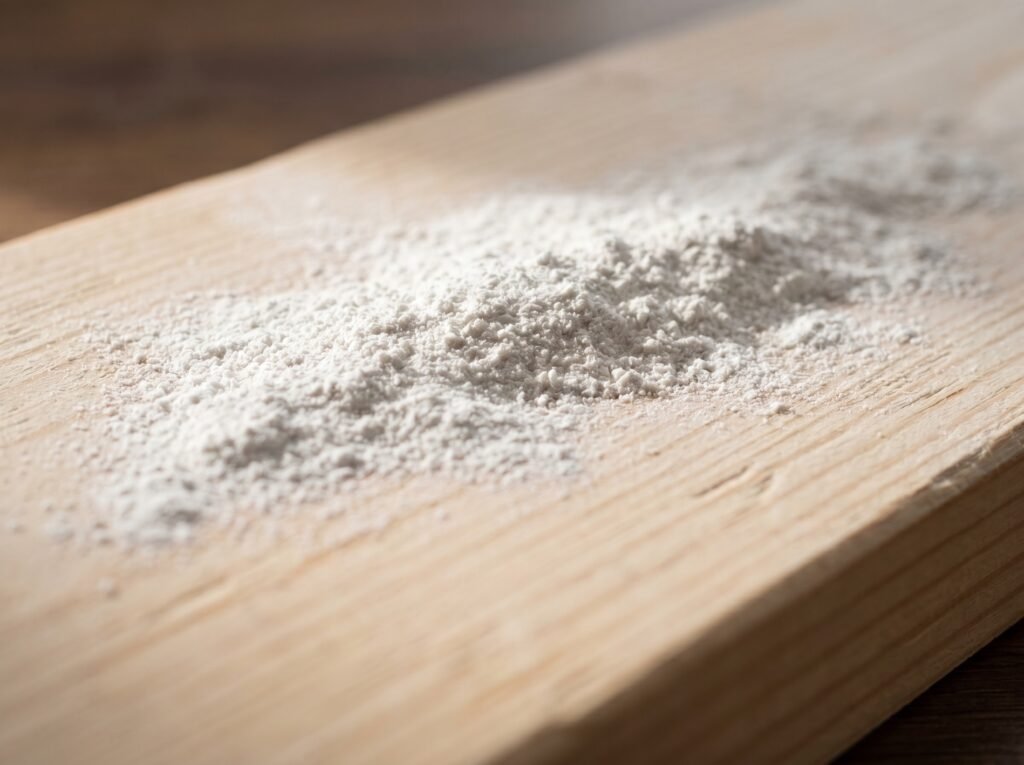
Diatomaceous earth is a soft white powder mined from ancient fossilized algae deposits. Food-grade DE contains less than 1% crystalline silica, carries FDA GRAS status, and kills insects by abrading and drying out their protective cuticle - a physical mechanism that mites and lice cannot develop resistance to.
Diatoms are single-celled aquatic algae that have been building silica shells for hundreds of millions of years. When they die, those shells accumulate on lake and ocean beds. Diatomaceous earth is mined from those deposits, dried, and milled into a fine white powder. The particles are mostly amorphous silicon dioxide - the same element that makes up quartz and beach sand, but in a glassy, non-crystalline form.
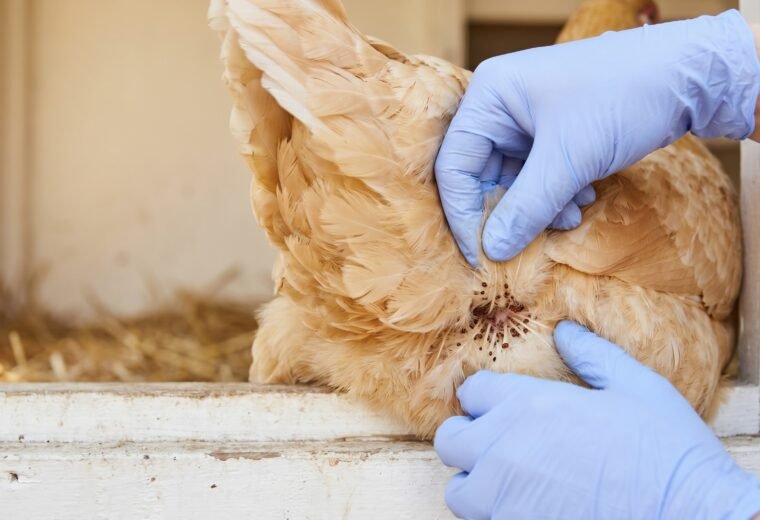
Under a microscope the edges look like tiny shards. That structure is the whole point: when DE contacts an insect or mite, the particles adhere to joints and soft membranes, abrade the waxy protective cuticle, and draw moisture out of the body. According to the National Pesticide Information Center at Oregon State University, DE "causes insects to dry out and die by absorbing the oils and fats from the cuticle of the insect's exoskeleton." It works physically, not chemically. Mites and lice cannot develop resistance to a desiccant the way they can to a neurotoxin.
Two grades matter to chicken keepers. Food-grade DE contains less than 1% crystalline silica and carries FDA GRAS (Generally Recognized as Safe) status. Industrial-grade or "filter-grade" DE is heat-calcined, which converts the amorphous silica into crystalline forms (sometimes 60%+ of the product) that are far more hazardous to breathe. Use food-grade only - look for it explicitly on the label.
Does diatomaceous earth actually work against mites and lice?
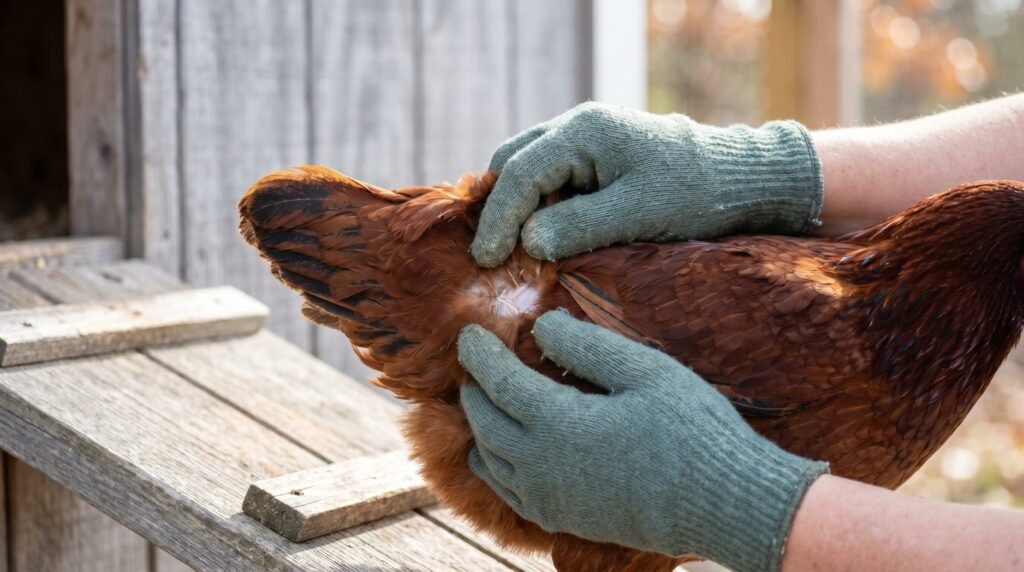
The evidence is mixed. One peer-reviewed field trial found DE reduced northern fowl mite counts and improved egg production in free-range hens. A 2017 systematic review from the University of Edinburgh, however, found zero in vivo studies confirming DE clears a red mite infestation. DE shows promise as a preventive supplement at low mite pressure but is not a reliable treatment for an active infestation.
Spend five minutes on poultry forums and you will see fervent testimonials for DE. Spend five minutes in the academic literature and you will see considerably more caution. Both perspectives are real, and understanding the gap between them helps you use DE intelligently.
The most cited peer-reviewed study comes from Bennett et al. in Poultry Science (2011). The researchers fed DE at 2% of total ration to two breeds of free-range organic laying hens - Bovan Brown and Lohmann Brown - and also applied it as a dust treatment directly on birds. The dusted birds of both breeds showed reduced northern fowl mite (Ornithonyssus sylviarum) counts compared to untreated controls. The Bovan Brown hens receiving dietary DE also had lower internal parasite burdens and laid more and larger eggs. The authors concluded that DE "has the potential to be an effective treatment to help control parasites and improve production of organically raised, free-range layer hens." Those are genuinely encouraging results for the free-range, low-infestation scenario.
On the other side: a 2017 systematic review from the Royal (Dick) School of Veterinary Studies at the University of Edinburgh searched MEDLINE and CAB Abstracts for in vivo (real-world, on-bird) clinical evidence that DE reduces red mite (Dermanyssus gallinae) infestations. After screening hundreds of papers, the reviewers found exactly zero peer-reviewed in vivo studies meeting their criteria. Several in vitro (lab dish) studies suggested DE may have some anti-parasitic effect, but lab conditions and coop conditions differ enormously. The review's conclusion: "There is no comparative, peer reviewed, in vivo evidence identifying diatomaceous earth as an effective anti-parasitic treatment for red mite infested chickens."
Virginia Tech Cooperative Extension adds a middle-ground data point: DE at a 12% concentration reduced but did not eliminate northern fowl mite infestations in trials. That matches what many keepers observe - meaningful suppression during low-pressure periods, but not reliable control during a real infestation.
The table below summarizes the current state of evidence so you can calibrate expectations before you buy a bag.
| Use case | Evidence grade | What the research shows | Practical verdict |
|---|---|---|---|
| Dust-bath supplement (preventive, low mite pressure) | Weak-moderate (one RCT, free-range hens) | Reduced mite counts in dusted birds vs. controls (Bennett et al. 2011) | Reasonable addition; low cost, low risk when used dry |
| Red mite (Dermanyssus gallinae) treatment | No in vivo clinical evidence (Edinburgh systematic review 2017) | Zero qualifying studies found; in vitro only | Do not rely on DE as primary treatment; use proven ectoparasiticides per label |
| Northern fowl mite (Ornithonyssus sylviarum) treatment | Low (one RCT; extension trial data) | Reduced but did not eliminate mites at 12% concentration (VT Extension) | Adjunct only; plan retreatment and consider permethrin for active infestations |
| Coop/bedding scatter (residual pest deterrent) | Indirect; mechanism-based only | Works while dry; loses efficacy when wet or disturbed into fine airborne dust | Useful in dry nesting areas; replace after any moisture event |
| Internal parasite control (fed in ration) | Very limited; mixed results by breed | Some internal parasite reduction in one susceptible breed (Bennett et al.); no effect in more resistant breed | Insufficient evidence to recommend for worm control; consult a poultry vet for diagnosed worm burdens |
The bottom of this evidence picture is clear: DE is not a treatment for a confirmed infestation. For active red mite or heavy northern fowl mite problems, established treatments and retreatment schedules are what actually work. DE is best understood as a low-cost, low-risk preventive addition to a well-managed dust bath or dry coop area - not a replacement for a serious parasite plan.
Is diatomaceous earth safe to breathe around chickens?
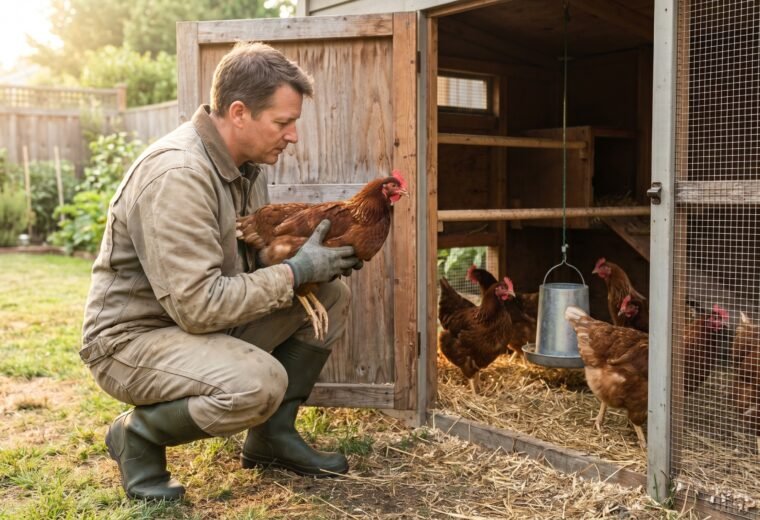
No - not as an airborne dust. Even food-grade DE produces fine respirable particles that irritate lung tissue in humans and birds alike. Always wear an N95 respirator when handling DE, apply it only when birds are outside the space, and wait for dust to fully settle before returning the flock. Correct application method makes it safe; skipping that step does not.
This is the part most product descriptions understate. Even food-grade DE, which is predominantly amorphous silica, produces a fine respirable dust that irritates lung tissue. The table below summarizes what the key regulatory sources say about exposure limits and inhalation effects.
| Source | Key finding |
|---|---|
| Oregon State University / NPIC | Inhalation may irritate nasal passages; large exposures can cause shortness of breath and coughing |
| CDC / NIOSH | Recommended exposure limit (TWA) for amorphous silica: 6 mg/m3 - easy to exceed briefly when pouring DE from a bag |
Long-term repeated inhalation of crystalline silica causes silicosis, a serious and irreversible lung disease. Food-grade DE contains very little crystalline silica, and the IARC rates food-grade amorphous DE as Group 3 (not classifiable as a human carcinogen). But "not classifiable" does not mean "harmless to breathe." Repeated exposure to any fine amorphous silica dust causes mild lung inflammation, and the long-term effects on birds - who breathe inside the same enclosed coop - are poorly studied.
Two rules that matter in practice:
- Wear an N95 or better respirator every time you handle DE. A cloth mask does not filter particles this fine.
- Apply DE only when birds are out of the space, then allow the dust to fully settle before letting them back in. Pouring or puffing DE with birds present creates a particle cloud they will breathe for several minutes.
The respiratory risk does not make DE off-limits. It makes application method non-negotiable. DE fits well inside a broader flock health routine that keeps birds resilient before problems develop.
How do you use diatomaceous earth in the dust bath?
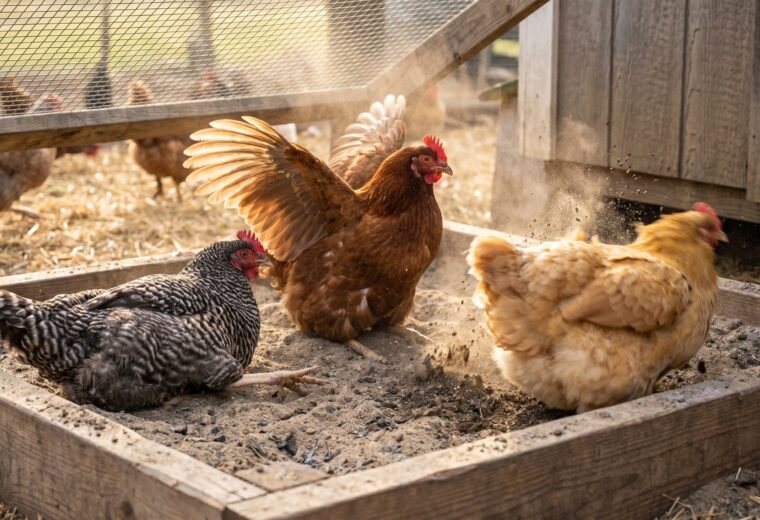
Mix DE into dry loose soil or coarse sand at roughly 10-15% of the total volume, stir it in, and keep the bath in a covered spot away from rain. Chickens distribute the powder themselves by rolling and flapping, which spreads it through feathers gradually rather than in a concentrated cloud. Top up the DE fraction monthly in dry weather, or after any moisture event.
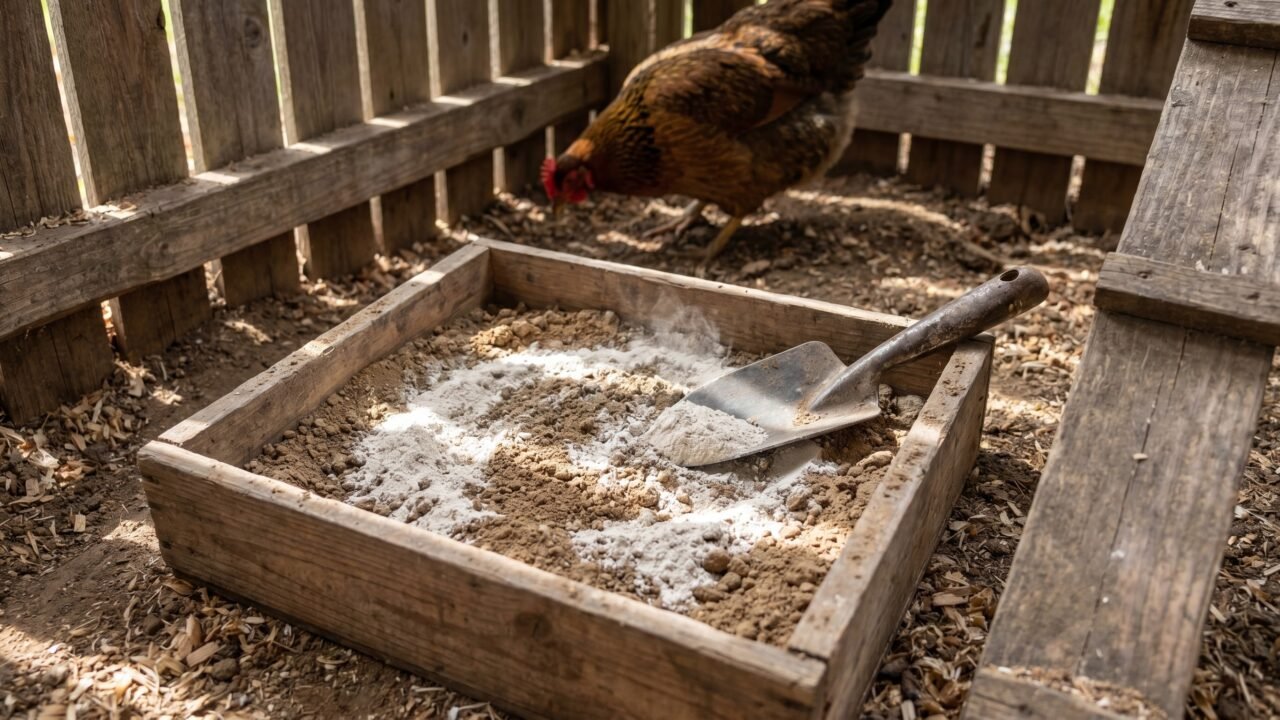
A dust bath is the most sensible place for DE in a backyard setup. Chickens roll and flap in it themselves, distributing the powder through their feathers at a natural pace rather than receiving a concentrated cloud from a squeeze bottle. The key is keeping the ratio modest and the bath dry.
A practical mix for a small flock of 15 hens: fill the bath container about two-thirds full with dry loose soil or coarse sand (the main medium birds actually love to roll in), then add about a 10-15% layer of DE on top and stir it in. That works out to roughly one part DE to six or seven parts base material. Keep the bath in a covered or sheltered spot - once DE absorbs moisture it loses both its desiccant action and its light, free-flowing texture, clumping into a paste that does nothing useful.
Top up the DE fraction about once a month in dry weather, or after any rain event soaks the bath. Wood ash is a common companion material that many keepers mix in alongside DE - both are dry, abrasive additions that help deter external parasites, though they work by different mechanisms. Getting the base medium right matters too; the dust bath setup guide walks through container depth, placement, and seasonal adjustments that keep DE effective longer. Replace the whole bath contents two or three times a year.
How do you apply diatomaceous earth in the coop and nesting boxes?
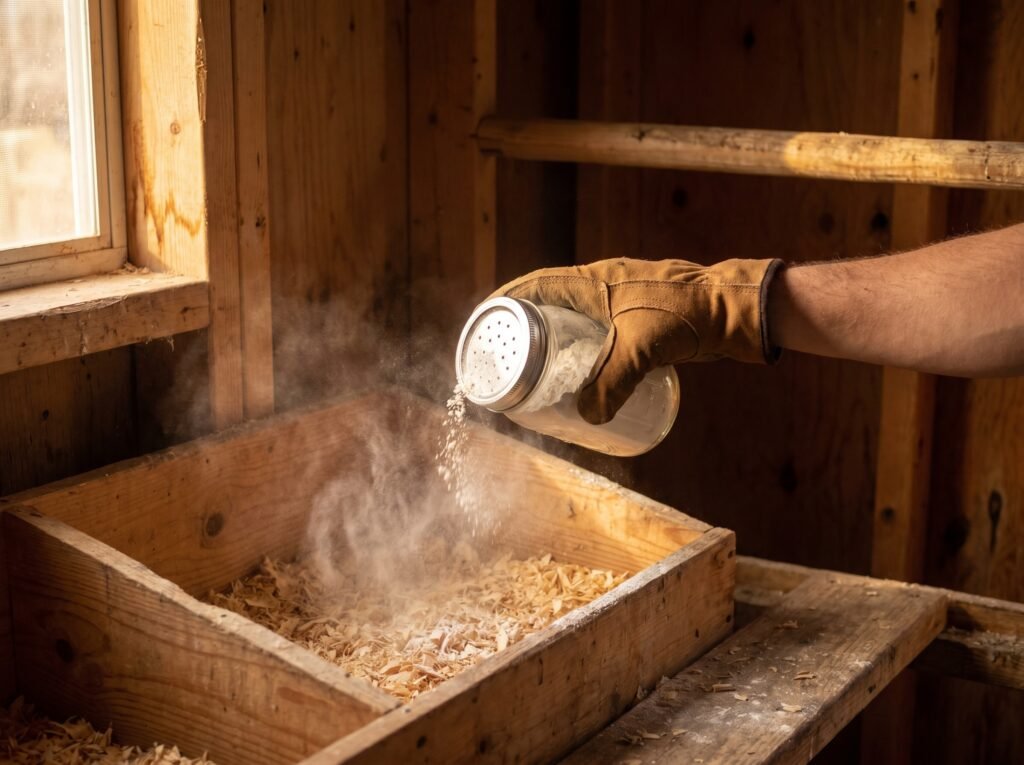
Apply a light dusting - not a thick layer - into dry nesting box corners, along roost bar crevices, and in wall cracks where mites shelter during daylight. Use a shaker-top jar for controlled application, do it when birds are ranging outside, and replace or refresh any DE-treated bedding after moisture events. DE is ineffective when wet and does not penetrate an established red mite infestation on its own.
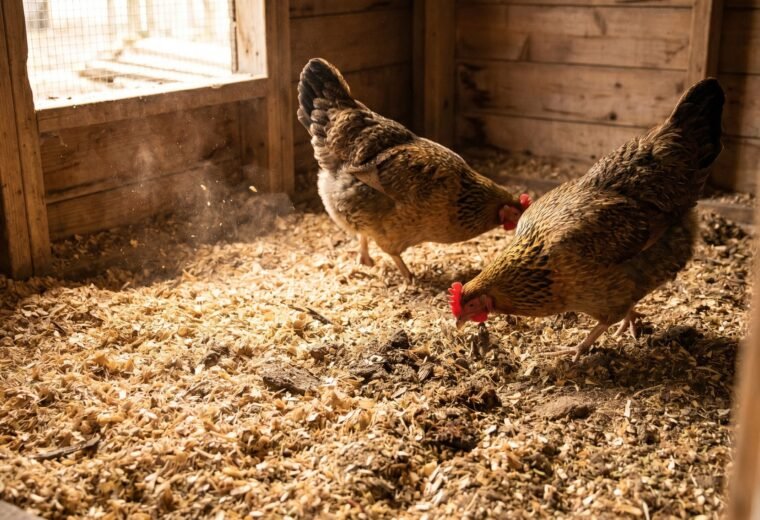
Sprinkling DE into bedding or nesting boxes is a common practice, but it works only as long as the bedding stays genuinely dry. Damp pine shavings defeat DE within hours. The most effective spots are the drier structural areas: along the roost bars (apply underneath and along the crevices), inside nesting box corners, and in any visible cracks along the floor or walls where red mites hide during daylight hours.
Apply a light dusting - not a thick layer. A heavy pour just creates an airborne cloud without adding meaningful coverage. Use a shaker-top container or a flour sifter for controlled application, and do it on a morning when the birds are outside ranging.
One realistic expectation: DE scatter in bedding does not penetrate a genuine red mite (Dermanyssus gallinae) infestation. Red mites feed on birds only at night and spend daylight in coop crevices. For mite issues that have reached problem levels, a thorough coop cleanout plus proven ectoparasiticides applied per label directions - and a repeat treatment within 7-10 days to catch newly hatched mites - is the actual solution. Mississippi State University Extension notes clearly that "products used to kill mites do not kill the eggs," so a single treatment of anything, DE or otherwise, will not resolve an infestation.
Keep DE away from waterers and feeders. It does not belong in or near drinking water, and contaminating feed with DE dust produces exactly the fine airborne particles you are trying to avoid.