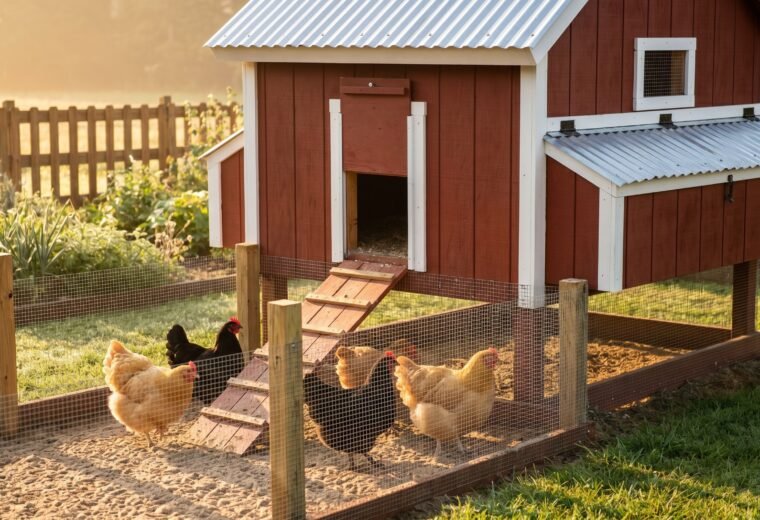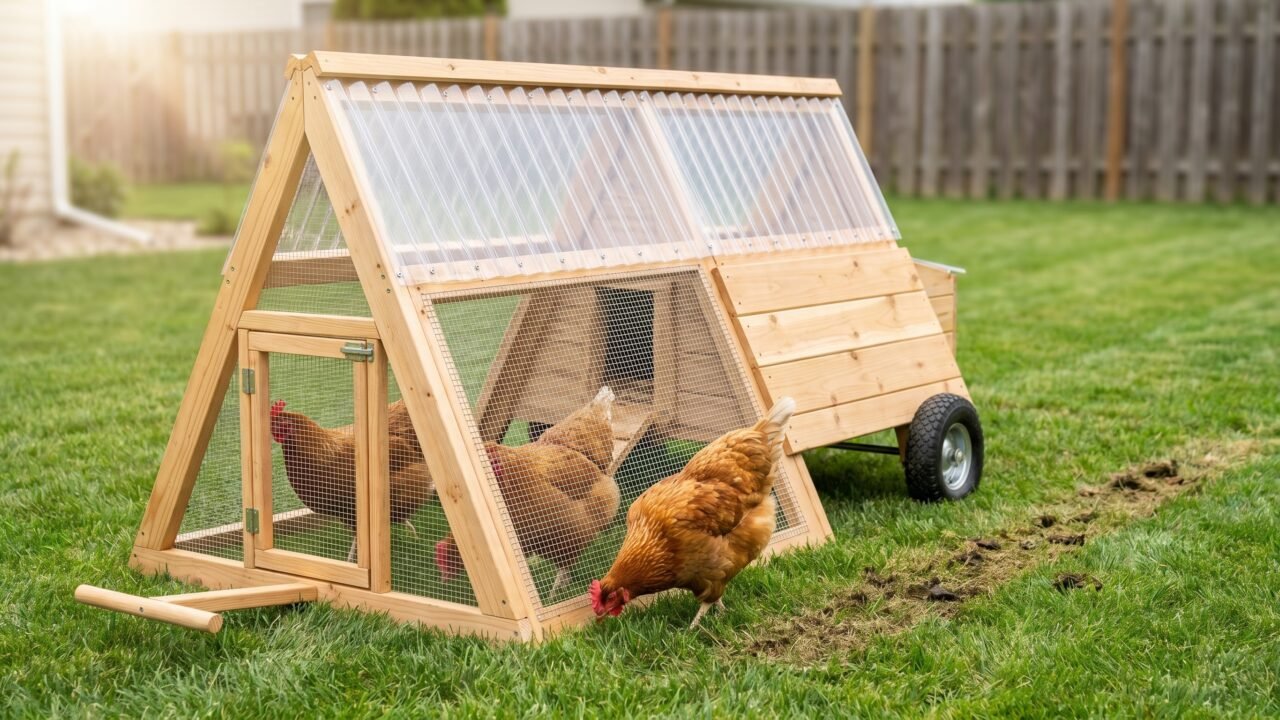
Move a chicken tractor every day or two and you get fresh forage for the birds, natural fertilization for the soil, and a coop that never needs mucking out. That trade-off - daily movement in exchange for nearly zero bedding chores - is exactly why backyard keepers choose a portable setup over a fixed coop. It is not the right choice for every flock, though, and getting the sizing, predator-proofing, and rotation timing right matters more than most first-time buyers expect.
A chicken tractor is a lightweight, floorless poultry pen that rests directly on the ground and gets dragged or wheeled to a fresh patch of grass on a regular schedule. The name comes from the bird's habit of scratching, pecking, and turning soil - doing work that might otherwise require a garden tractor. Most designs combine a small enclosed sleeping area with an attached open-air run, all mounted on skids, wheels, or a frame light enough for one or two people to move without machinery.
When a tractor beats a fixed coop
A chicken tractor wins whenever the land itself is part of the equation. If your goal is fresh forage for the birds, regular soil fertility, and a coop that never needs deep-litter management, a portable setup delivers all three in a single daily chore - moving the tractor. A fixed coop cannot replicate the rotation benefit, no matter how well it is built.
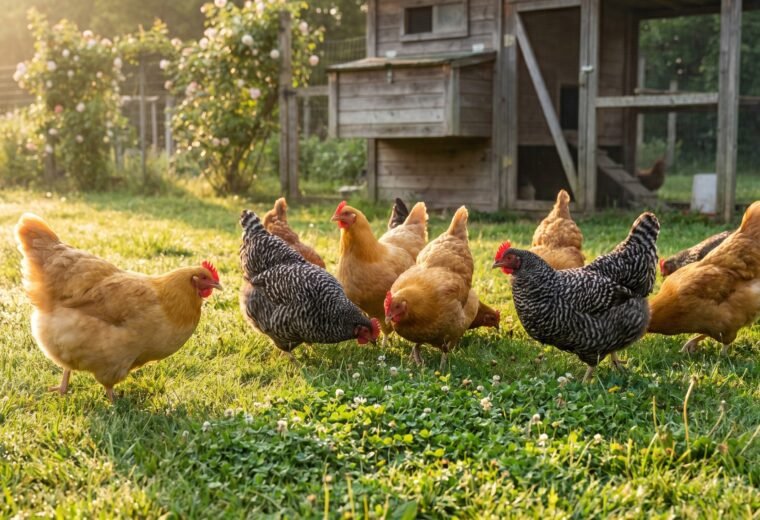
Grass preservation is the clearest example. Chickens confined to the same run strip the ground bare within weeks. A flock of eight hens left on a 10-by-10-foot patch will turn it to mud and compacted bare dirt by the end of a single summer, and that bare ground becomes a parasite reservoir. Move the tractor every one to three days and the birds never stay long enough to destroy vegetation. The grazed patch gets a dose of manure, then rests and regrows while the birds work the next strip. Research published in Renewable Agriculture and Food Systems confirms that integrating pastured chickens into a rotated system increased soil nitrogen and microbial biomass - a measurable benefit that a fixed pen cannot replicate.
Orchard and garden prep is a second strong use case. Park a tractor over a weedy raised bed for two or three days before planting season and a small flock will scratch out much of the weed seed, eat pest insects, and deposit fertility directly where you need it. Experienced orchardists and market gardeners have used moveable flocks to manage pest pressure between growing seasons - a practice well-documented by poultry extension educators across the US, though results vary by pest species and timing.
Seasonal or small-flock setups are a third fit. If you keep four to six birds through the warmer months and then reduce or pause your flock in winter, a tractor stores more easily than a permanent structure and costs far less to build or buy. Renters, or anyone who might move, also avoid the permanence of a fixed shed.
Where a tractor loses: cold climates favor the insulated walls and solid floor of a fixed coop. Larger flocks - think 12 or more birds - become hard to house in a structure light enough to move by hand, and the daily relocation routine that feels manageable in May starts to feel like a chore in December rain. If your yard is smaller than about 1,000 square feet, you may also run out of rotation space before the first-grazed patch has recovered. A look at what a well-designed stationary setup offers is worth doing before you commit to either path.
Sizing: how much space your flock actually needs
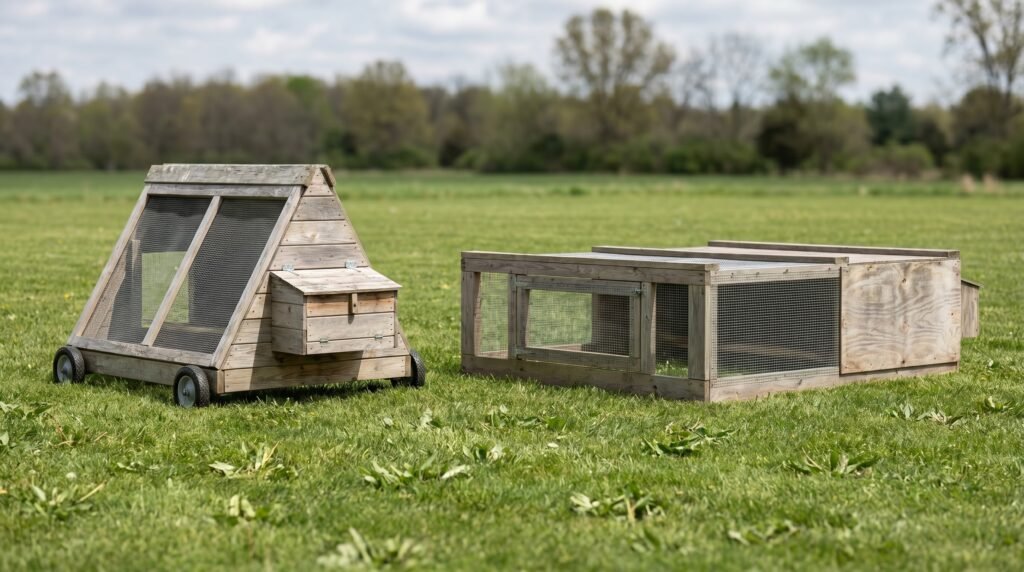
The minimum for laying hens is 3 to 4 square feet per bird inside the sleeping section and 10 square feet per bird in the run, according to the eXtension Foundation. For a flock of four that means roughly 12 to 16 square feet enclosed plus 40 square feet of open run - achievable in a single portable structure if you use lightweight materials. Meat birds are managed differently and pack tighter; see the breakdown below.
The space math for a chicken tractor depends on whether you are keeping laying hens or raising meat birds, and on how quickly you plan to move the structure.
For backyard laying hens, poultry.extension.org (the eXtension Foundation's peer-reviewed platform) lists the minimum at 3 to 4 square feet per bird inside and 10 square feet per bird in the outdoor run. Apply that to a small home flock of four hens and you need roughly 12 to 16 square feet of covered sleeping space plus 40 square feet of run. A 4-by-4-foot enclosed section paired with a 4-by-10-foot open run gets you there and stays portable if built with lightweight materials.
Pastured meat birds pack tighter. Penn State Extension's guide to raising pastured broilers puts the floor space at 1.5 square feet per bird for a chicken tractor system, which is how a Salatin-style 10-by-12-foot tractor accommodates up to 80 broilers, while a smaller A-frame design (roughly 5.5 by 10 feet) works for 36. Those are broiler-specific figures; do not apply the 1.5 sq ft number to laying hens kept for a full season.
Height matters for your comfort, not just the birds'. A structure under 4 feet tall forces you to reach awkwardly to collect eggs or fill feeders. Many backyard-scale tractors use an A-frame peak of 5 to 6 feet so you can crouch inside without contorting. If the design is truly too low to enter, plan for easy drop-down access doors on every side.
Whatever floor area you land on, keep the combined weight in mind. A 4-by-8-foot plywood-and-lumber tractor with hardware cloth can easily hit 150 to 200 pounds before you add feeders, water, and birds. Wheels or skid-rails that reduce friction are not optional at that weight - they are what makes daily movement realistic for one person. Pneumatic tire wheels on rear axles let a single keeper tip and roll a tractor the way you would a wheelbarrow; skids work on flat, soft ground but bind on slopes or dry-packed earth.
DIY vs. buying ready-made
Building your own costs $100 to $350 in materials for a small tractor and gives you full control over size, hardware quality, and wheel placement. Buying ready-made costs more upfront but saves a weekend of labor. Both options can house a healthy flock - the difference is whether you want a structure built exactly for your terrain, or whether you want birds in the yard by Saturday afternoon.
The decision comes down to time, budget, and what you want to optimize.
| Factor | DIY build | Ready-made / kit |
|---|---|---|
| Upfront cost (small flock) | $100 - $350 in materials for a 4x8 ft design | $250 - $900+ depending on size and brand |
| Time to build | One to two weekends for a first build | 1 - 4 hours of assembly |
| Customization | Full control over size, door placement, hardware | Fixed dimensions; limited options |
| Hardware cloth quality | You choose: 1/2-inch or 1/4-inch galvanized | Varies; some kits use thin chicken wire (weaker) |
| Wheel and handle system | Add exactly what you need for your terrain | May be undersized for heavier loads |
| Weight | Depends heavily on lumber choices | Lighter plastic/aluminum options exist |
| Repairability | Easy; you know every joint | Proprietary parts can be hard to source |
| Best for | Keepers who want a specific size or terrain fit | Keepers who want to start quickly with no tools |
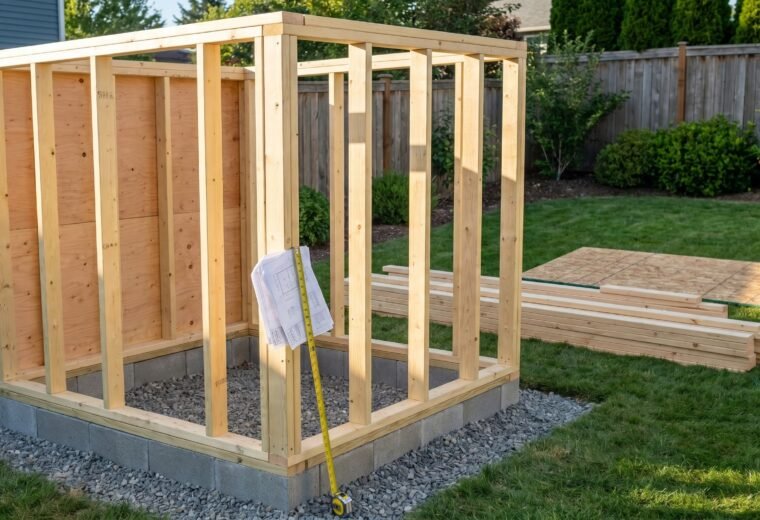
If you go the DIY route, use 2-by-3 or 2-by-4 lumber for the frame and 1/2-inch galvanized hardware cloth for all wire panels. Skip standard chicken wire - its thin gauge and wide hexagonal openings stop nothing determined. A raccoon will tear through inexpensive chicken wire in minutes. If you want framing and door-hanging technique before you pick up a saw, the step-by-step coop build guide is the right starting point - most of those methods transfer directly to tractor construction.
For ready-made options, polypropylene and twin-wall plastic models weigh significantly less than wood, clean quickly, and hold up to UV exposure better than painted pine. The tradeoff is a higher per-unit cost and fixed interior dimensions. Check whether the product uses welded wire or woven hexagonal mesh on the run panels - welded hardware cloth is the only choice worth trusting with predators in the area.
Predator risks specific to a tractor setup
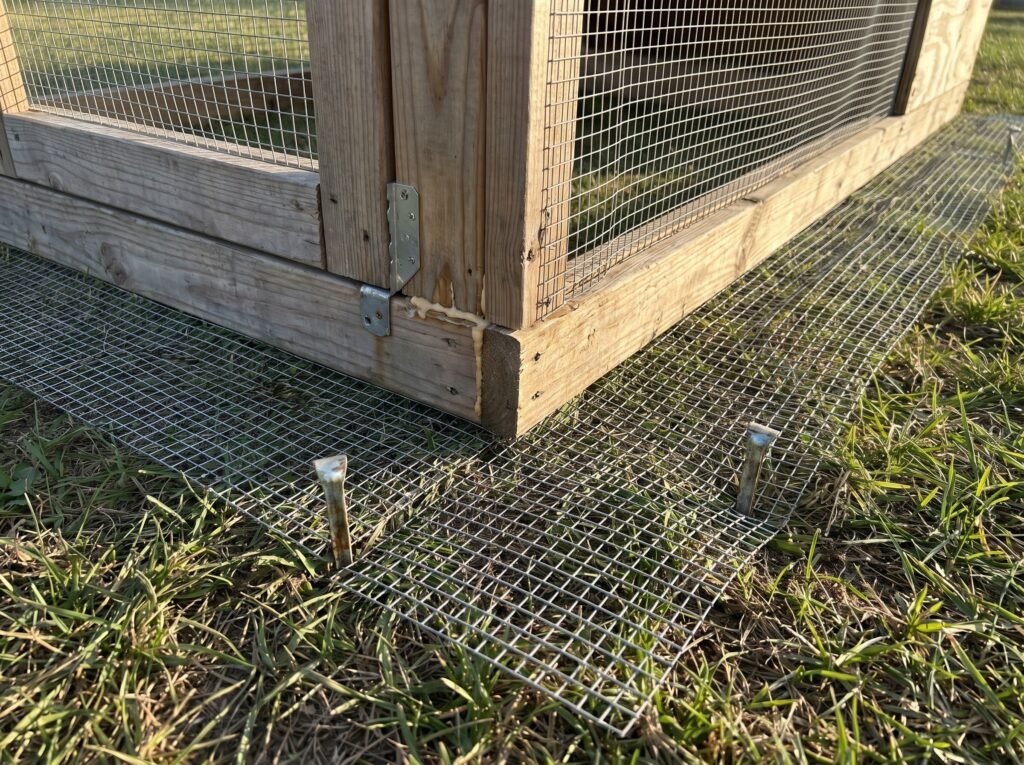
The floorless design creates a digging vulnerability that a fixed coop with a buried wire apron does not have. You can close that gap with a portable skirt, hardware cloth selection, two-step latches, and electric net fencing - and a well-built tractor using all four is significantly harder to breach than most keepers expect.
The floorless design is the feature that lets chickens scratch live soil - and it is also the feature that creates the greatest predator vulnerability. A fixed coop can have a hardware cloth apron buried 12 to 18 inches into the earth around its perimeter. A tractor that moves daily cannot use permanent buried wire.
Several strategies address this gap.
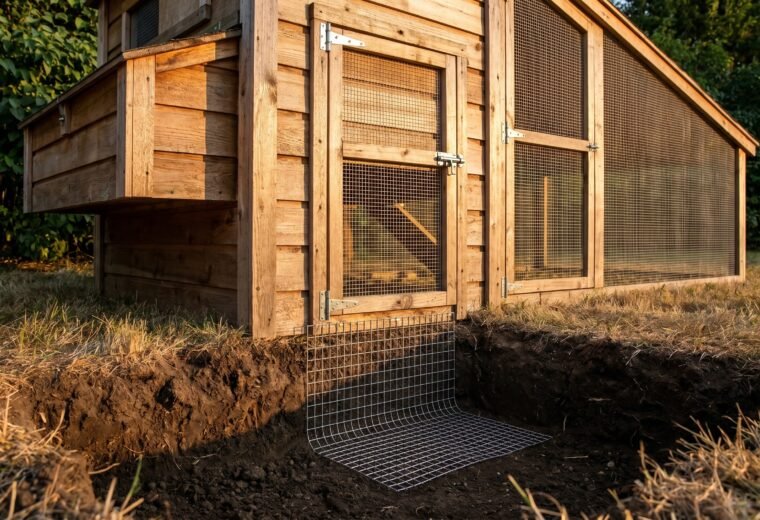
First, a portable skirt. Attach a 12-to-16-inch-wide strip of 1/2-inch hardware cloth along the bottom rails on all four sides so that it lies flat on the ground around the perimeter when the tractor is in place. A fox or raccoon trying to dig under the wall encounters the skirt almost immediately; most give up rather than dig further outward to clear it. Fold the skirt up when moving, then unfold once the tractor is set.
Second, electric net fencing. Penn State Extension recommends surrounding the tractor's rotation field with electric net fencing in high-predator areas, providing a perimeter shock that deters burrowing, reaching through wire, or tearing fence panels. A 164-foot roll is enough to ring a generous rotation area, and the netting moves with the tractor as you shift it across the yard.
Third, hardware cloth selection. Use 1/2-inch galvanized welded mesh for sides and top. Cornell Cooperative Extension notes that raccoons "possess amazing dexterity and have been known to pull chickens through cages by the feet or head" - so even the gaps in 1-inch wire are large enough to be dangerous. At areas like pop-door edges and any narrow openings, step down to 1/4-inch mesh; long-tailed weasels can pass through a 1-inch gap, and juveniles can squeeze through smaller openings than adults.
Fourth, latches. Use two-step carabiner-style or pin-and-slide latches on every door. A single hook-and-eye latch is something a raccoon figures out in one night. Knowing which animal is attacking - and on what schedule - changes which fix you prioritize; the complete predator guide breaks down each threat from aerial hunters to diggers.
Close birds inside the enclosed portion at dusk every night. University of Wisconsin Extension's pastured poultry guide lists predation as "the main disadvantage of pastured poultry" - and most attacks happen between dusk and dawn when birds are on the ground rather than roosted behind secure walls.
Rotation: how often and how far
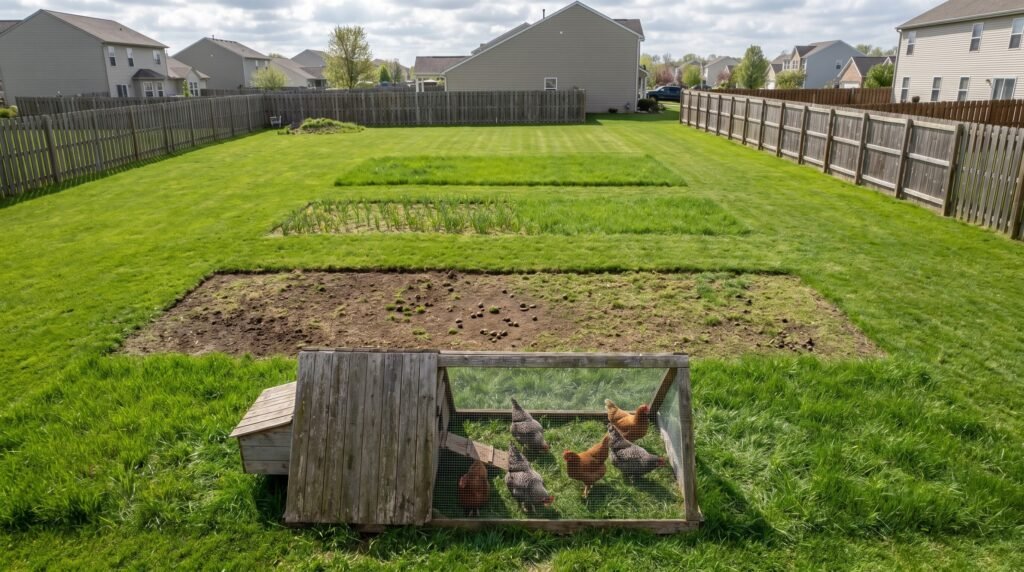
Move the tractor before birds have removed more than half the forage from a given patch - in practice, that means every one to three days for a small laying flock. The land needs a recovery window of several weeks before it is ready to graze again, so the more rotation positions you have available, the healthier the system runs. Yards under 800 square feet often lack the room to make rotation work properly.
Moving the tractor on the right schedule is what keeps the pasture healthy and the birds eating fresh material instead of standing in worn bare ground.
Penn State Extension's pastured broiler guide sets a clear ecological benchmark: once birds have removed 50% of above-ground forage in a given spot, it is time to move. In practice, that translates to a few rules of thumb:
- Weeks 1-3 on pasture (younger, lighter birds, lower forage pressure): move every two to three days
- Weeks 4-6 (heavier birds eating more): move daily
- Weeks 7-8 (full-size broilers or heavy laying hens): consider moving twice daily if forage is disappearing quickly
For a small flock of laying hens in a backyard rather than on a commercial pastured-broiler schedule, every one to three days is a workable starting frequency. Watch the patch behind the tractor: if the grass is grazed to a half-inch stub and the soil is already pocked with scratch marks, you waited a day too long. If the birds are ignoring most of the vegetation, you can stretch the interval a little further.
How much land you need depends on how long the rested patches take to recover. Grass regrowth can begin in three to four days during peak spring growing conditions but may take two weeks or longer during a hot, dry August. In summer heat, practitioners commonly plan for a 25-to-30-day recovery window before a strip is ready to graze again. If you have a 10-bird tractor moving across a 3,000-square-foot backyard with strips of roughly 40 square feet per position, and if you move it every two days, the first position will get close to 60 days of rest before the birds return - generous even in a slow-recovery month. Sketch your yard, count the positions, and check whether the math closes before committing to a tractor as your only housing. Yards under about 800 square feet rarely provide enough rotation room for more than four birds.
A secondary benefit that experienced keepers value: rotating the tractor interrupts parasite cycles. Coccidiosis oocysts deposited in soil take 1 to 7 days to become infectious, depending on temperature, humidity, and the specific Eimeria species involved - warm, moist conditions push toward the shorter end of that range, while cooler or drier conditions extend it considerably. Moving the birds early in that window means they rarely encounter high concentrations of their own infectious material - a genuine health benefit that static runs cannot match. This is also why some keepers use a tractor as an intermediate housing step when transitioning a flock toward partial free-range access, letting birds develop natural immunity to the local environment in a controlled way.
Practical things that trip people up
Most tractor problems trace back to five design or management decisions that seemed minor at build time. Weight, ventilation, water, nest box placement, and roost height each come with a specific correction; catching them before you build saves significant rework. In our experience testing a 4-by-6-foot A-frame on clay soil over a full summer, every one of these issues surfaced within the first month - and each one was easier to fix on paper than after the screws were in.
Weight creep
Builders start with the lightest possible lumber, then add a heavier nest box, a full-sized metal feeder, and a two-gallon waterer. By the time the tractor is finished it needs two strong people to move. Calculate the loaded weight before you build: lumber, hardware cloth, roofing, nest box, feeder, drinker, and the birds themselves. If that number exceeds about 120 pounds, put wheels on it - not as an afterthought but in the original design, with axle blocks built into the frame.
Ventilation at night
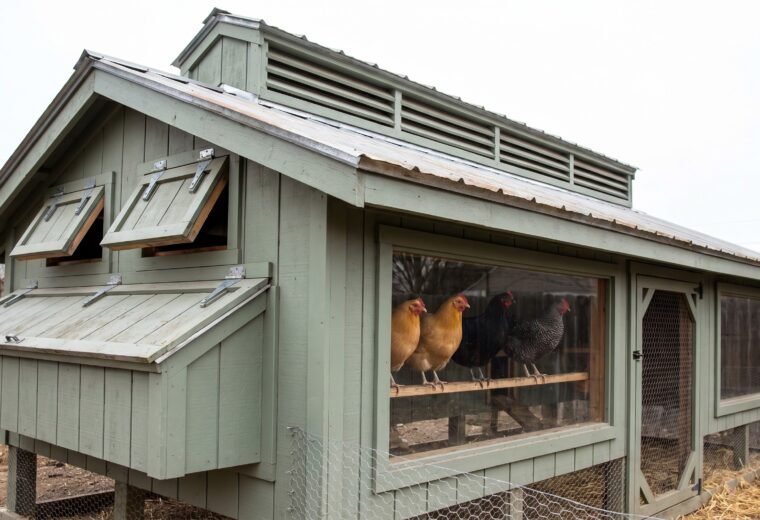
Because tractors are often compact and the enclosed sleeping area is small, ventilation gets squeezed. Chickens produce a surprising amount of moisture and ammonia overnight. The sleeping section needs at least 1 square foot of covered vent opening per 4 square feet of floor space, positioned high in the wall above the roost. A damp, closed-off box is harder on birds than cold air. The same principles apply here as in any coop - the ventilation guide is worth reading if you want the full reasoning behind vent sizing and placement.
Water in summer
A small tractor parked on open ground in July can heat up fast. Position the structure so the enclosed section faces away from afternoon sun, or drape shade cloth over the roof panel. Check water twice daily in hot weather; a small nipple drinker hung inside the run empties quickly when 10 birds are working a sunny patch. A nipple-style system also stays cleaner than an open bowl and spills less when the tractor is moved.
Nest box access
Keepers building their first tractor sometimes place the nest box inside the enclosed section without any external collection door. Collecting eggs then requires opening the main access door, bending double, and reaching across the sleeping area. Build a hinged egg-collection door directly behind the nest box from the start; your back will thank you within the first week.
Roost placement
The roost bar should clear the floor by at least 12 to 18 inches and sit higher than the nest box opening so birds prefer to roost on the bar rather than sleep in the nest. Use a flat 2-by-4 laid wide-side-up rather than a round dowel; chickens grip it more naturally and it puts less stress on their feet over a long night. Allow 8 to 10 inches of bar length per bird so the whole flock can line up comfortably.