What mistakes do beginners make with chicken coops?
The five most commonly documented beginner mistakes are: underestimating space requirements (fewer than 3-4 sq ft per bird indoors), skipping adequate ventilation, using chicken wire instead of hardware cloth, placing nest boxes higher than roost bars, and relying on a single barrel-bolt latch. Each is easy to fix once identified, and correcting any one of them meaningfully reduces flock losses.
Overcrowding, ammonia buildup, and a single flimsy latch - these three factors account for the majority of preventable losses in backyard flocks during the first year. Getting a coop wrong does not always announce itself immediately: birds can look fine for weeks while silently suffering respiratory stress, losing condition from broken sleep, or sitting one visit from a determined raccoon away from disaster. Most of these errors are also remarkably easy to avoid once you know what to look for.
Below is a straightforward rundown of the mistakes most commonly documented in beginner setups, with the numbers and fixes grounded in university extension research rather than rough rule-of-thumb guessing.
Underestimating how much space birds actually need
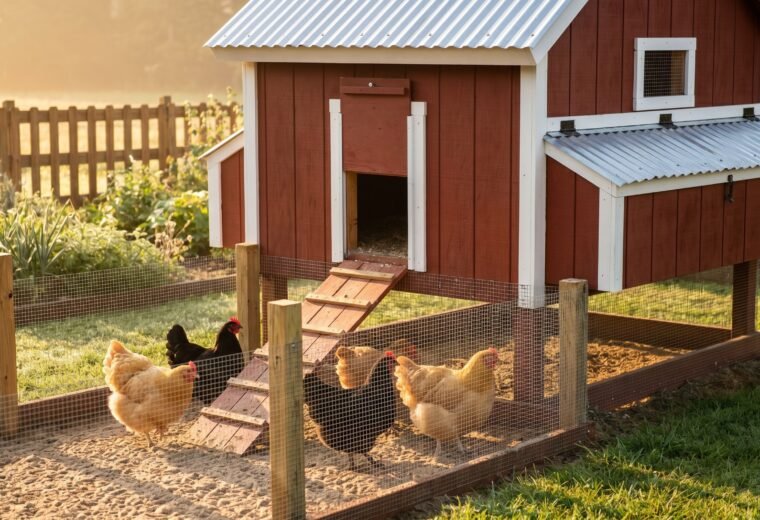
Catalog descriptions for pre-built coops sometimes claim a structure "houses 8 chickens" when its actual floor area barely clears 3 square feet per bird at a squeeze. Virginia Tech Extension's published housing tables put laying hens at 3-4 square feet of enclosed coop space plus 10 square feet per bird in an outdoor run. The University of Minnesota Extension sets a firm floor of 3-5 square feet of indoor space per bird. Bantams can get by on a little less; heavy dual-purpose breeds generally want the upper end of that range or more.
A flock of eight standard laying hens, then, needs at minimum 24-32 square feet of coop floor (roughly a 5-by-6 foot interior) plus an 80-square-foot run alongside it. Many entry-level coops marketed for that flock size fall well short of both numbers.
Tight quarters do more than cause boredom. Overcrowding is a documented trigger for feather-pecking and cannibalism because birds cannot escape one another's attention. Dirty litter accumulates faster in a cramped space, which drives up ammonia faster (more on that below), and stress hormones compromise immunity and tank egg output. If you are still working out the numbers for your specific setup, the coop space per chicken page has the calculations for different flock sizes and run layouts.
One practical tip: buy or build for the flock you will have in two years, not the one you have today. "Chicken math" is a real phenomenon - most keepers add birds. A coop sized exactly for six birds leaves zero room to maneuver if you hatch a clutch or pick up a pair of pullets at a feed swap.
Treating ventilation as optional, especially in winter
This is the single mistake most likely to silently damage a flock over months before a keeper notices. A chicken's droppings are roughly 70% water (University of Minnesota Extension), and a closed-up coop exhales that moisture directly into the air the birds breathe all night. Pair that moisture with the ammonia rising from the litter and you have a combination that injures lungs, causes eye inflammation, and sets the stage for respiratory infections. Research published in peer-reviewed poultry science literature found that ammonia concentrations above 25 parts per million "may have adverse effects on the health and production of poultry." In choice tests, laying hens consistently moved away from air containing 20-40 ppm to choose fresh air.
The smell test is blunt but reliable: if you smell ammonium fumes and see thick cobwebs in your coop, ventilation is inadequate (University of Maryland Extension). If you can smell it kneeling at the pop door, the birds living inside are breathing far worse all night.
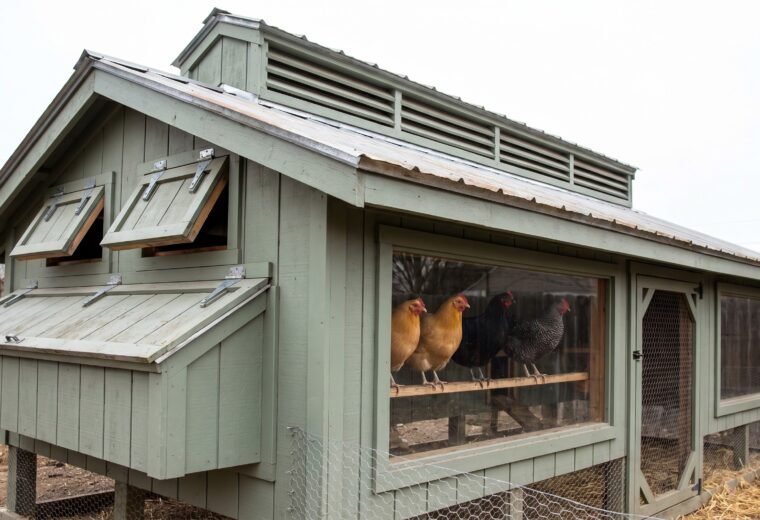
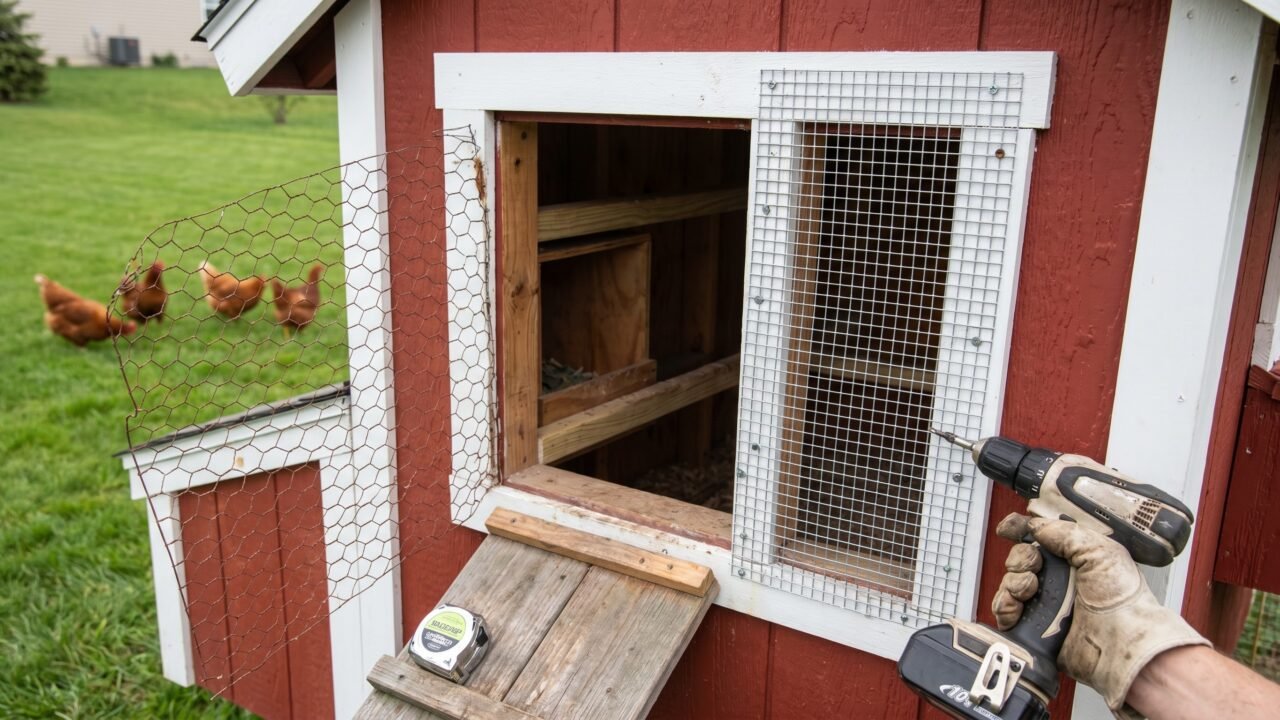
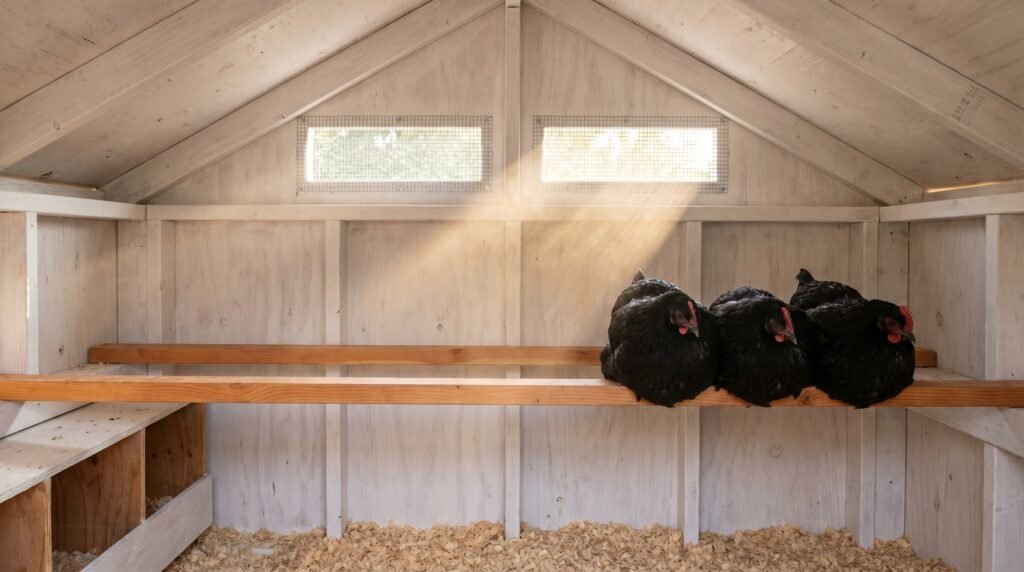
Cold weather does not excuse sealing a coop shut. Moisture buildup combined with cold temperatures causes condensation, which leads to frostbite on combs and toes (University of Minnesota Extension). That is a different kind of harm than ammonia, but just as avoidable. What you want is a coop that is draft-free at roost level but freely exchanging air above the birds' heads. High ridge vents, gable vents, or hardware-cloth-covered openings along the upper walls let warm, wet air rise and escape without blowing across the perch. If you are ready to size and place your vents, the coop ventilation guide walks through the numbers by coop volume.
A commonly cited guideline: aim for at least 1 square foot of vent opening per 10 square feet of coop floor, with the openings positioned well above roost height. A 60-square-foot coop needs roughly 6 square feet of vent area. That sounds like a lot until you realize how much moisture eight birds produce overnight.
Using chicken wire instead of hardware cloth
Chicken wire keeps chickens in. It was never designed to keep predators out. The hexagonal mesh is thin-gauge and the twist joints pull apart under pressure. A raccoon that reaches through a 1-inch hex opening to grab a roosting bird can do so easily, and the fencing often fails entirely within a season of UV exposure and moisture.
When raccoons or members of the weasel family are among local predators, you will lose fewer birds with 1-by-2-inch mesh or smaller welded wire than with lighter 2-by-3-inch fencing (Colorado State University Extension). In areas with least weasels or mink - animals that can compress their bodies through very small gaps - 1/4-inch hardware cloth on all openings is the appropriate call.
University of Maryland Extension specifies a 1/4-inch mesh over windows where chickens roost to deny entry to snakes. The same principle applies to the run: cover every opening with hardware cloth, not chicken wire, and fasten it with screws and washers rather than staples. Staples back out over time; a motivated raccoon can rip out a stapled apron in minutes.
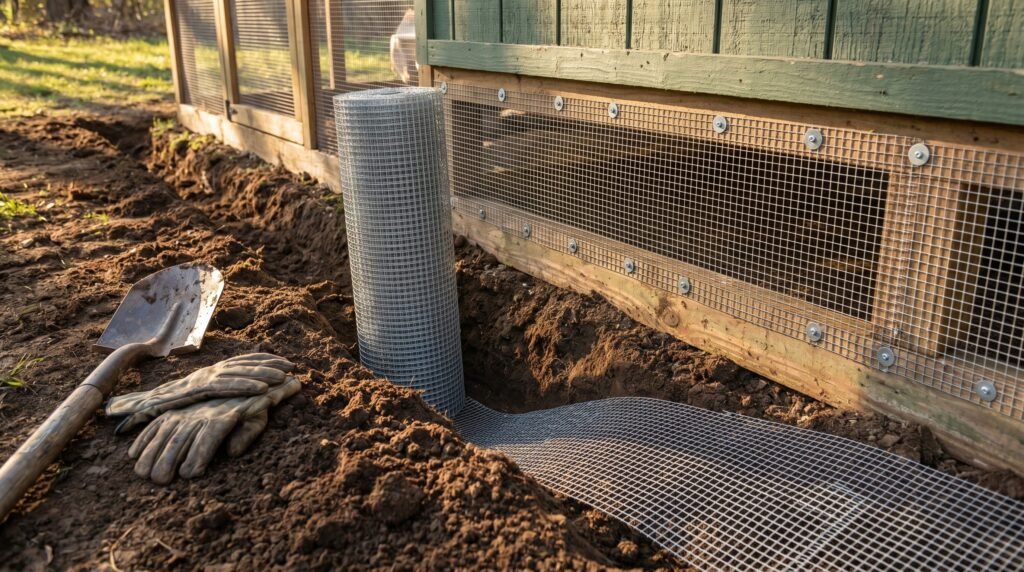
Digging predators - foxes, skunks, opossums - require a buried or outward-apron perimeter. University of Maryland Extension recommends digging "a trench 12 inches to 1.5 feet deep around the entire coop and burying hardware cloth there." The alternative is an L-shaped apron: lay hardware cloth flat on the ground extending 12 inches outward from the base of the wall. Grass grows through it within a season and it becomes invisible, while any animal that starts digging at the base immediately hits wire before it gets anywhere useful.
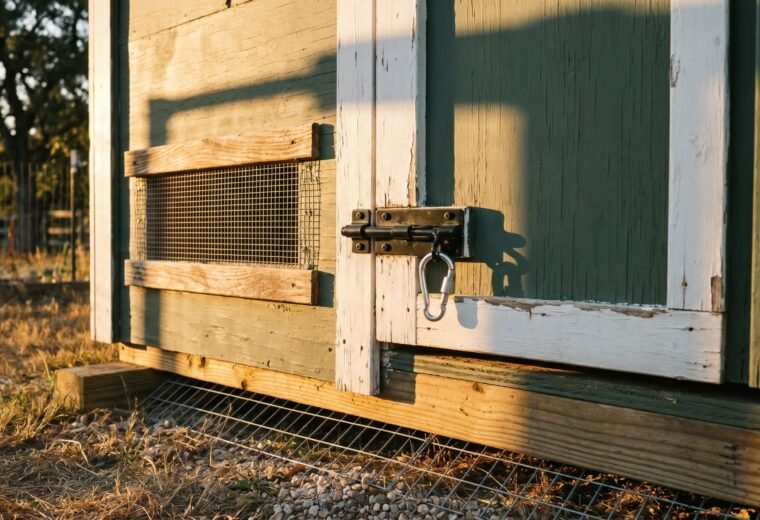
Latches deserve their own mention. A standard barrel bolt takes a raccoon about 30 seconds to slide open. Any door the birds sleep behind should use a two-step latch: a carabiner through a bolt, a sliding pin paired with a hook, or a lockable latch specifically rated for livestock. To check every entry point - pop doors, run gates, and the hardware for each - start with the predator-proof chicken coop overview.
The nest box height trap (and why roost placement fixes it)
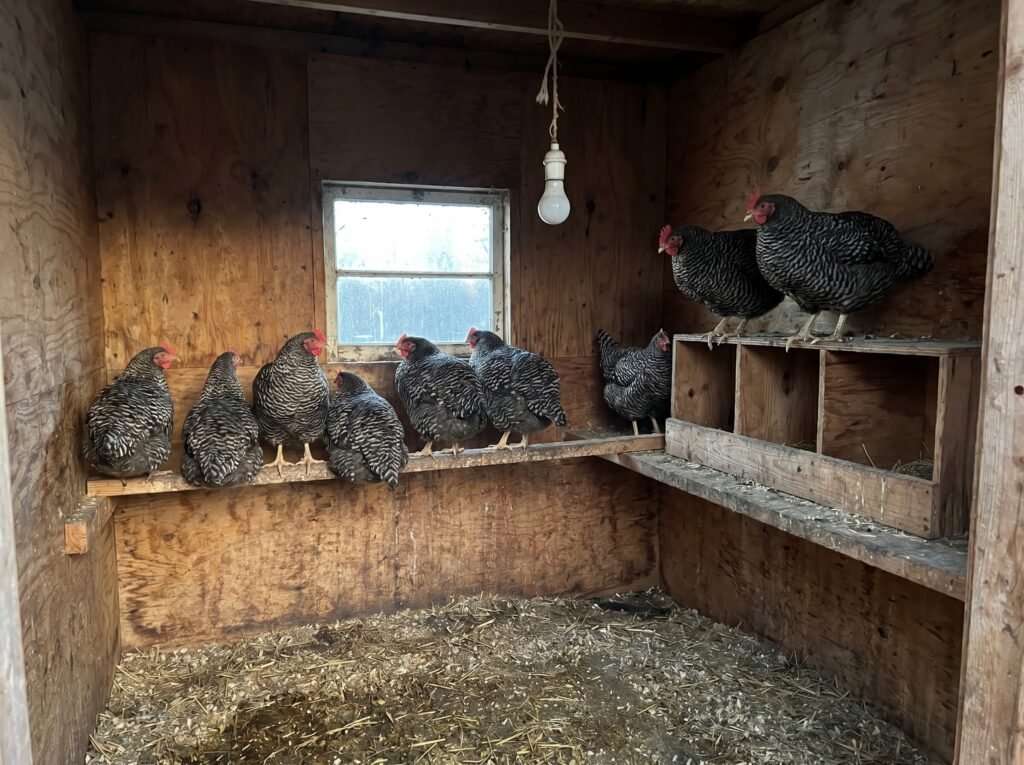
Chickens sleep at the highest point they can reach. That is an instinct carried from their ancestors: height at night means safety from ground-level threats. If nest boxes sit higher than the roost bars - or at the same level - birds will pile into the boxes to sleep, foul the bedding with overnight droppings, and you will collect dirty eggs from day one.
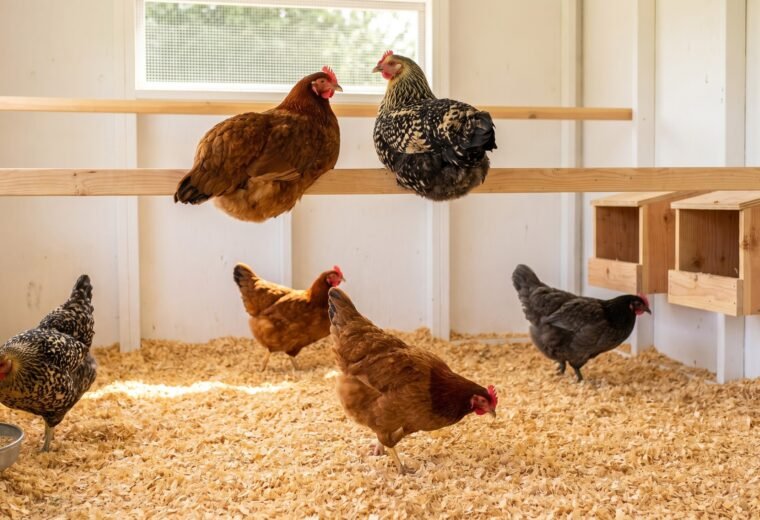
University of Maryland Extension housing guidance is clear: "Keep roosts higher than the nesting boxes." The same source places nest boxes 18-24 inches off the floor once birds are accustomed to using them. The roost must sit meaningfully above the boxes - not just 2 inches higher where a bird on the box edge is essentially at the same elevation. Six to eight inches of height difference is a practical minimum; more is better.
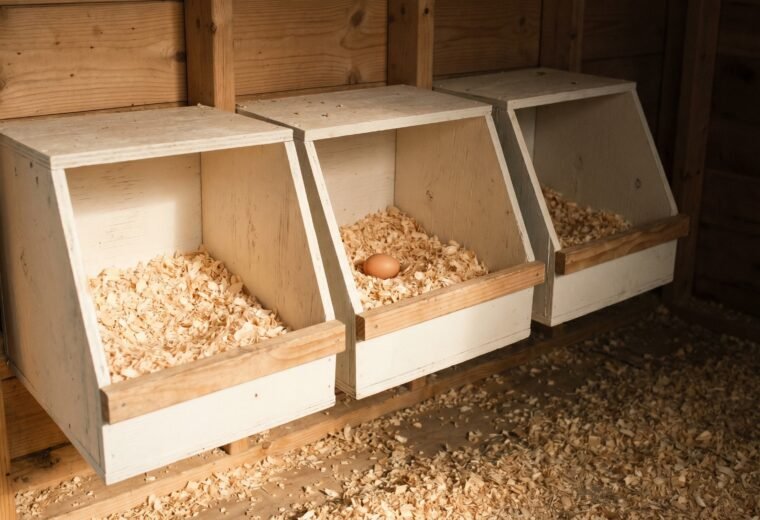
Nest box sizing also trips up beginners in a different direction: going too big. A box that is too spacious encourages two or three birds to pile in together, which leads to broken eggs and soiled bedding. The University of Maryland Extension specification is one 10-by-10-inch box per four to five hens, with 1-2 inches of clean dry straw or pine shavings inside. Note that 10x10 inches is a minimum; large dual-purpose breeds such as Plymouth Rocks, Australorps, and Jersey Giants typically do better with 12x12-inch boxes. Virginia Tech Extension puts the ratio at one box per 4-5 females. Keepers who want consistently clean eggs without daily monitoring will find material choices, curtains, and rollaway options in the chicken nesting boxes guide.
One fix for birds already in the habit of sleeping in boxes: block the boxes each evening for two to three weeks using a piece of cardboard or a hinged board. Birds forced onto the roosts at night re-learn the habit quickly. Pullets going into a new coop for the first time are best physically placed on the roost after dark for the first week - they almost always adopt the roost as home from there.
Skipping the structural basics: floors, latches, and fire risk from heat lamps
A few smaller but still costly mistakes round out the list.
Inadequate flooring. Dirt floors are not inherently wrong, but they demand hardware cloth skirting buried below grade to stop digging predators from tunneling up inside. Wooden floors need to be thick enough (at minimum 3/4-inch plywood, preferably with a painted or sealed surface) to resist moisture rot and rodent gnawing. The tradeoffs between wood, concrete, and dirt are broken down in the chicken coop flooring piece if you are still deciding.
Heat lamps in adult coops. This one is worth plain language: heat lamps are a documented fire hazard on farms. Cornell University's Small Farms Program reviewed heat lamp incidents and found that most consumer-grade heat lamps have "short thin cords, poor connections to the fixture, unreliable attachment points for hanging, and just general cheap construction," and that when a bulb drops into dry straw, the results are predictable. Healthy adult chickens tolerate cold remarkably well provided the coop is dry, draft-free at roost level, and properly ventilated. Most flocks in North American winters do not need supplemental heat. Never hang a heat lamp by the cord (University of Minnesota Extension). If a keeper's climate genuinely warrants some warmth - deep cold with very small or cold-sensitive breeds - flat panel radiant heaters designed for coops carry far lower fire risk than an infrared bulb over a litter bed. Chick brooders are a different question; the choice between a heat lamp and a heat plate is covered separately for that use case.
Building for today's flock, not tomorrow's. Coops are hard to expand and easy to regret sizing. The most common trajectory: start with four birds, add four more after the first spring, discover the coop is cramped by summer. Designing 20-25% more floor area and run space than you think you need costs very little at build time and pays back immediately in calmer birds and simpler management.
A quick-reference comparison: common mistakes and their fixes
| Mistake | What goes wrong | The fix | Key number |
|---|---|---|---|
| Coop too small | Pecking, foul litter, stress, egg drop | Minimum 3-4 sq ft/bird indoors + 10 sq ft/bird in run | 3-4 sq ft (VT Extension) |
| No ventilation or sealed in winter | Ammonia injury, respiratory infections, frostbite | High-placed vents above roost level; 1 sq ft vent per 10 sq ft floor | 25 ppm ammonia threshold (PMC) |
| Chicken wire on run | Raccoon breach, weasel entry, wire failure | 1x2-inch or smaller welded-wire mesh (1/4-inch in weasel country); screw-and-washer fastening | 1x2-inch mesh or smaller (CSU Extension) |
| Nest boxes too high or no height gap | Birds sleep in boxes; dirty, broken eggs | Roosts 6+ inches above boxes; boxes at 18-24 inches off floor | 1 box per 4-5 hens, 10x10 in (UMD Extension) |
| No buried perimeter wire | Foxes and skunks tunnel in overnight | 12-18 inch buried apron or L-apron laid flat outward | 12 in minimum depth (UMD Extension) |
| Simple barrel-bolt latch | Raccoons open it in under a minute | Two-step latch or carabiner-through-bolt on every door | Any latch a raccoon can't manipulate |
| Heat lamp in adult coop | Fire risk; dry healthy adults don't need it | Radiant panel heater if heat is truly needed; no lamp over bedding | Most flocks need no supplemental heat |
How to check your own coop in under 10 minutes
Walk through at dusk, when the birds have gone in for the night. Check these in order:
- Space count. Count the birds and multiply by 3-4. If the floor area of the coop falls short of that number, you either need a larger structure or need to cut flock size. Be honest: measure the actual sleeping area, not the total footprint including nest box alcoves.
- Smell and eyes. Close the pop door. Wait 90 seconds. If you smell any ammonia, ventilation is insufficient. Look up - condensation on the roof boards is the same diagnosis.
- Wire inspection. Grab the run mesh and pull. Chicken wire will deflect dramatically. Hardware cloth should feel rigid and fastened firmly at every edge. Check corners - that is where staples fail first.
- Roost vs. nest height. Stand back and look at which is higher. If it is not obviously the roost, you will find birds sleeping in boxes.
- Latches. Try to open each latch using only one hand. If you can do it, a raccoon can too.
- Perimeter. Walk the run base and look for fresh scratch marks, soft soil, or gaps where the wall meets the ground.
Any issue you find tonight can be fixed before it becomes a loss. Good coop design is not complicated - it is mostly a matter of taking the known failure points seriously before they fail.