Most backyard eggs do not need washing at all. A quick dry-brush or gentle wipe removes the loose debris that bothers most keepers, leaves the protective cuticle intact, and means the egg can sit on the counter for days without refrigeration. Washing is a genuine option when the egg is visibly soiled, but it triggers an immediate requirement: refrigerate at or below 40°F from that point forward, because washing strips the coating that does the protective work.
Both rules come from the same biology. Every freshly laid egg is covered in what extension specialists call the bloom - a moist, thin coating that partially seals the shell's pores against bacteria. Once you wash it away, that barrier is gone and the egg behaves like a commercially washed egg: safe, but cold-dependent.
Dry cleaning: the right first move for most eggs
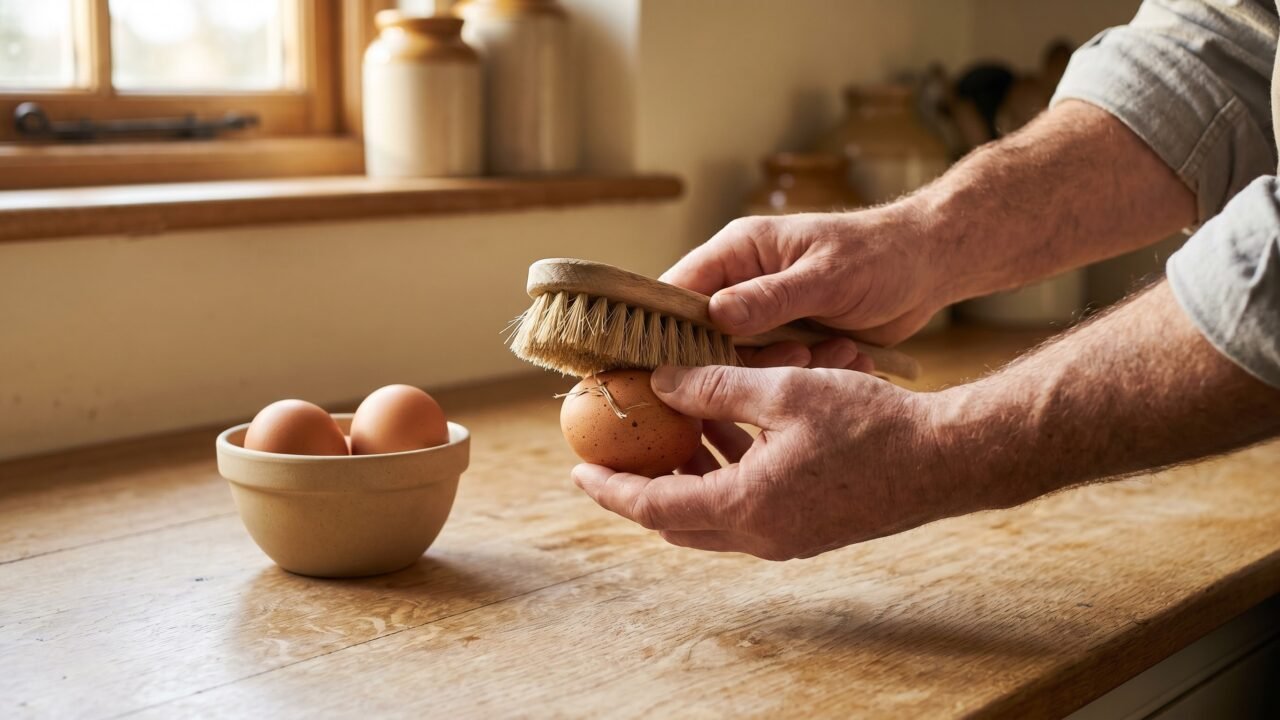
Before reaching for water, check whether the egg actually needs it. Eggs collected promptly from a clean nest box are often spotless or carry only a smear of dried bedding. A dry brush, a rough-textured cloth, or fine sandpaper handles that kind of dirt without disturbing the bloom at all.
University extension guidance (Ask Extension / Iowa State) recommends using "fine sandpaper, a brush, or emery cloth" for eggs with surface dirt and debris. A stiff-bristled vegetable brush or an old toothbrush works on the same principle. Brush outward from the soiled spot with short, light strokes, then wipe with a clean dry cloth.
Dry-cleaned eggs retain the bloom and can be refrigerated or left at room temperature, whichever you prefer. Michigan State Extension notes that choosing not to wash eggs "is a personal decision and may be stored at room temperature." University of Arizona Cooperative Extension cites up to 2-3 months for properly handled unwashed eggs stored in a carton, though quality is best in the first one to two weeks. Keep them cool and out of direct sunlight if you go that route.
One situation calls for discarding rather than cleaning: a cracked egg or one where the contents have begun to seep. No cleaning method makes those safe.
When you do wash: the 20°F rule
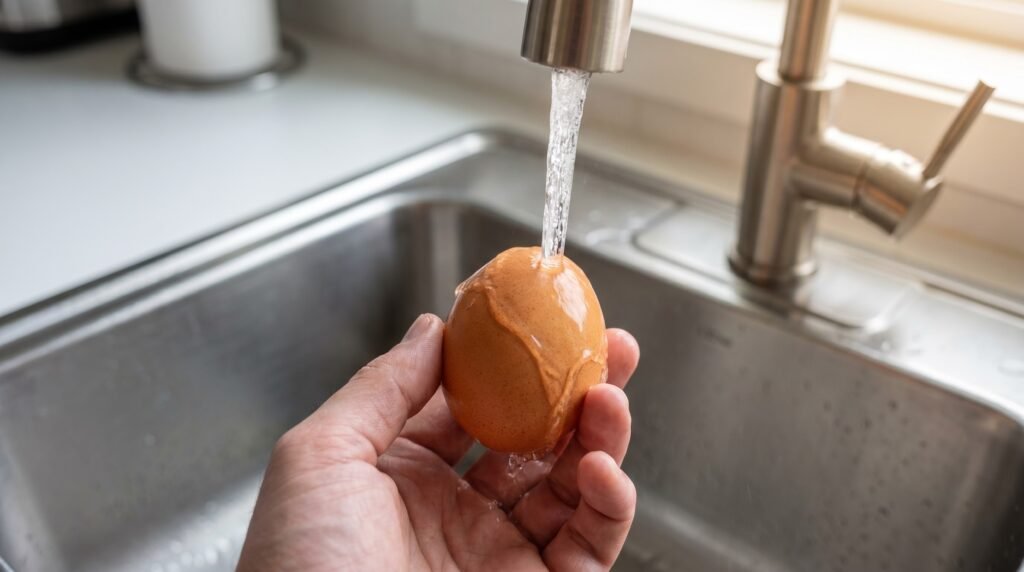
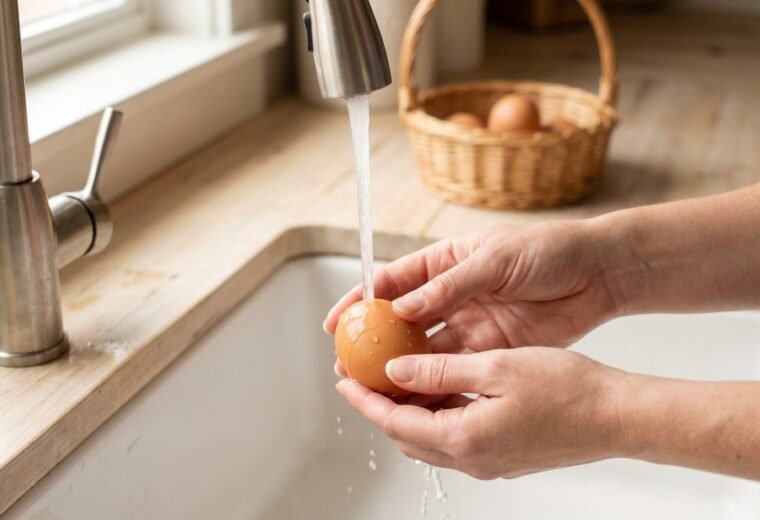
Some eggs arrive from the nest truly dirty - ground into the bedding, or laid in an unexpected spot overnight. Washing is the right call there, but water temperature is not optional.
Penn State Extension is specific: wash in water "at least 20°F higher than the internal temperature of the egg, and a minimum of 90°F." The reason is physical. Warm water causes the egg's contents to expand slightly, creating outward pressure that keeps contaminated water from being pulled in through the pores. Cold or lukewarm water does the opposite - it causes the shell to contract and can pull surface bacteria inward.
The University of Arizona Cooperative Extension keeps the rule simpler for home use: "use water that is slightly warmer than the egg." Both formulations lead to the same practice. Run the tap until it feels distinctly warm on the inside of your wrist - well above lukewarm.
Two other things matter during the wash:
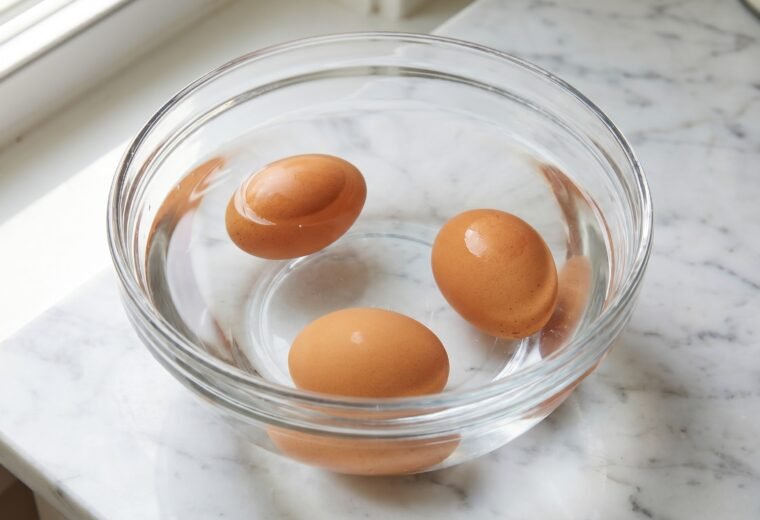
- Do not submerge eggs. Agitate one egg at a time under running water or in a small amount of washing solution. Penn State warns that once water temperature equalizes with the egg, the egg "can absorb contaminants in the water."
- Do not scrub the shell. A soft cloth or sponge is enough. Scrubbing can abrade the shell surface and create micro-damage.
If soap is needed for heavy soiling, use a non-foaming, unscented detergent - a plain dish soap free of dyes and added fragrances. Scented products can be absorbed through the shell and affect flavor.
After washing, rinse briefly in water that is slightly warmer than the wash water, then set the egg on a clean towel and let it air dry before placing it in a carton. Penn State specifies drying before packaging because moisture can enter shell pores as the egg cools.
Refrigeration after washing: not a suggestion
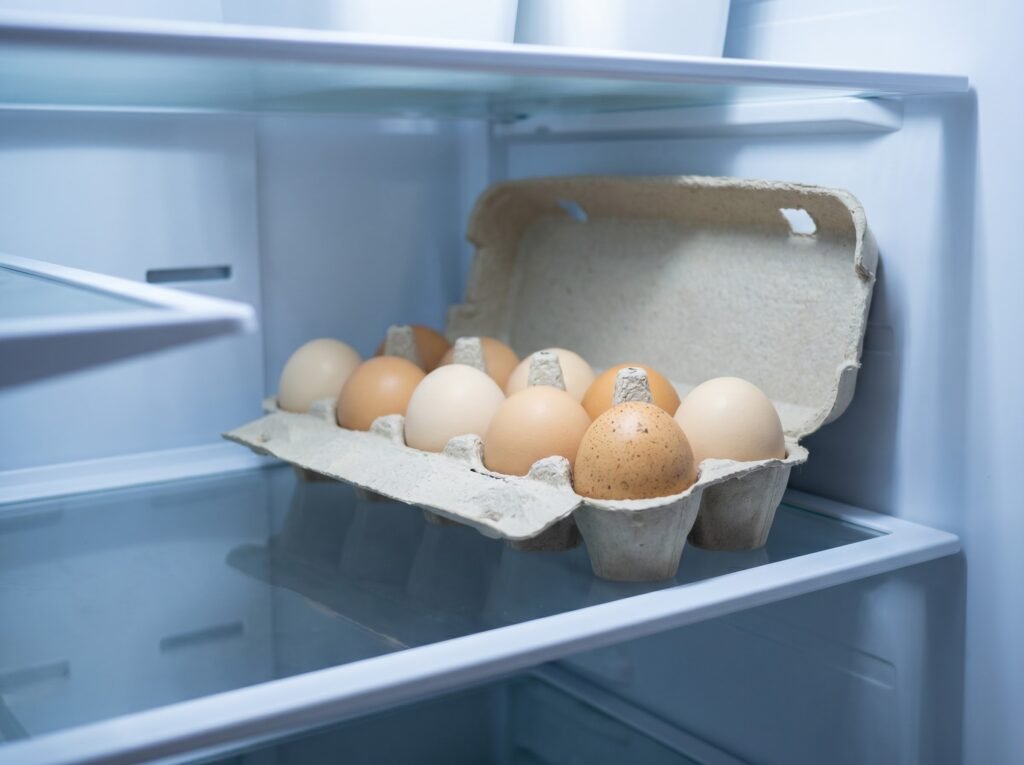
Once you wash an egg, refrigeration becomes mandatory. Michigan State University Extension explains the mechanism directly: "If the eggs have been cleaned and sanitized, then they do require refrigeration as the protective natural coating (the cuticle) has been removed."
Store washed eggs at 40°F or below, large end up, in the main body of the refrigerator rather than the door. The door sees the most temperature swing every time you open it, and eggs absorb flavor from nearby foods. Penn State's guidance on temperature is 40-45°F; the USDA danger zone begins above 40°F, so staying at or below that mark keeps you safely clear of the range where bacterial growth accelerates.
One more thing: once an egg has been refrigerated - washed or not - keep it cold. A refrigerated egg brought back to room temperature will condense moisture on its shell; that surface dampness can allow bacteria to move through the pores more readily. A washed egg that has been in the fridge for two days should not be left on the counter for a few hours and then put back.
For a broader look at how collection timing and storage affect shelf life, our collecting and storing eggs guide covers the full chain from nest box to kitchen.
Decision table: dry clean vs. wash
| Egg condition | Recommended approach | Storage after |
|---|---|---|
| Clean or light surface dust | Dry-brush or dry cloth; skip water entirely | Counter (best quality in 1-2 weeks; UA Extension cites up to 2-3 months unwashed) or refrigerator |
| Dried mud or bedding stuck to shell | Dry-brush first; wash only if debris remains after brushing | Refrigerator at 40°F or below if washed |
| Visible manure or wet soiling | Wash: warm water (90°F minimum, at least 20°F above egg temp), no scrubbing, dry completely | Refrigerator at 40°F or below, mandatory |
| Cracked or seeping | Discard | N/A |
What not to do
Here is what to avoid, and why each matters for food safety:
- Cold or room-temperature water. The contraction effect is real. Always use water that is noticeably warm to the touch.
- Soaking. Leaving eggs sitting in a bowl of water - even warm water - lets temperature equalize and defeats the purpose.
- Scrubbing with abrasive pads. Coarse scrubbers scratch the shell and can push contaminants into small abrasions.
- Leaving washed eggs at room temperature. A washed egg on the counter is not unsafe for a short time, but it has no bloom left to help it. Refrigerate it the same day you wash it.
- Washing all eggs at collection, regardless of cleanliness. Washing removes the bloom and adds a refrigeration requirement. Reserve it for eggs that genuinely need it.
The question of whether to wash at all - and why the answer differs between backyard keepers and commercial producers - is explored in detail in our should you wash fresh eggs article, which covers the regulatory split between US commercial practice and what small-flock owners actually need to do at home.
Keeping eggs cleaner before they need attention
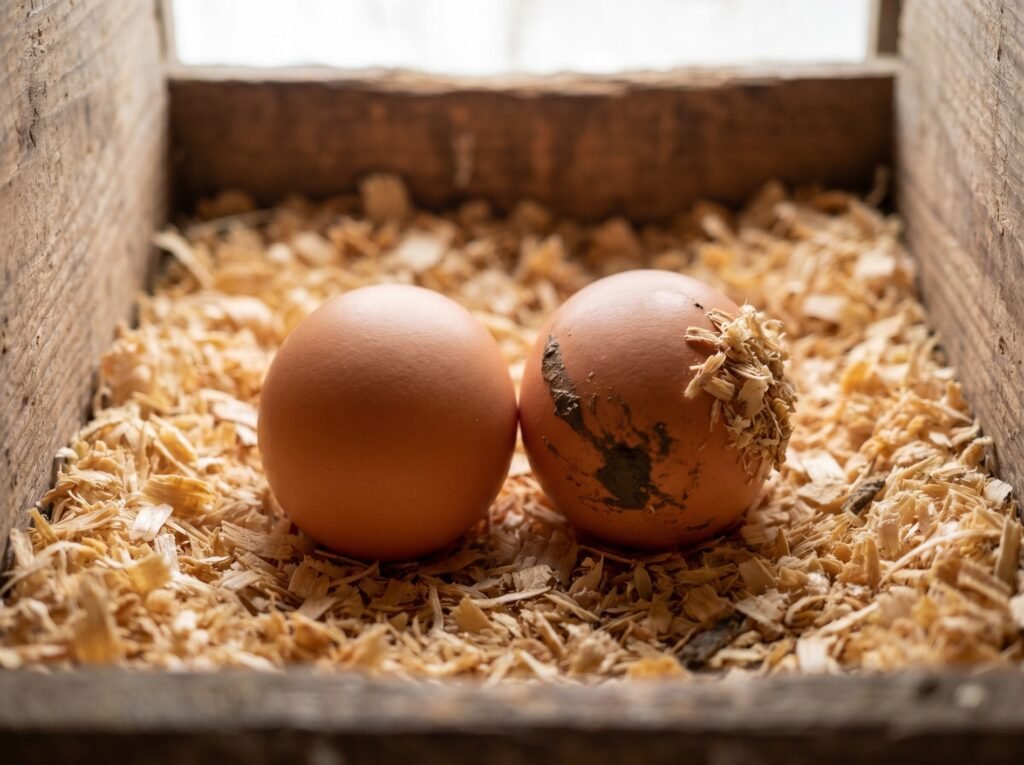
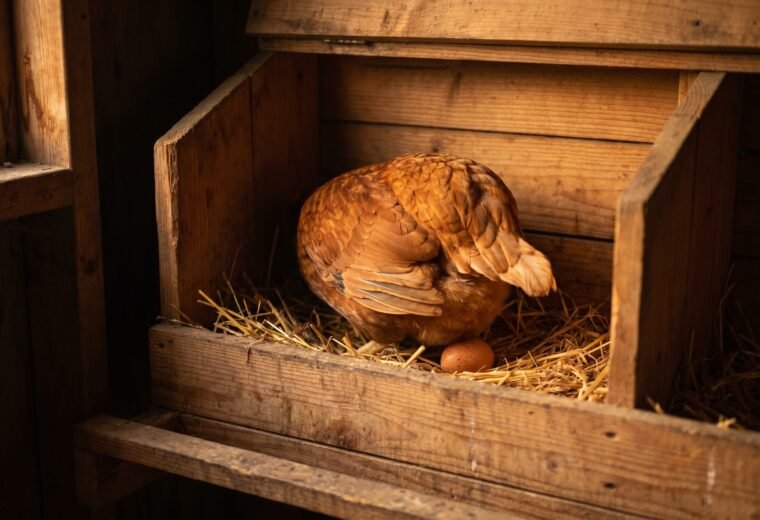
The most reliable way to avoid dirty eggs is to make them less likely in the first place. Hens that lay in a clean, bedded nest box leave far fewer soiled shells than hens laying on bare ground or in a crowded box.
Practical steps that keep a flock of 15 hens producing consistently clean eggs:
- Collect eggs at least twice a day. University of Arizona Cooperative Extension specifically recommends collecting "at least 1-2 times a day." Eggs that sit in the nest overnight gather more debris and are more likely to be stood on or broken.
- Keep nest box bedding fresh. A thin layer of pine shavings or straw, refreshed weekly, costs almost nothing and dramatically reduces contact soiling.
- Make sure roosts sit higher than nest boxes. Hens naturally seek the highest perch to sleep; if the nest box is the highest spot, they will roost there and foul it.
- Block nest boxes at night. Some keepers close off the boxes after the laying day ends (typically by early afternoon for most breeds). Fewer overnight occupants means cleaner bedding in the morning.
If you are routinely washing half your eggs, the nest box setup is worth revisiting before the cleaning routine. A coop that consistently produces clean eggs is a design problem solved at the source, not a cleaning problem managed by hand.
Understanding what a normal egg looks like - texture, shell integrity, interior when candled - is part of the same set of skills. Our how to tell if an egg is fresh guide walks through the float test and other quick checks. And for a deeper look at egg biology itself, the chicken eggs overview covers shell structure, yolk grades, and what affects flavor.