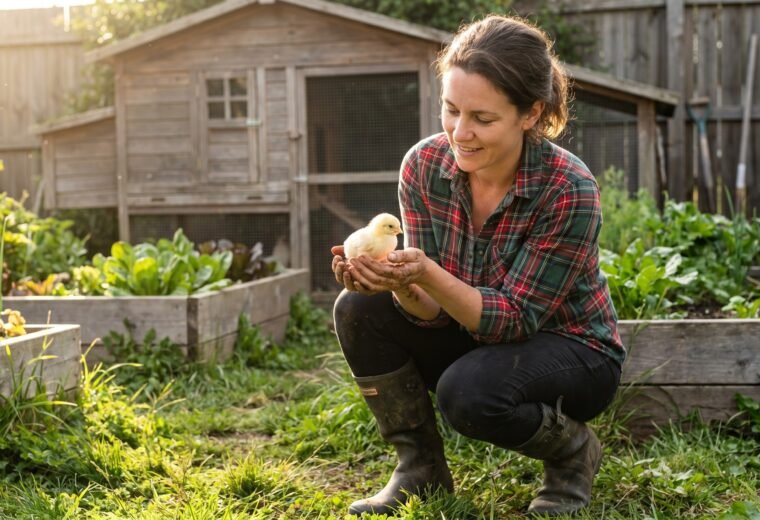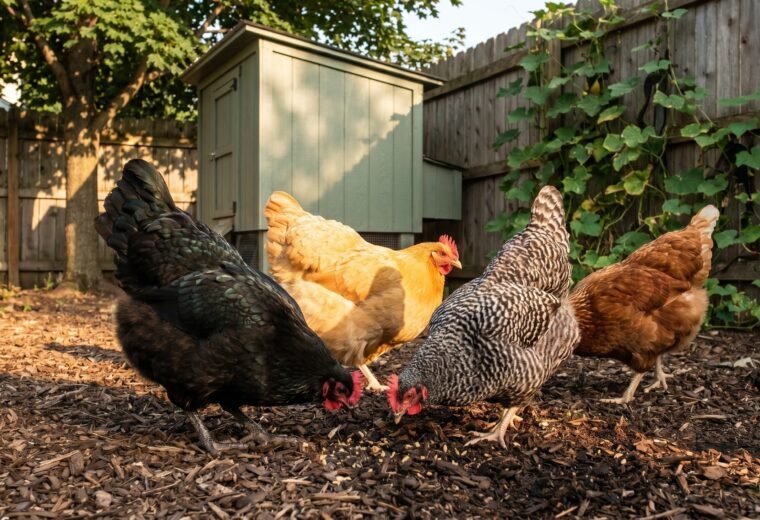
Purely on the cost of eggs, backyard chickens almost never pencil out. That is not a cynical take - it is the straightforward conclusion from university extension economists who have run the numbers, and it is worth saying clearly before anything else. Yet millions of people keep chickens anyway, and most of them do not regret it. The reason is that "worth it" covers a lot more ground than the grocery receipt.
This guide works through the real first-year numbers for a small flock, the recurring costs you will carry every year, why the math improves (a little) over time but never flips to a savings story, and the genuine non-financial returns that actually drive most flock owners. It also covers who genuinely should not start - because the chicken internet trends toward relentless enthusiasm and the honest warnings get soft-pedaled.
What a small flock actually costs
A four-hen flock is a common starting point, so the figures below use that size. The table shows typical first-year ranges compiled from extension budgeting frameworks; your actual numbers will land somewhere in these bands depending on whether you build, buy, or salvage your coop.
| Expense | Typical first-year range | Notes |
|---|---|---|
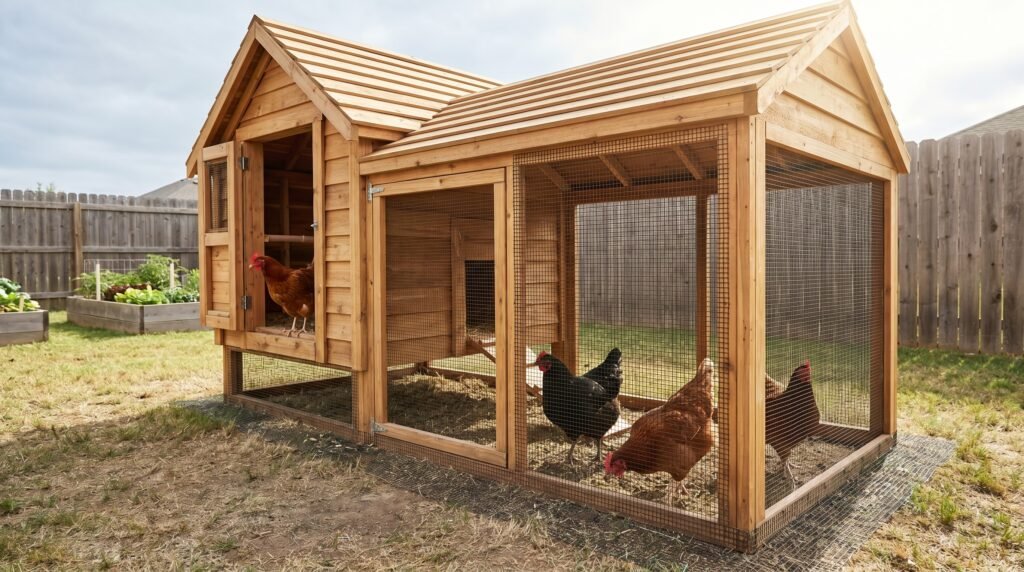
| Coop (DIY basic build) | $300 - $700 | Lumber, hardware cloth, roofing; excludes labor. Pre-built runs $500 - $2,000+. |
| Run and predator fencing | $80 - $250 | Hardware cloth at 1/2-in mesh; apron or buried perimeter recommended. |
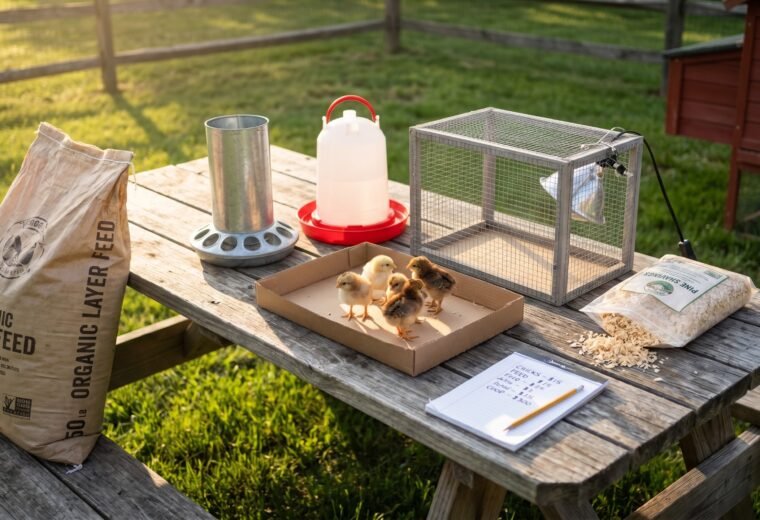
| Feeder, waterer, accessories | $30 - $120 | Basic gravity types on the low end; heated waterer for cold climates adds cost. |
| Chicks or started pullets (4 birds) | $15 - $100 | Day-old chicks ~$4-8 each; point-of-lay pullets ~$20-35 each. |
| Brooder supplies (if starting with chicks) | $30 - $80 | Heat plate, thermometer, litter; skipped if buying started pullets. |
| Feed (layer pellets, first year) | $80 - $130 | Four hens eat roughly 1 lb of feed total per day; 50-lb bags run $20-35 at current prices. |
| Bedding (pine shavings) | $30 - $60 | Never cedar - the aromatic oils are harmful to respiratory systems. |
| Oyster shell, grit, misc. supplements | $15 - $30 | Calcium is mandatory once hens start laying. |
| Vet or unexpected costs | $0 - $200+ | Highly variable; predator loss, injury, or illness can spike this sharply. |
| First-year total (estimated) | $580 - $1,670+ | Wide range driven mostly by coop choice. |
After the first year, the one-time coop and setup costs drop away. Ongoing annual costs for four hens settle around $200 - $350 (feed, bedding, oyster shell, miscellaneous), assuming no major health events. Feed accounts for roughly 70% of that recurring figure, a proportion consistent with what UF/IFAS Extension reports for backyard flocks generally.
The egg math: why it rarely beats the store
Four hens at solid production - say, a Rhode Island Red or a Golden Comet laying 260 eggs a year each - generate about 1,040 eggs annually, or roughly 87 dozen. UF/IFAS extension reports a general average of 200-240 eggs per hen per year (17-20 dozen); a high-producing breed like a Rhode Island Red or Golden Comet will exceed that average and deliver 250-280 at peak, so the figures below use a production-breed assumption. If you choose a heritage or dual-purpose breed, reduce the egg totals by 15-25%. That sounds like a lot until you run the per-dozen cost.
One more factor first-year buyers often miss: if you start with day-old chicks rather than point-of-lay pullets, your birds will not produce a single egg for roughly 18-20 weeks. During that window you carry full feed, bedding, and brooder costs with zero return. That gap - five months of expenses with no eggs - should be factored into your first-year math.
If you spent $900 on setup and $275 per year on ongoing costs, a simple five-year average looks like this:
- Total five-year cost: $900 + (5 × $275) = $2,275
- Total eggs over five years: roughly 390 dozen - years 1 and 2 at full output (87 dozen/year each = 174 dozen), years 3-5 at roughly 80% of peak (about 70 dozen/year = 210 dozen total), giving 384 dozen, rounded to approximately 390 dozen after accounting for variation
- Average cost per dozen: about $5.83
That number assumes no vet bills, no predator losses, no flock replacement costs, and that all four hens lay at their breed peak every year - none of which are safe assumptions. UF/IFAS Extension's analysis found that feed alone, without coop amortization or any other costs, ran about $6.11 per dozen eggs. Mississippi State Extension puts it plainly: buying eggs at the store is probably cheaper and less work. That verdict holds even during periods when retail egg prices spike, because your input costs (feed, bedding, electricity for a heated waterer in winter) also track inflation.
Two factors can narrow the gap but do not close it. Letting hens free-range on good pasture reduces feed consumption and improves egg nutrition - but that requires the land, the time to manage rotational access, and predator protection overhead. Raising a production breed such as a Golden Comet or a White Leghorn (280-320 eggs per year at peak) rather than a dual-purpose heritage breed squeezes more eggs per pound of feed. Neither strategy turns a profit; both reduce the loss per egg.
Our full chicken cost breakdown goes deeper into line-by-line expenses across the first three years, including the coop amortization math that most quick-start guides skip.
What people are actually buying when they buy chickens

A USDA survey of backyard flock owners found that fun and hobby was the leading reason people cited for keeping chickens - ahead of food production. In a broader research survey, 63% of owners described their birds as gardening partners, and 57% called them pets. These are not footnote motivations. They are why most people who crunch the numbers honestly still go ahead and build the coop.
What the non-financial returns look like in practice:
- Egg quality you control. Penn State research found pastured hens produce eggs with twice the vitamin E and long-chain omega-3 fats, and less than half the omega-6:omega-3 ratio, compared to commercially caged hens. That advantage depends on your birds actually foraging on living pasture - a concrete diet difference, not marketing language. The same study noted pastured hens laid about 15% fewer eggs, so the trade-off is real.
- Garden fertility. Properly composted chicken litter - manure mixed with pine shaving bedding - is a legitimate soil amendment high in nitrogen, phosphorus, and potassium. Composting it hot (extension guidance cites 140-160°F as sufficient to kill pathogens like Salmonella and E. coli) turns a waste-management chore into a garden resource.
- Daily rhythms and stress. The emotional literature on animal companionship applies here; the extension.org article on urban chicken regulations notes that flock keeping is associated with reduced feelings of loneliness and isolation. That is a soft variable but a real one for people who work from home or live alone.
- Children and food connection. Teaching kids where food comes from - and having them participate in the daily routine - was one of the top reasons new keepers gave for starting in 2020-2022, alongside hobby interest.
- Food supply resilience. About 23% of new entrants during the 2020-2022 period cited concern about food-supply disruptions. A laying flock does not replace grocery shopping, but it does provide a steady local egg stream independent of retail shortages or price spikes.
None of these returns show up in the egg-price math. If you value them, the cost gap is offset by something real. If you do not, the math is the honest answer.
Time: what caring for a small flock takes each day
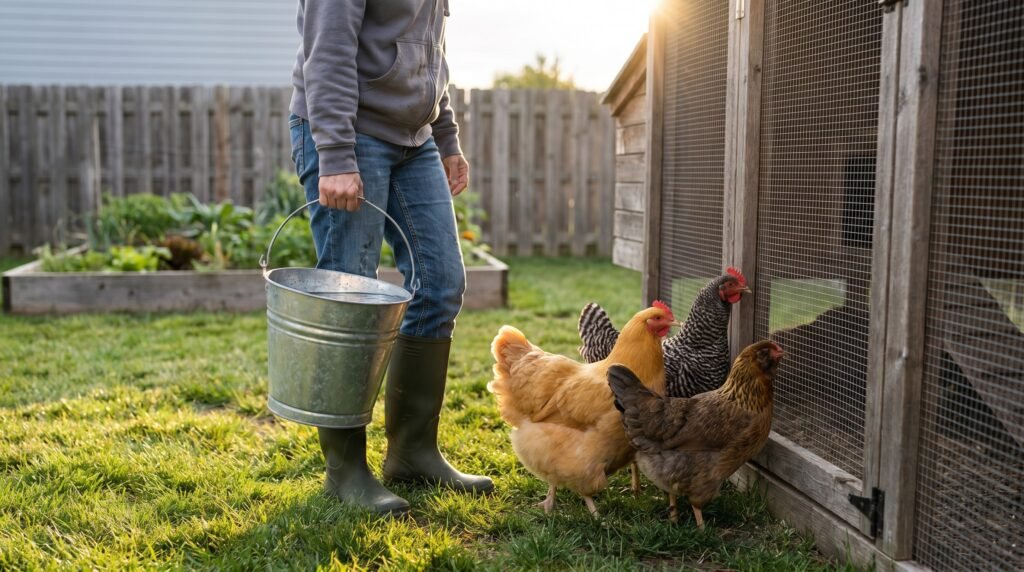
Small flock care runs 10 to 20 minutes on most days: open the coop in the morning, check feed and water, collect eggs, close up at dusk. Weekly coop cleaning - removing soiled litter, scrubbing waterers, refreshing bedding - adds another 20 to 45 minutes for a four-hen setup using the deep litter method. Deep litter done right (4-6 inches of pine shavings, managed so the surface stays dry) cuts cleaning frequency, but wet litter is the enemy and needs immediate attention whenever it appears.
The harder commitment is the daily dependency. Chickens need care every single day, including holidays and the days you feel terrible. Before you travel, you need someone reliable to cover: open the pop door, check water, collect eggs, close up at night. Automatic coop doors help with the morning and evening bookends but do not replace someone checking food, water, and bird health. If you travel frequently and do not have a neighbor or friend willing to chicken-sit, that logistics problem is real and recurring.
The full breakdown of what a chicken care routine actually takes week by week is worth reviewing before you decide - especially the seasonal differences between summer and a cold January with frozen waterers.
Legal and neighbor considerations that bite beginners
Check your local rules before buying anything. eXtension's urban poultry resource reports that most city ordinances cap flocks at five to six hens, prohibit roosters because of noise, and require coop setbacks from property lines. HOA communities frequently prohibit poultry entirely - and the CC&Rs in deed-restricted communities are legally enforceable regardless of what your neighbors informally agree to. Your city clerk or local cooperative extension office can tell you what applies in your jurisdiction.
University of Minnesota Extension flags five concerns that come up in neighbor complaints about backyard flocks: disease, noise, odor, pests, and waste. Odor is manageable with regular coop cleaning; odor from a neglected coop, however, is a genuine neighbor problem. Hens are quieter than roosters but they do produce a loud egg-song after laying - a five-second burst of enthusiastic clucking that carries across a small yard. The disease concern centers on Salmonella: the Minnesota extension notes that Salmonella outbreaks linked to backyard poultry have increased, and CDC data from that source shows 45% of cases involve children. Thorough handwashing after any contact with birds, eggs, or coop surfaces is not optional.
If you want to understand your specific local rules before committing, our guide to checking local chicken ordinances walks through what to look for and where to find the relevant documents.
Who should and should not start a flock
A direct split is more useful than a hedged "it depends."
Chickens are likely a good fit if you:
- Have outdoor space to build or place a proper coop (at least 4 sq ft of interior per bird - 16 sq ft for four standard hens - plus a secured run at roughly 8-10 sq ft per bird; 3 sq ft per bird is the cramped minimum found in some older guides and is below current extension recommendations)
- Genuinely want a daily outdoor routine and see the morning egg check as a pleasure, not a chore
- Have at least one reliable backup person for when you travel
- Live in a jurisdiction that permits hens and have confirmed it
- Are interested in a garden - the compost integration is a real secondary return
- Have children who will benefit from the responsibility and the direct food-source education
Chickens are probably the wrong call if you:
- Are primarily motivated by saving money on eggs - the math does not support it
- Travel several times a year without a trusted sitter lined up
- Live in a rental, an HOA community that prohibits poultry, or a municipality without clear hen allowance
- Are not prepared for the reality that birds get sick, get injured, and sometimes die suddenly - often with limited veterinary options for poultry
- Want low-maintenance, "set it and forget it" livestock - there is no such thing in this category
- Have young children and are not yet comfortable enforcing strict post-contact handwashing routines (the Salmonella risk is real - CDC data shows 45% of poultry-linked Salmonella cases involve children, making consistent hygiene non-negotiable)
Flock size matters too. Starting with two or three hens instead of six or eight reduces the initial investment, the daily feed cost, and the emotional stakes if something goes wrong early. Our guide to choosing flock size covers the minimum-flock tradeoffs and why four is generally a more stable social minimum than two (one loss in a two-hen flock leaves a single bird, which is genuinely stressful for the remaining animal).
If you do decide to start, the single most common first-year failure is under-building the coop and run. Predator-proofing is not optional: hardware cloth at 1/2-inch mesh, hardware cloth on the floor or a buried apron, and a solid latch on every opening. Raccoons are clever and patient, and a coop that seemed secure in daylight is not the same as a coop that survives a raccoon working it for 30 minutes at 2 a.m. Our beginner's guide covers setup in detail, including the coop size and predator-proofing specifics that first-timers most often cut corners on. A complete chicken supplies checklist can help you buy what you actually need before the birds arrive, rather than making emergency runs to the farm store in week one.
The math in plain terms
Over five years, a four-hen flock that starts with an $800 coop will cost somewhere between $1,800 and $2,800 total, depending on health events and feed prices. The eggs those hens produce will be fresher than anything in the grocery aisle and nutritionally superior if the birds free-range on real pasture. But each dozen will cost you more than store eggs - often two to four times more when you count every real expense. The value is not in the egg economics. It is in everything else the flock delivers: the routine, the garden fertility, the quality of the eggs, the daily reason to go outside, and if you have kids, the look on a child's face the first morning they reach into a nest box and pull out a warm egg.
Run the numbers first. Go in with accurate expectations. Then decide whether those other returns are worth real money to you - because they will cost some.