Four to six hens in a well-built coop will produce more eggs than most families can use - roughly 20 to 25 dozen in their first laying year (for chicks hatched in spring, whose first laying season runs only a few months before winter). That is the reward. The honest price is daily care, upfront setup costs that usually run higher than new keepers expect, and the need to check local laws before you buy a single chick. This guide walks through every step of that first year so you can decide whether backyard chickens fit your life and, if they do, start them right.
Should you get chickens? Check these four things first
Before looking at breed photos or coop kits, answer four questions. They will save you money and headaches later.
Is it legal? Many cities and suburbs allow small laying flocks but restrict or outright ban roosters. Most local ordinances that permit chickens cap the flock at five or six hens. Some neighborhoods governed by a homeowners association add their own layer of rules on top of city codes. Call your city or county planning department to confirm what is allowed - or see our full breakdown at can I have chickens in my backyard.
Can you be there every day? Chickens need fresh water and feed, a coop closed against predators at dusk, and someone to notice when a bird is off. Penn State Extension puts it plainly: birds require attention "24 hours a day seven days a week." You need a trusted backup for vacations.
Do you have enough space? A trio of standard-size hens needs at minimum 9 to 12 square feet of indoor coop space plus 30 square feet of attached run. Those are floor minimums - more is always better. A 4 x 8 foot coop paired with a 5 x 10 foot run is a workable start for four birds. Bantam breeds need roughly half that footprint.
Are you ready for the cost? Penn State Extension states flatly that "producing eggs in small flocks will usually be more expensive than buying eggs at the store." Eggs from a backyard flock carry real value - you know exactly how they were raised - but the math almost never pencils out purely on grocery savings. Go in knowing you are paying for the experience and the quality, not for a cheaper dozen.
What chickens actually cost - the numbers beginners rarely see
The figures below reflect typical ranges for a starter flock of four to six standard-size hens in the US. Local feed prices and whether you build or buy the coop move these numbers significantly. See our full cost breakdown at how much does it cost to raise chickens.
| Item | Typical range | Notes |
|---|---|---|
| Day-old chicks (4-6 birds) | $20 - $60 | Production breeds at the low end; rare or specialty breeds higher |
| Coop (purchased kit) | $200 - $600+ | DIY with reclaimed lumber can be cheaper; quality varies widely |
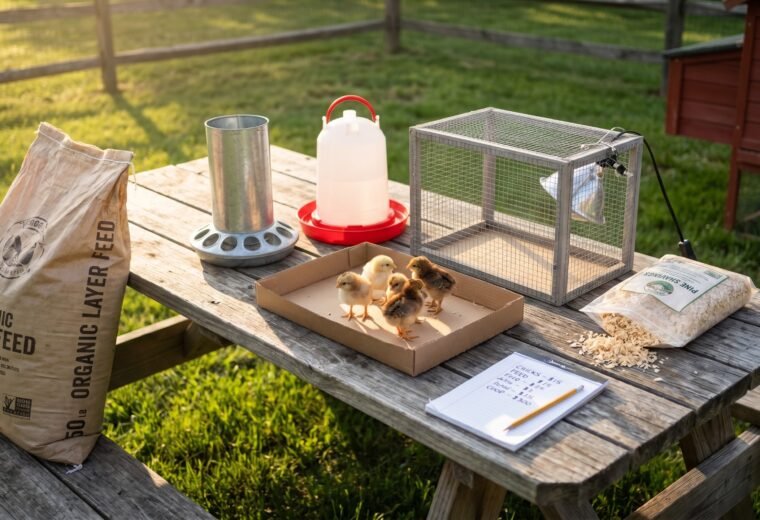
| Brooder setup (chicks only) | $40 - $120 | Heat plate or heat lamp, feeder, waterer, pine shavings |
| Feed: chick starter to laying age (~20 weeks) | $30 - $60 per bird | Based on ~13-15 lb total feed per chick before first egg |
| Annual layer feed (per hen) | $50 - $90 | A 6-lb hen eats roughly 3 lb of feed per week |
| Bedding (annual) | $30 - $80 | Pine shavings most common; deep litter reduces replacement frequency |
| Oyster shell, grit (annual) | $15 - $30 | Oyster shell free-choice for layers; grit if not free-ranging |
| Veterinary (if needed) | Variable | Budget a reserve; poultry vets are not found everywhere |
Total first-year outlay for four hens commonly runs $500 to $1,000 once the coop, brooder, and pre-laying feed are included. Ongoing annual costs for feed and bedding settle into a more manageable $300 to $500 range once setup is behind you.
Choosing your first breeds
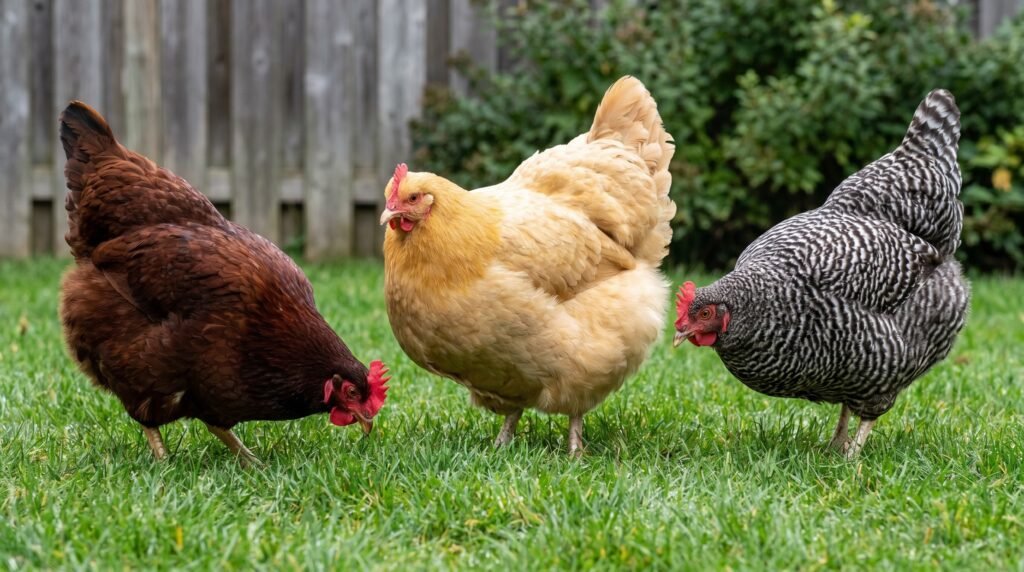
The breed you choose sets the tone for the next several years. A few key variables matter most for beginners: egg numbers, temperament, and cold or heat hardiness for your climate.
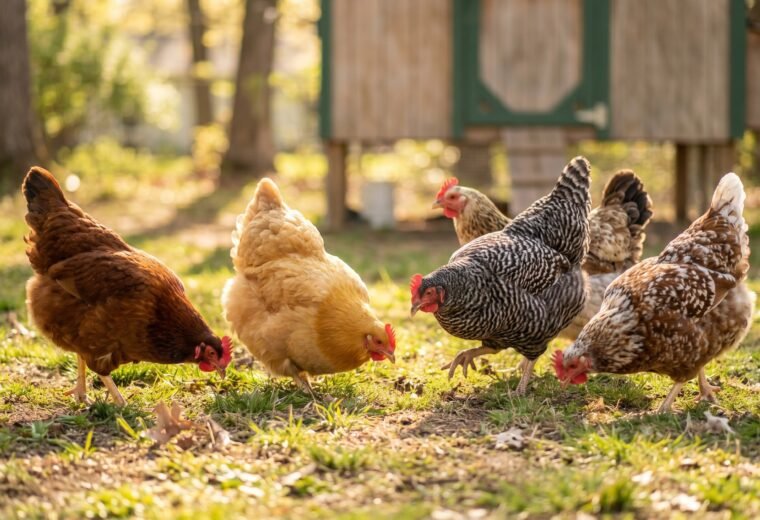
Hatchery data gives the clearest egg-count benchmarks. Commercial sex-linked hybrid pullets - often sold as "Red Stars" or "Golden Comets" - top the charts at 240 to 280 eggs per year, according to Penn State Extension. Heritage breeds typically produce 50 to 150 eggs per year; dual-purpose production breeds reach 200 or more. Neither number is better or worse; they reflect different breeding priorities. A high-production hybrid burns through her peak-laying years faster. A dual-purpose bird lays less but stays calmer, goes broody more reliably, and can live a longer productive life.
The table below covers five proven beginner breeds. Egg counts come from hatchery breed specifications rather than averaged blog estimates.
| Breed | Eggs per year | Egg color | Temperament | Best for |
|---|---|---|---|---|
| Rhode Island Red | 200-280 | Brown | Active, confident; hens usually steady | High production, adaptable climate |
| Buff Orpington | 220 | Brown | Docile, calm, gentle, friendly | Families with children, cold climates |
| Barred Plymouth Rock | 220-280 | Brown | Hardy, steady, even-tempered | Cold climates, dual-purpose flocks |
| Black Australorp | 250 | Brown | Docile, energetic | Consistent production, backyard flocks |
| Ameraucana / Easter Egger (often sold as Ameraucana) | 150-200 (varies by line) | Blue, green, or pink-tinted | Calm, tolerant to all climates | Colorful egg basket, family flocks |
A word on roosters: you do not need one for hens to lay eggs. A rooster is only required if you want fertile eggs for hatching. Most urban ordinances ban roosters outright, so plan on a hen-only flock unless you are on rural property and have confirmed it is allowed. For a much deeper look at breed options, see our best chicken breeds for beginners guide.
Chicks vs. started pullets: which to buy
New keepers face their first real decision before ordering: start with day-old chicks or buy started pullets (young hens at 15 to 18 weeks old, close to laying age)?
Chicks cost less per bird, give you a tame flock raised by your hands, and arrive at the right time for your setup. The tradeoff is six months of waiting for the first egg plus six weeks of brooder management - a small, heated enclosure you must monitor daily. Heat plates have replaced heat lamps as the safer choice for small-flock brooders. If you do use a heat lamp, eXtension's poultry resource notes you must suspend it with a chain or wire (not the electrical cord), keep it at least 18 inches above the bedding, and use porcelain sockets approved for those lamps. A lamp that falls into pine shavings is a documented fire hazard.
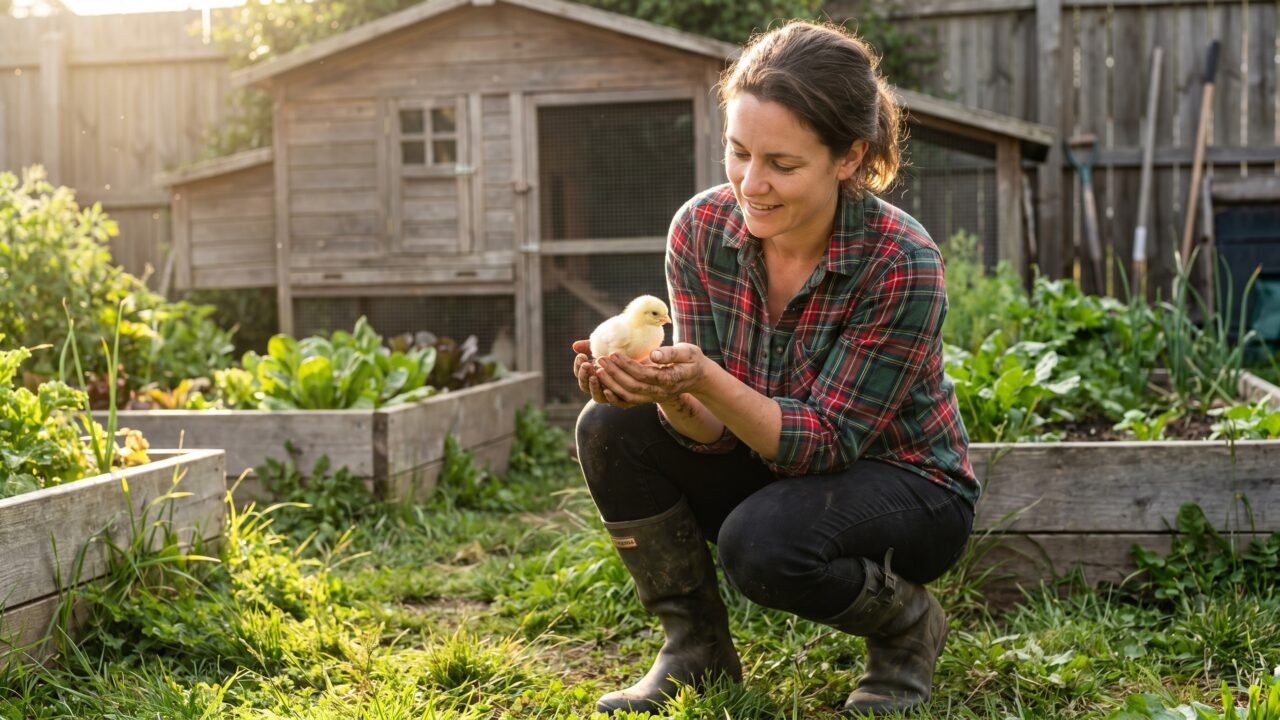
Started pullets cost two to four times more per bird but skip the brooder phase entirely and start laying within weeks of purchase. They are harder to tame after the critical imprinting window. If you have children who want to handle calm birds, chicks are the better choice. If you want eggs by midsummer and start in spring, a started pullet may be worth the premium.
Whichever you choose, buy from a National Poultry Improvement Plan (NPIP) certified flock whenever possible. NPIP testing reduces the risk of introducing Salmonella pullorum or Mycoplasma to your property.
Brooding chicks: the first six weeks
Day-old chicks cannot regulate their body temperature. They need a warm, dry, draft-free brooder until they are fully feathered at around six to eight weeks of age. University of Minnesota Extension recommends starting at 90 to 95 F and reducing the temperature by 5 F each week until supplemental heat is no longer needed. That schedule runs approximately like this:
- Week 1: 90-95 F
- Week 2: 85-90 F
- Week 3: 80-85 F
- Week 4: 75-80 F
- Week 5: 70-75 F
- Week 6+: Ambient temperature when fully feathered
The chicks' behavior tells you more than the thermometer. Chicks huddled together directly under the heat source are cold. Chicks pressed to the far edges, panting, are too hot. Chicks spread evenly around the brooder, active and peeping contentedly, are comfortable.
Feed chick starter - an 18 to 20 percent protein crumble - from day one through about six to eight weeks. Switch to a 14 to 15 percent protein grower ration through 18 weeks, then transition to layer feed (16 to 18 percent protein, with added calcium) once the first eggs appear or at around 18 to 20 weeks. Oyster shell free-choice keeps eggshells hard once hens begin laying. Grit is needed any time chicks eat anything other than powdered crumble - scratch, greens, or whole grains all require grit for proper digestion.
For a complete week-by-week chick timeline, see our guide to raising baby chicks. For a comparison of heat sources, our heat lamp vs. heat plate article covers the tradeoffs in detail.
Building or buying the right coop
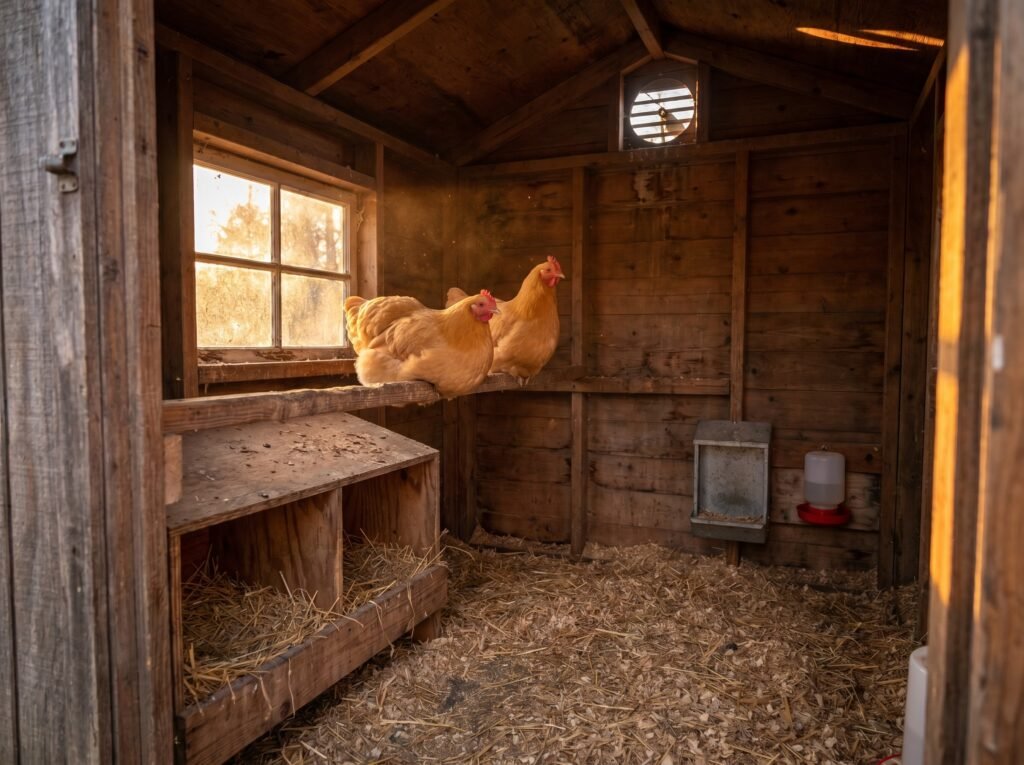
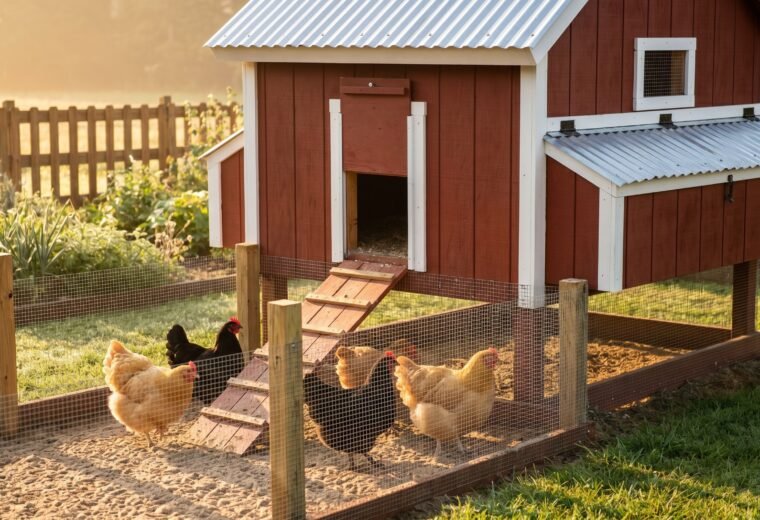
The coop is your most important long-term investment and the area where beginners most often cut corners they later regret. Two standards from eXtension's poultry resources apply across nearly all sources: at minimum 3 to 4 square feet of indoor floor space per standard-size bird, and at minimum 10 square feet of outdoor run space per bird. When in doubt, build bigger - crowded hens are stressed hens, and stress tanks egg production.
Inside the coop, three features matter most:
- Roosts: Hens sleep elevated. Allow at least 6 to 8 inches of roost bar per bird (more is better in cold weather, when hens huddle together), positioned at least 24 inches above the floor. Roosts must sit higher than the nest boxes or hens will sleep in the boxes and soil them.
- Nest boxes: One 12 x 12-inch box per four hens is the standard ratio. More is fine; fewer leads to egg-laying bottlenecks and broken eggs.
- Ventilation: This is the detail most beginner coops get wrong. Healthy chickens tolerate cold well when the coop is dry and draft-free. Moisture and ammonia, not cold air, cause respiratory disease. Open ridge or soffit vents positioned above head height let warm, humid air escape without blasting birds with a draft at roost level. Most flocks - even in cold northern states - need no supplemental heat. A well-ventilated coop at freezing temperatures is safer than a sealed one that traps moisture.
Our full resource library covers every coop topic in depth: see chicken coop overview, coop size per chicken, coop ventilation, and mistakes beginners make.
Predator-proofing: the step that saves your flock
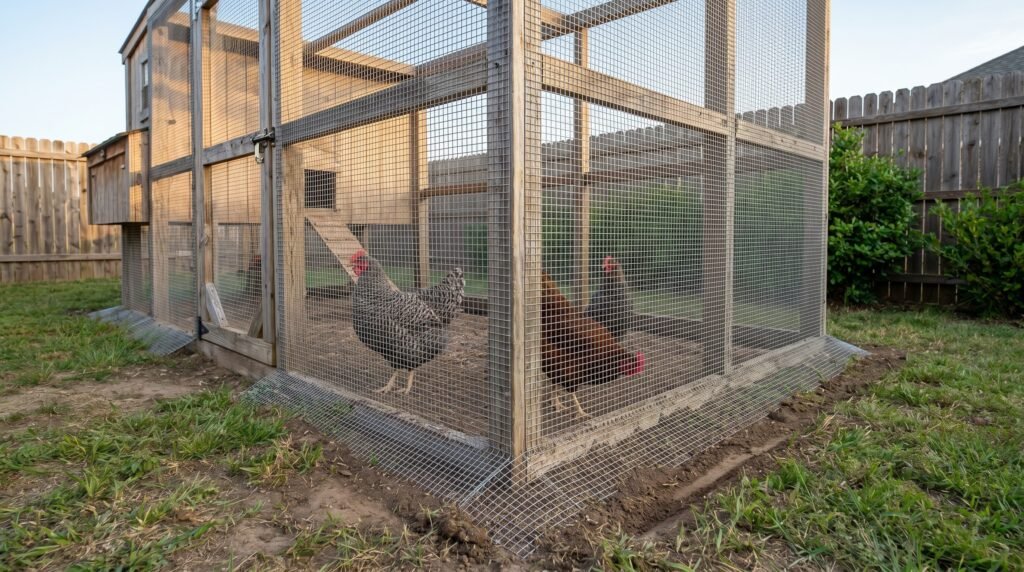
Predators are the leading cause of sudden flock loss for backyard keepers. Raccoons, foxes, coyotes, dogs, hawks, owls, and weasels all take chickens - and they are more persistent and clever than most new keepers expect.
Hardware cloth, not chicken wire, is the correct material for runs and any open panel in the coop. The difference matters: eXtension's predator management resource notes that weasels "can squeeze through holes as small as 1/4-inch in diameter" and "typically can get through chicken wire." Use 1/2-inch hardware cloth on all sides, including the top of any enclosed run. Bury it at least 12 inches into the ground or bend it outward in an L-shaped apron to stop diggers like foxes and raccoons.
Close the coop door at dusk, every night, without exception. Most attacks happen after dark. If you cannot be home reliably at dusk, an automatic coop door is one of the best investments you can make. Hawks are a daytime threat and are federally protected under the Migratory Bird Treaty Act - never harm one. Overhead netting or a fully covered run is your legal and effective answer. For full guidance by predator type, see predator-proof chicken run and what kills chickens at night.
Feeding, water, and egg handling in year one
Chickens have straightforward nutritional needs, but a few details trip up beginners regularly.
Water is more critical than feed. A hen deprived of water for even 12 hours can see a drop in production, and extended deprivation causes lasting damage. Clean waterers daily - algae and biofilm build up fast in summer. In winter, a heated waterer or base prevents freezing without heating the whole coop.
The 90/10 rule keeps treats from unbalancing the diet: no more than 10 percent of daily calories from anything other than formulated feed. Avocado (all parts), raw or dried beans, chocolate, and moldy food are toxic to chickens. Kitchen scraps in small amounts are fine; a scratch grain blend as an evening treat is traditional and harmless in moderation.
Once hens start laying, egg handling has a clear logic. USDA research found that unwashed eggs stored at room temperature "degraded from Grade AA to Grade B in just a week." Refrigerated eggs - washed or not - "were still Grade A quality after 15 weeks, on average." In the US, commercial eggs are washed and must be refrigerated because washing removes the egg's natural bloom. Your backyard eggs still have their bloom intact, so you have a short window of counter storage. The HenAcre team keeps backyard eggs refrigerated as a habit: it is the easiest way to maintain quality and eliminate any guesswork. For anything beyond personal use, check your state's cottage food or egg sale rules.
For a complete supplies list covering feeders, waterers, bedding, and first-aid basics, see our chicken supplies checklist.
The first year: what actually happens
Understanding the arc of year one prevents the three most common disappointments: the long wait for eggs, the production dip in winter, and the molt.
Chicks hatched in spring will typically begin laying in late summer or early fall, at 18 to 24 weeks of age depending on breed. Production builds quickly for a few weeks, then sunlight hours start declining in October and November - and shorter days suppress laying. Hens need 14 to 16 hours of light per day for maximum production. Many keepers add a few hours of supplemental light in the morning (a timer-controlled 25-watt bulb works well) to maintain winter output. Penn State Extension cautions never to reduce lighting hours once hens are in lay; doing so triggers a stop in production.
The annual molt - usually in the bird's second fall - is the other big production pause. Hens redirect protein from egg production to feather regrowth for about 8 to 12 weeks. Production drops sharply or stops. Boost protein in the feed during molt (a 20-percent protein ration helps), avoid introducing new birds to the stressed flock, and do not over-disturb the coop. Eggs return after the molt, though at a slightly lower rate than the peak first year. Each subsequent year of lay typically produces about 10 to 20 percent fewer eggs than the year before.
The pecking order is normal and not a crisis. New flocks establish their hierarchy quickly, sometimes with visible squabbling. Give birds enough space, provide multiple feed and water stations, and the social structure settles. Serious injury is rare in a properly sized flock. Problems multiply in overcrowded coops, so the space minimums listed above are not suggestions.
If a bird looks sick - fluffed feathers, closed eyes, not eating, labored breathing, unusual droppings - separate her from the flock the same day to prevent spread, and contact a poultry veterinarian. The HenAcre team never recommends diagnosing or medicating birds without a vet's input. Poultry are skilled at hiding illness until it is advanced, so early separation and professional advice matter.
Your first-year decision guide
This framework helps new keepers match their situation to the right starting approach. Run through each row before buying anything.
| Your situation | Recommended starting point | Why |
|---|---|---|
| Urban or suburban lot, ordinance limits 4-6 hens | 4 hens, compact coop with attached run | Matches most permit caps; right-sizes feed cost; still 15-20 doz eggs/month at peak |
| Family with young children | Buff Orpington or Barred Rock chicks; heat plate brooder | Both breeds are calm and handleable from chick age; heat plates are safer than lamps indoors |
| Want eggs this season, starting after April | 15-18 week started pullets | Skips brooder; first eggs within 4-6 weeks of purchase |
| Cold climate (zone 5 or colder) | Wyandotte or Dominique (rose or pea comb), Australorp, or Buff Orpington; insulated coop with good ventilation | Single-comb breeds are more susceptible to frostbite at comb tips; rose-comb and pea-comb breeds like Wyandottes and Dominiques are the cold-hardy choice; dual-purpose breeds handle cold better than lean production types |
| Hot climate (zone 8+) | Australorp, Leghorn, or Rhode Island Red; shaded run, ventilated coop | Heat tolerance matters more than cold hardiness; heavily feathered breeds like Orpington struggle above 90 F |
| Maximum egg output priority | Commercial sex-linked hybrid pullets (Red Star, Golden Comet, ISA Brown) | 240-280 eggs/year; available as sexed pullets; peak production lasts 2-3 years before decline |
| Concerned about predators (rural or suburban with wildlife) | Hardware cloth run with buried apron; automatic coop door | Wire gauge is the single highest-impact predator deterrent; automatic door handles dusk closure when you are away |