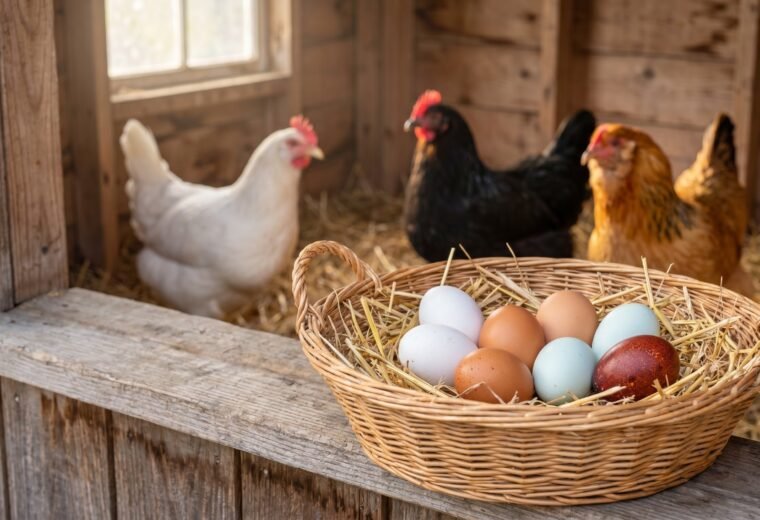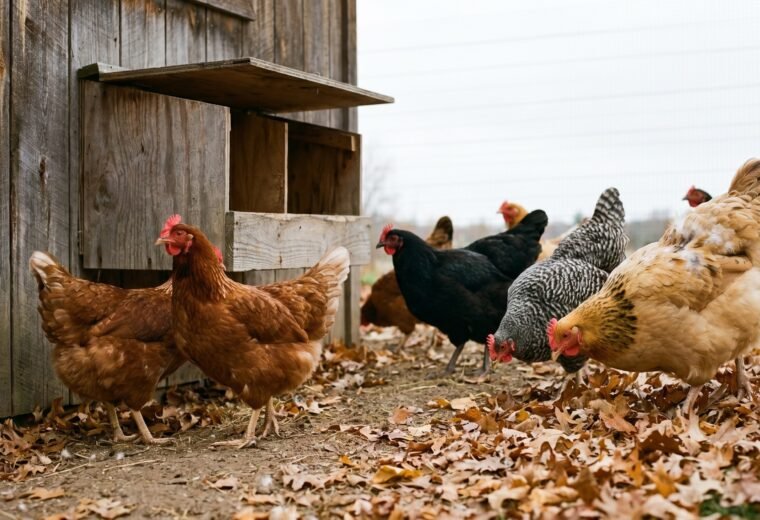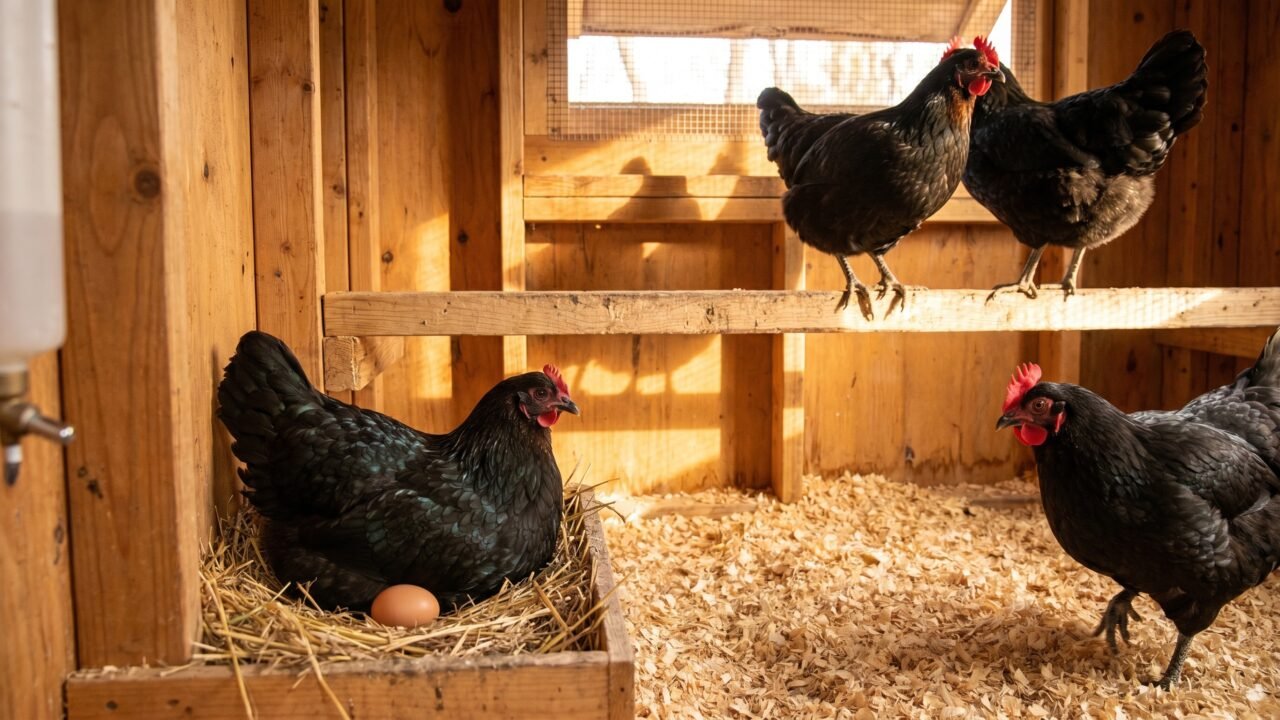
Pick a breed like the Black Australorp or a sex-link hybrid, set up a secure coop with 3-4 square feet per bird indoors, switch to a 16% protein layer feed around week 18, and most hens will reward you with 200-280 eggs per year. That sentence covers the skeleton. Every number in it has a consequence - the wrong breed choice or skipping the calcium source will cost you eggs long before the season ends. This guide walks through each decision in the order you face it, with the honest tradeoffs at each step.
Before anything else: a rooster is not required. A hen lays entirely on her own hormonal schedule - no rooster involved. You only need a rooster if you want fertilized eggs to hatch.
Choosing the right laying breeds
Not all chickens were shaped for the egg basket. Heritage breeds like Cochins or Brahmas can take six to nine months to start laying - Brahmas and Cochins sit near the lower end of the heritage range, around 50-80 eggs per year, while some dual-purpose heritage breeds can approach 100-120 at their best. Penn State Extension puts the overall heritage ceiling at 50 to 100 eggs per year. Production-focused breeds start earlier and work much harder.
For a small household flock - say, four to eight hens - the breeds below cover most situations. Production numbers come from hatchery breed data and reflect estimates under normal backyard management; actual results vary with light, weather, and feed quality.
| Breed | Egg color | Est. eggs/year | Age at first egg | Best for |
|---|---|---|---|---|
| Black Australorp | Light brown | 250-280 | ~4 months | Cold climates, calm temperament |
| Rhode Island Red | Brown | 250-300 | 5-6 months | Dual-purpose, hardy, beginner-friendly |
| Barred Plymouth Rock | Brown | 200-280 | 5-6 months | Friendly, consistent winter production |
| Red/Black Sex-Link hybrids | Brown | 240-280 | 4-5 months | Maximum eggs per bird, easy sexing |
| White Leghorn | White | 250-300+ | ~4 months | Highest volume, feed-efficient, active |
Sex-link hybrids (sold under various trade names depending on the hatchery) are autosexing, meaning you can tell pullets from cockerels at hatch by feather color - a real advantage when city ordinances ban roosters. Penn State Extension notes they lay 240-280 eggs per year in backyard conditions, putting them near the top of the production chart without the flightiness of commercial Leghorns.
If temperament matters as much as output, the Australorp and Barred Rock are calm enough for children to handle. Leghorns produce impressively but tend to be nervous and vocal - worth knowing before you commit. A detailed comparison of egg-laying varieties lives in our guide to the best egg-laying breeds.
Whatever breed you choose, buy from a National Poultry Improvement Plan (NPIP)-certified hatchery. NPIP flocks are tested for certain diseases, reducing the risk you bring something invisible home with your chicks.
Getting chicks started: brooder basics
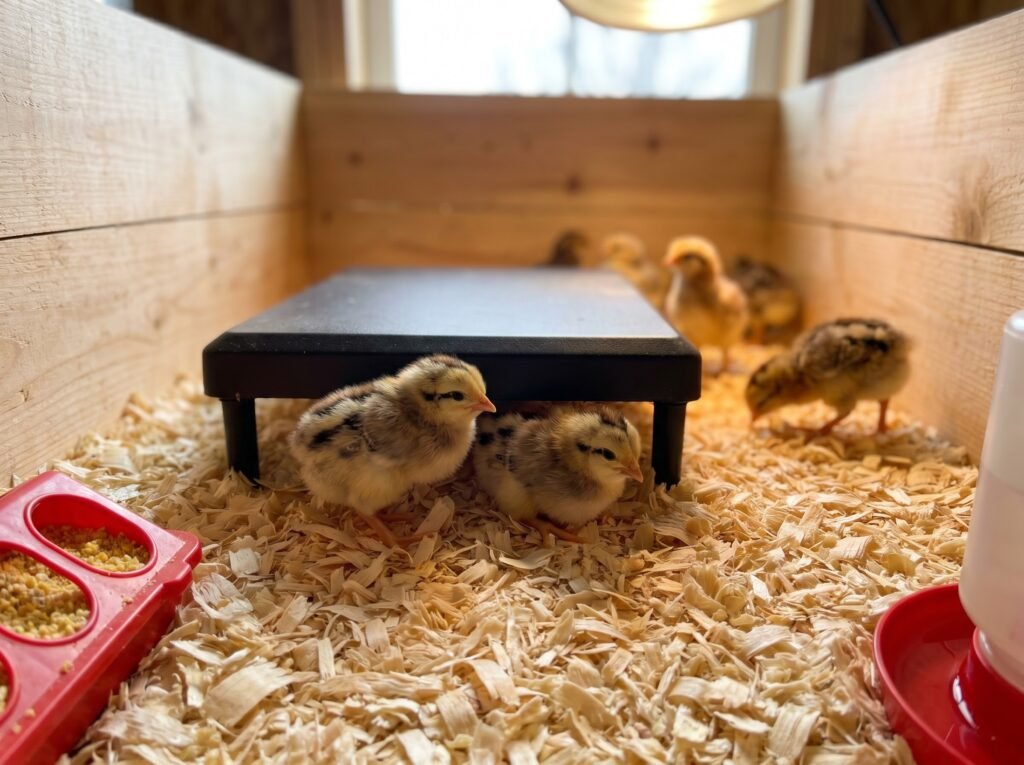
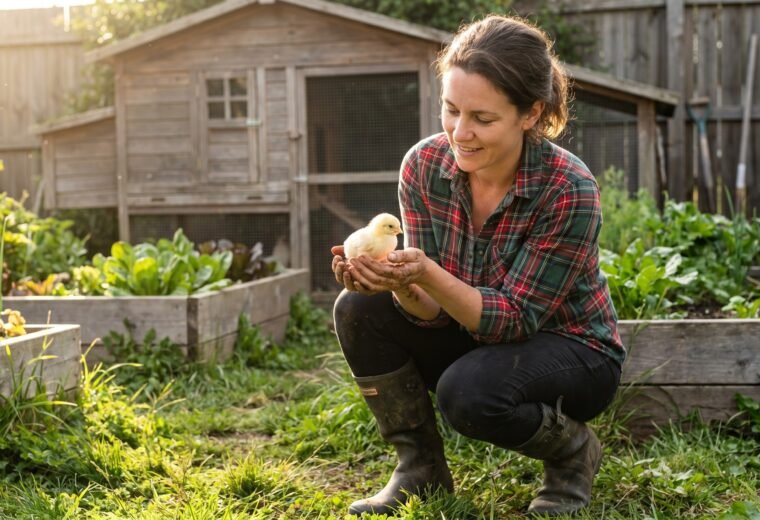
Day-old chicks cannot regulate their own body temperature. For the first week, the brooder floor (measured 2 inches above the litter under the heat source) should sit at 95°F. Drop it by 5°F each week after that. By the time chicks are fully feathered at around 6-8 weeks, they tolerate normal temperatures without supplemental heat.
Watch the chicks, not just the thermometer. Chicks piled directly under the heat lamp are cold - raise the lamp or add warmth. Chicks pushed to the edges, panting, are too hot - lower the lamp or add ventilation. A comfortable group spreads loosely around the warm zone.
Heat lamps work but carry a fire risk if the bulb breaks or the lamp falls. A radiant heat plate sits low, mimics a broody hen, and runs cool to the touch on the outside. Either option works; the plate is safer for an unattended overnight setup.
Feed chicks a starter crumble with 18-20% protein from hatch through week six. Week seven through about week 18, switch to a grower feed at 14-15% protein. The protein drop is intentional - young pullets do not need the calcium level in layer feed, and feeding it early can damage developing kidneys.
For a full week-by-week breakdown of brooder management, raising baby chicks week by week covers temperature, space, and early health checks in sequence.
Coop and run: the numbers that matter
Crowding is the fastest way to collapse egg production and flock health together. Extension research from poultry.extension.org puts the minimum at 3-4 square feet per hen inside the coop and 10 square feet per hen in the outdoor run. For a flock of eight hens, that means at least 24-32 square feet of enclosed sleeping space and 80 square feet of run - roughly a 6x5 coop footprint and a 10x8 run at minimum.
Three additional details decide whether the coop actually works:
- Roost bars: Hens sleep on elevated bars, not on the floor. Allow 8-10 linear inches of perch per bird on a flat 2x4 installed with the wide face up - the broad surface protects feet in cold weather. Keep roosts higher than nest boxes so hens are not tempted to sleep in the nests.
- Nest boxes: Plan on one 12-inch-by-12-inch box for every three to four hens. A flock of 15 needs at least four boxes. Fewer boxes push hens to lay on the floor, breaking eggs.
- Ventilation: Fresh air removes ammonia and moisture - the two things that quietly damage a flock's respiratory health and drop egg output. Passive vents near the roofline let warm, humid air escape without creating a draft at bird level. Most backyard flocks do not need supplemental heat in winter; what they need is dry air and no drafts. A well-ventilated coop in January beats a sealed, heated one every time.
Cedar shavings are widely available but their aromatic oils can irritate the respiratory tract. Pine shavings are the standard recommendation from poultry extension services - absorbent, low-dust, and easy to find. Keep litter at least 3-4 inches deep and pull wet patches before ammonia builds up. Wet litter under a nest box is a common cause of dirty eggs and shell bacteria.
For predator-proofing the run, hardware cloth with a half-inch mesh stops raccoons, foxes, and most weasels in a way that ordinary chicken wire does not. Bury or bend an apron of hardware cloth at least 12 inches outward at the base to stop diggers. Our complete coop guide covers flooring, hardware, and layout decisions in depth.
Feeding your laying flock
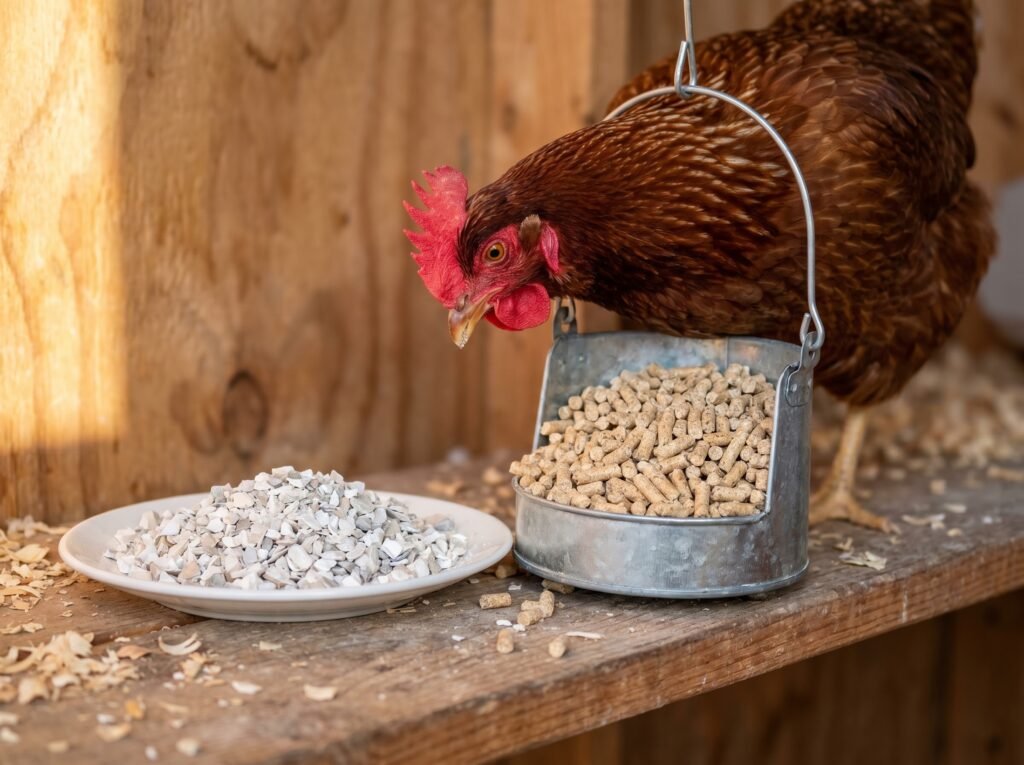
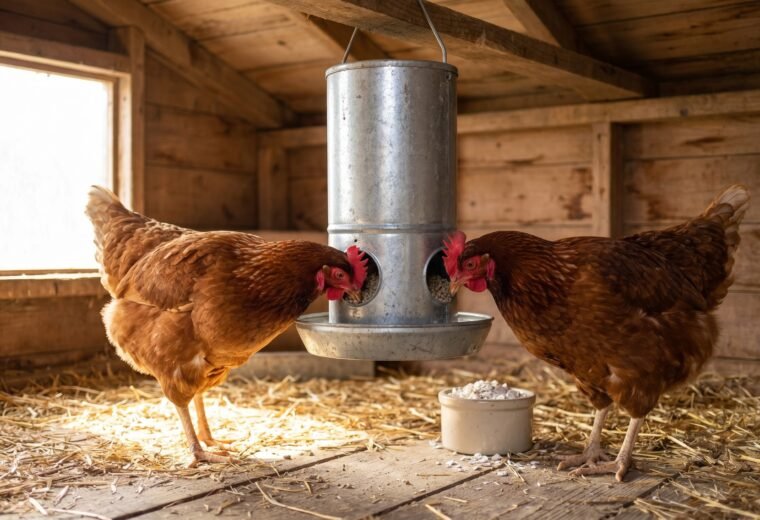
Around week 18, or when your first egg appears, switch the flock to a commercial layer feed. Penn State Extension specifies the target: at least 16% crude protein and 3.5% calcium. That calcium is non-negotiable - a hen deposits roughly 2 grams of calcium into every eggshell, and her body cannot source it from thin air.
Even a good layer feed sometimes falls short for heavy-producing hens, especially through summer heat when feed intake drops. Keep crushed oyster shell available free-choice in a separate small dish. Hens self-regulate; a hen whose shells are strong will mostly ignore it, while one under calcium stress will eat more.
Scratch grains and kitchen scraps are fine as a small supplement, but they dilute the protein and calcium in the layer ration when fed in excess. A workable ceiling: offer only what the flock finishes in 20 minutes, and always after the birds have had access to their complete feed. The extension guidance is consistent - treats are an afternoon bonus, not a dietary staple.
If birds are confined to a run and not foraging on soil, offer commercial poultry grit free-choice. Grit stays in the gizzard and grinds whole grains and fibrous material. Without it, anything other than finely milled feed can pass through only partially digested.
Water is the overlooked variable. Laying hens should never go without fresh water for an extended stretch - a single prolonged drought in summer heat can trigger a partial molt and stop production for weeks. Check waterers morning and evening, and keep them clean; algae-coated waterers get ignored.
The layer feed guide goes deeper into feed types, organic options, and how to read a feed label.
When hens start laying and what to expect
Early-maturing breeds like Black Australorps and Golden Comets often lay their first egg around four months of age. Most dual-purpose breeds, including Rhode Island Reds and Barred Rocks, take closer to five to six months. Large-bodied breeds like Brahmas sometimes hold off until eight or nine months.
Signs that laying is close: the comb and wattles redden and enlarge, a pullet starts squatting when you reach toward her, and she begins inspecting the nest boxes with new interest. First eggs are often small and occasionally double-yolked as the reproductive system calibrates. Shell quality and size both improve over the first few weeks.
Once in full production, a healthy hen can only lay one egg roughly every 26 hours - egg formation takes that long from ovulation to lay, which is why hens lay a little later each day and eventually skip a day. Some days she will skip entirely. This means even a top-performing hen averages around five to six eggs per week, not seven. For a family that wants roughly a dozen eggs per week, four well-chosen production hens will generally cover it through the peak season.
Production drops during the annual molt (usually triggered by shortening fall days), when feathers are replaced over 10-12 weeks and the body redirects resources away from egg-making. It also drops each year as hens age. A first-year hen at her peak is a better layer than that same hen at age three, though heritage breeds tend to sustain production across more years than high-production hybrids.
Supplemental light - enough to keep day length at 14-16 hours - maintains production through winter. A simple timer on a low-wattage bulb inside the coop handles this. Add light in the morning rather than evening, since sudden darkness catches hens on the roost.
More detail on the full production timeline is in when do hens start laying and chicken eggs, which covers egg anatomy, color genetics, and what a normal egg looks like.
Egg handling: keeping what you collect
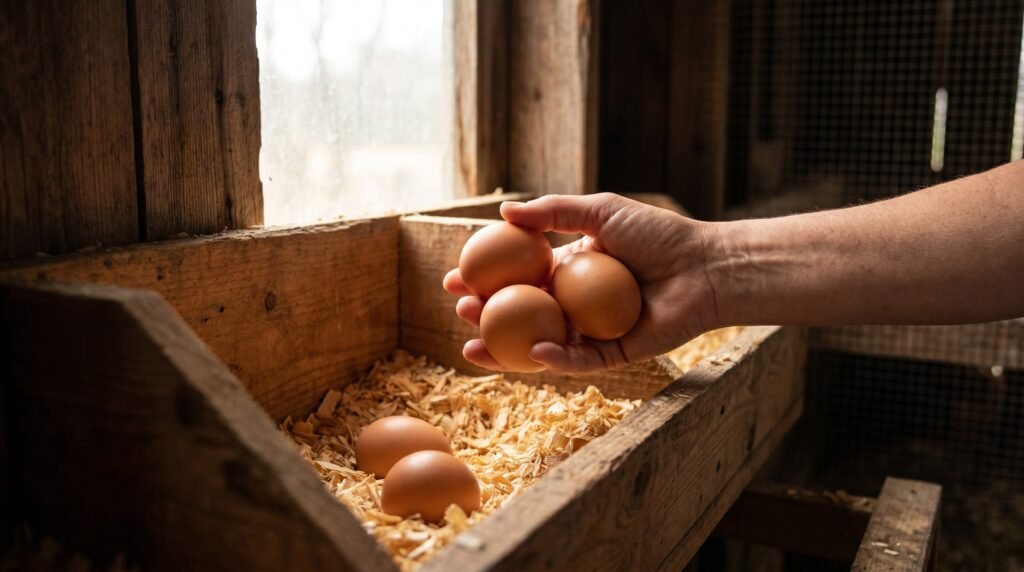
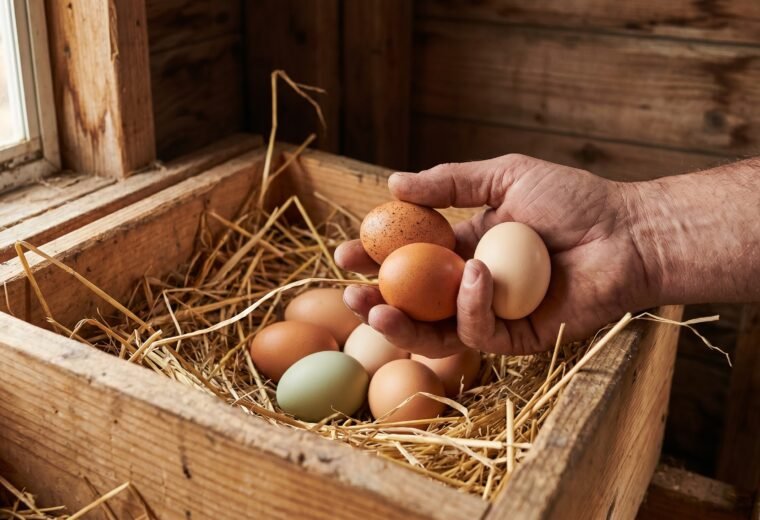
Collect eggs at least once a day - twice is better in summer. Eggs left in a warm nest lose quality faster than eggs collected promptly and cooled.
Every eggshell comes coated in a thin cuticle (sometimes called the bloom) that helps seal the pores against bacteria. USDA research describes it as "a thin, protective membrane that prevents Salmonella and other bacteria from penetrating the shell." Washing removes this layer. So: if you choose not to wash, store eggs at room temperature, but use them within a week - USDA ARS research found unwashed eggs degrade from Grade AA to Grade B in just a week at room temperature, so one week is the safer ceiling. If you wash them - or want longer storage - refrigerate at 40°F or below. The USDA confirms refrigerated eggs keep safely for at least a month.
A float test is a quick check on older eggs. Place an egg in a bowl of cold water. An egg that sinks and lies flat is fresh. One that sinks but stands on end has an enlarged air cell and is older but usually still good. A floating egg has gone far enough that you should crack it separately, smell it, and look at the white before deciding - an off odor means discard.
For more detail on collecting, washing, and storing, collecting and storing eggs walks through the full process.
The most common reason egg counts disappoint
Most beginner egg shortfalls trace back to one of four causes, often in combination.
Calcium deficiency is the quiet thief. Thin-shelled or soft eggs are the warning sign, but by the time shells fail, the hen has already been pulling calcium from her own bones for weeks. Keep oyster shell available before the problem appears, not after.
Insufficient light stops production cold. Below about 14 hours of light per day, many hens simply shut down. This is normal in winter - it is the flock responding to seasonal cues the way they evolved to. Add artificial morning light if year-round eggs matter to you.
Stress - from predator pressure, flock disruption, or extreme heat - suppresses the hormonal cycle that triggers ovulation. A hen that heard a hawk strike the run yesterday may not lay today. Predator-proofing your setup is not just about keeping birds alive; it protects your egg count too.
Water interruptions are underestimated. A waterer that ran dry on a hot afternoon can set back production for days. Laying hens drink roughly twice as much as they eat by weight, and that ratio climbs in summer.
If production has stopped unexpectedly, why chickens stop laying works through the diagnostic checklist step by step.