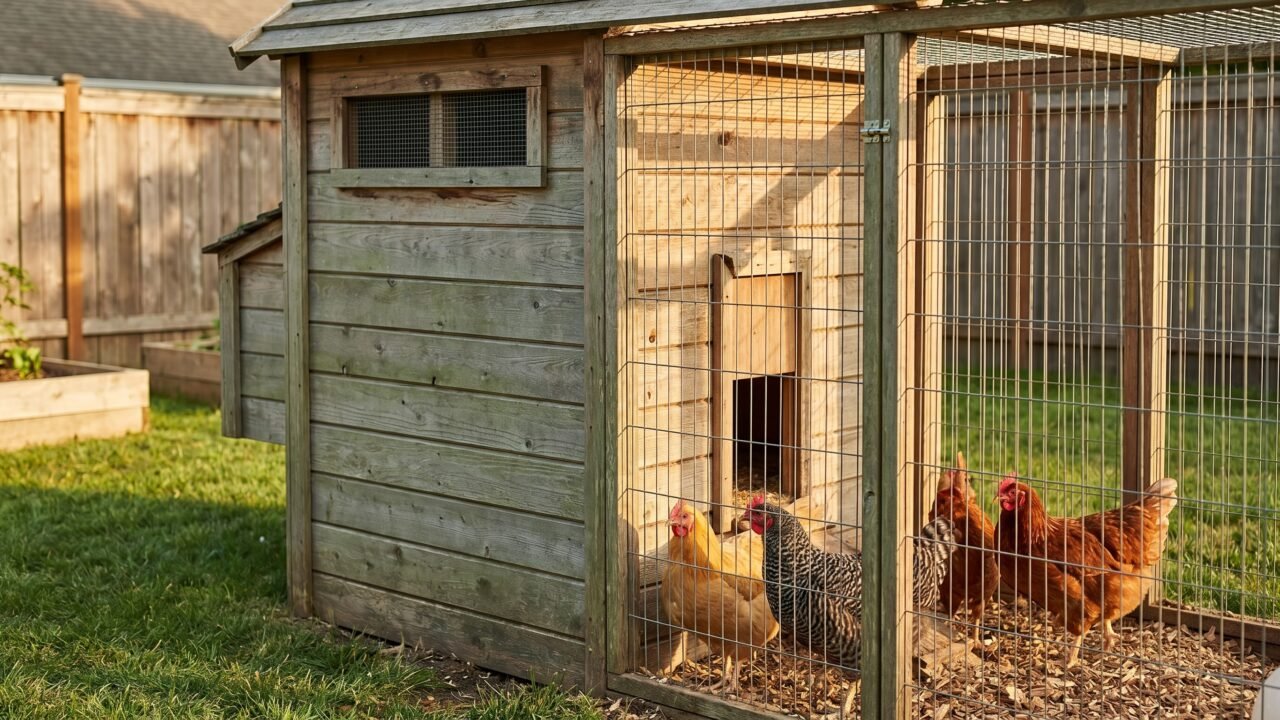
Three birds can live in a coop that looks enormous on paper and still drive each other crazy by February. The problem is almost never the square footage on the label - it's how that space is arranged and whether the numbers came from a manufacturer's marketing copy or an actual poultry guideline. Here's what a compact flock of three to six standard hens genuinely needs, and where most small-coop builds go sideways.
The space numbers that actually matter
For standard laying hens: 3-4 sq ft indoors per bird and 10 sq ft of outdoor run. For a four-bird flock that means at least 12-16 sq ft inside and 40 sq ft of run. Bantams follow the same run sizing but need roughly 0.75 to 1 square foot indoors per bird.
Two figures govern every coop decision: interior floor space and outdoor run space. For standard laying hens, extension guidance puts the indoor minimum at 3-4 square feet per bird, with outdoor run space at roughly 10 square feet per bird. Bantams need less - extension guidance cites 0.75 to 1 square foot per bird indoors for small breeds - but their runs benefit from the same generous sizing as standards because they forage just as actively.
Run those numbers for a four-bird flock of standard hens: you need at least 12-16 square feet of enclosed sleeping space and about 40 square feet of run. For six birds, that's 18-24 square feet inside and around 60 square feet outside. Most prefab "6-chicken" coops on the market put interior floor space at 12-18 square feet, which is at the absolute floor of those ranges - fine if the run is generous and the birds spend most daylight hours outside, but a real problem if weather keeps them cooped up for days at a stretch.
The reason these numbers matter goes beyond comfort. When space gets tight, dominant birds block weaker ones from feeders and waterers. Overcrowding can trigger feather pecking and cannibalism, behaviors that escalate quickly once they start - a connection well documented in extension poultry research. More space per bird is one of the most reliable ways to keep a small flock peaceful. Running the math for a specific breed mix is the next step - the coop size per chicken guide works through it flock size by flock size.
Small-coop sizing table: four scenarios compared
The table below applies extension minimums to the most common small-flock sizes. "Livable" means meets the 3-4 sq ft indoor minimum with run access; "comfortable" means about 20-25% more floor space, which we recommend as a buffer for bad-weather weeks.
| Flock size | Breed type | Min. indoor floor (sq ft) | Comfortable indoor floor (sq ft) | Min. run (sq ft) | Nest boxes needed | Roost bar length (linear in) |
|---|---|---|---|---|---|---|
| 3 birds | Standard hens | 9-12 | 15 | 30 | 1 | 27-30 in |
| 4 birds | Standard hens | 12-16 | 20 | 40 | 1 | 36-40 in |
| 6 birds | Standard hens | 18-24 | 30 | 60 | 2 | 54-60 in |
| 4 birds | Bantams | 3-4 | 5 | 32-40 | 1 | 30-36 in |
| 6 birds | Bantams | 5-6 | 7-8 | 48-60 | 1-2 | 45-54 in |
Roost bar length uses the 9-10 inch per bird figure from NC State Extension. Nest box count uses the 1-per-3-to-4-hens standard - so three or four birds genuinely only need one box, even though it feels counterintuitive. A flock this size will mostly agree on a favorite box anyway, and extra boxes rarely change that.
Choosing between prefab and build-your-own comes after getting the sizing right - the best chicken coops comparison lays out both paths with enough detail to make that call.
What a compact coop must get right
Floor space is one variable. These four are the others that small-coop owners most often underestimate.
Roost bar placement and width
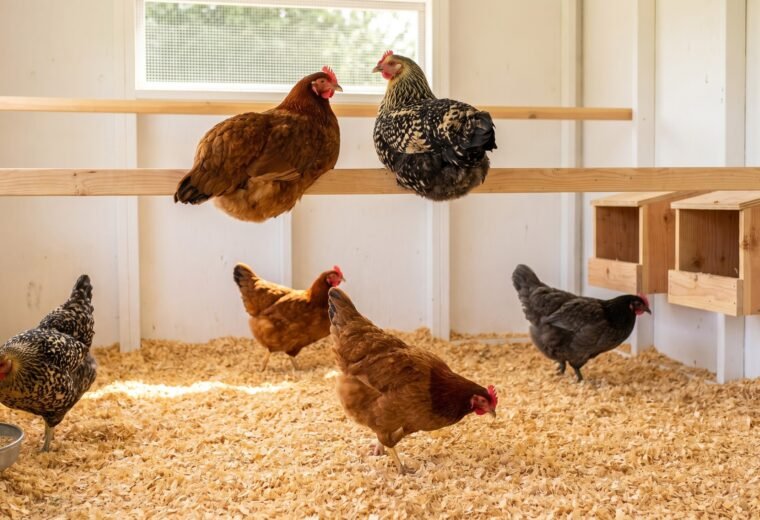
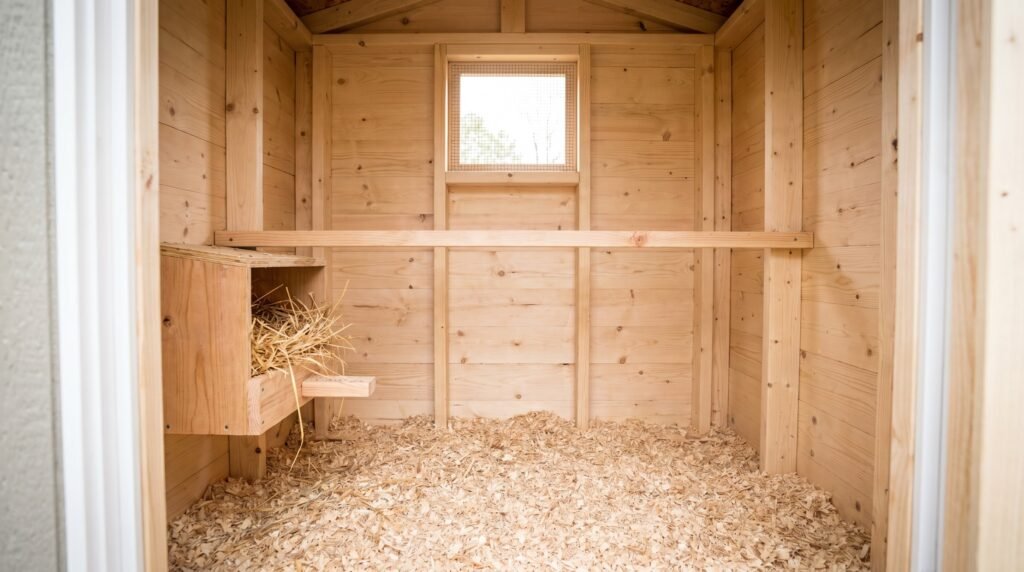
Chickens sleep on roosts, not on the floor, so roost quality matters as much as total square footage. Each bird needs 9-10 linear inches of bar. Set the roost higher than the nest boxes - birds instinctively want the highest perch and will sleep in nest boxes if the roost is lower, which leads to dirty, manure-fouled eggs every morning.
Bar shape also has a cold-weather consequence most people overlook. Cornell Cooperative Extension notes that round or narrow perches cause hens to wrap their toes around the bar, leaving the feet exposed to cold air. A flat 2x4 set wide-side-up lets a hen settle down and cover her toes with her belly feathers - a meaningful difference in climates where temperatures drop below freezing. Space bars at least 14 inches apart horizontally so birds can move along the roost without crowding.
Ventilation: the single most important feature in a small coop
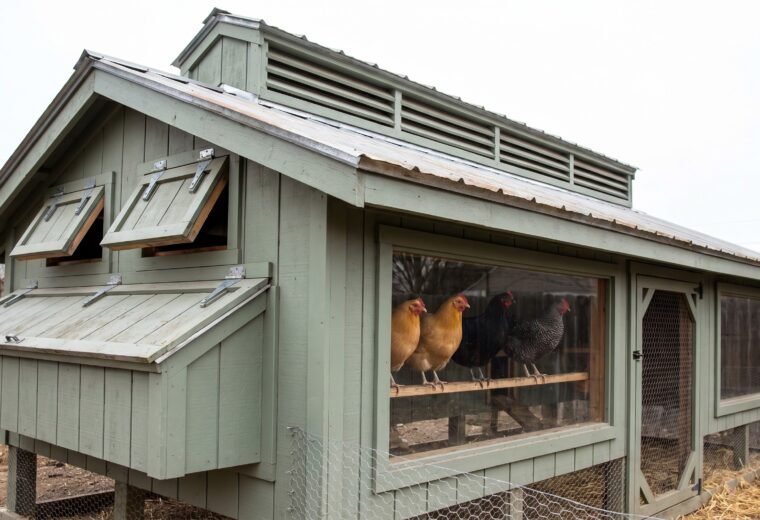
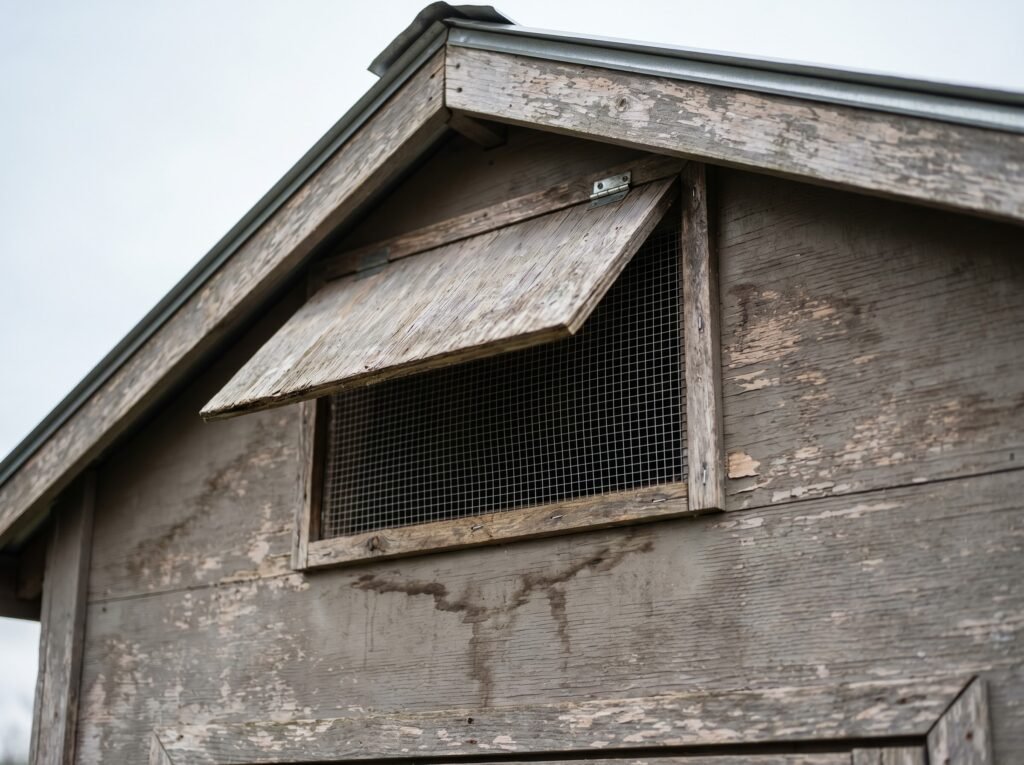
Moisture is the enemy. A small coop with poor airflow will be damp by morning in most climates, and a damp coop is where frostbite, respiratory problems, and ammonia buildup live. Extension guidelines put it plainly: the main job of a coop's ventilation is to remove carbon dioxide, moisture, dust, and odors. For a small structure, windows or vents positioned on one side of the house usually provide enough exchange - the key is that they sit high in the wall (so warm, moist air rises and exits) without creating a ground-level draft on roosting birds.
A simple field check: walk into the coop at dawn before opening it. If your eyes water from ammonia or you see condensation on metal surfaces, the ventilation is inadequate. More detail on the design side lives in our chicken coop ventilation guide.
Heat lamps in small coops: a real tradeoff
Most healthy adult chickens do not need supplemental heat. Cornell Cooperative Extension states that poultry acclimate to outdoor temperatures "with little or no need for supplemental heat if they are provided with a draft-free coop." The bigger winter danger is humidity, not cold. A well-ventilated, dry coop with a solid roost bar is far more protective against frostbite than an electric heat lamp.
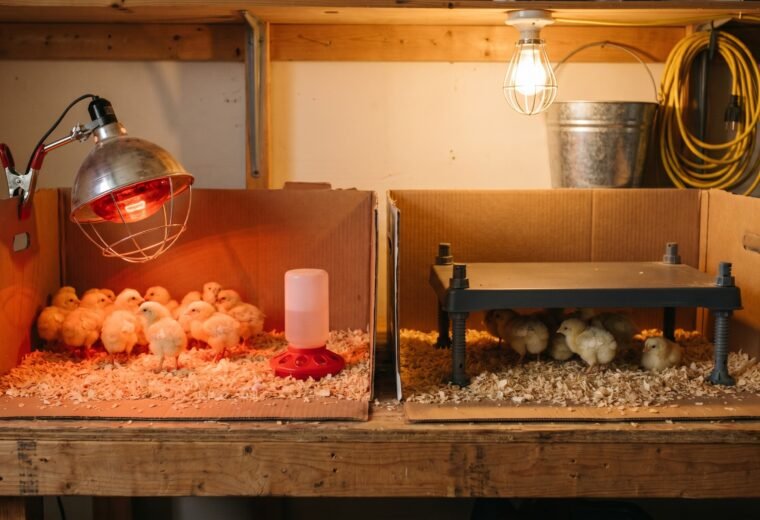
That said, keepers do use heat lamps, and the tradeoff is real: heating equipment is widely documented as a leading cause of fires in wooden animal shelters, and a small wooden coop gives a tipped or failed lamp almost no margin for error. If you choose to add supplemental heat - for chicks, for a recovering bird, or during an unusual cold snap - a flat radiant heat panel mounted to the wall is a lower-risk alternative because it doesn't involve a suspended, open-element lamp over flammable bedding. That tradeoff gets a thorough comparison - fire data, temperature output, and real-world mounting - in the heat lamp vs heat plate article.
Nest boxes: fewer than you think
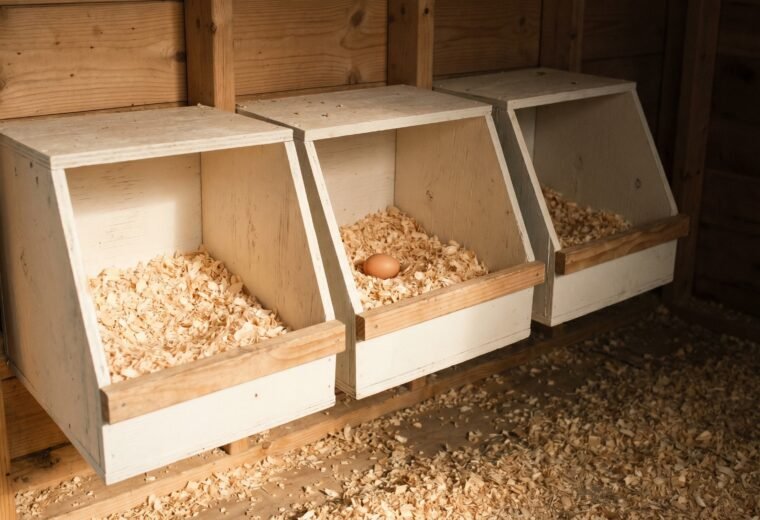
One 12x12 inch nest box per three to four hens is the standard, a figure backed by UGA Extension guidance. For a flock of three or four birds, that's one box - full stop. Mounting it about 2 feet off the floor and placing a short landing perch in front makes it easy to enter. Fill it about half-full with clean straw or shavings and keep it darker than the rest of the coop; hens prefer a shaded, enclosed spot. Position nest boxes lower than the roost bars so birds don't sleep inside them overnight.
Box dimensions, liner materials, and placement edge cases all factor into that decision - the chicken nesting boxes guide works through each one.
The four most common small-coop mistakes
Among the patterns most commonly reported by new keepers, these are the failures that come up most reliably:
- Buying the "6-chicken" coop for 6 chickens. Manufacturer flock-size claims count on birds being outdoors most of the day. If you're in a climate with wet winters or summers above 95°F, plan for more time confined than you expect. Size up, or build a larger attached run.
- Placing the roost too low. A roost that sits at the same height as or below the nest boxes guarantees birds will sleep in the boxes. Roost bars belong as the highest point in the sleeping area.
- Sealing the coop against cold, cutting off air. Warmth and ventilation feel like opposites, but in practice a drafty-at-bird-level coop causes more harm than a cold-but-dry one. Keep vents open year-round; block direct drafts at roost height instead.
- Underestimating the run. The 10 sq ft per bird outdoor guideline surprises most new keepers because it's much more generous than what most compact coop kits include. Cramped run space is where pecking problems start, especially in winter when muddy ground discourages foraging.
Many of these tie back to a broader pattern - the beginner coop mistakes article documents the full list and the fixes that actually stick.
Predator-proofing a compact coop
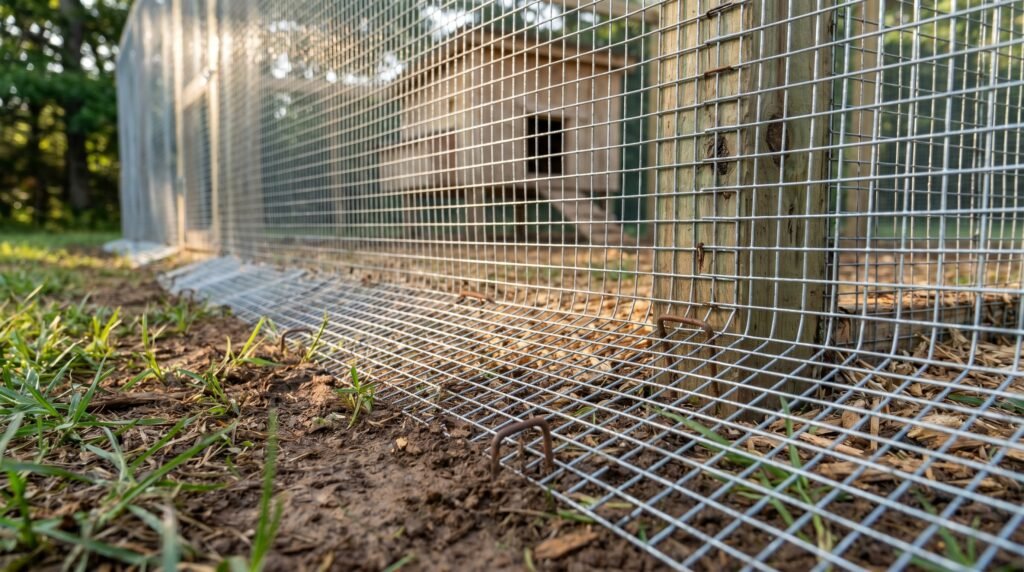
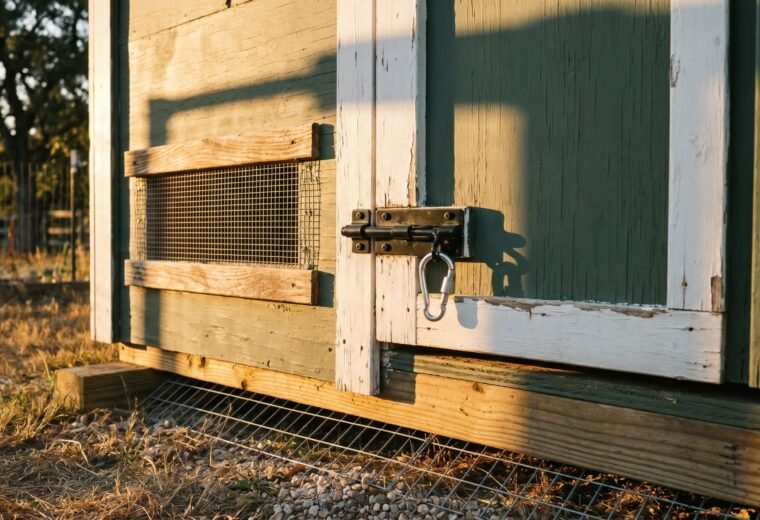
A small coop sits close to the ground and often weighs little enough for a determined raccoon or dog to shift it. The hardware matters. Use 1/2-inch hardware cloth rather than chicken wire on all openings - raccoons can reach through standard chicken wire and grab birds through the mesh. Bend a 12-inch apron of mesh outward along the soil surface to stop digging predators; burying the wire straight down works too, though some extension guidance puts the minimum at 6 inches and 12 inches is the more reliable figure. Cover the run from above with wire or solid material; hawks are federally protected and cannot be harmed, so overhead netting and visual deterrents are the only legal options. Latches, material gauges, and lock choices are the next layer of that system - all covered in the predator-proof chicken coop guide.
Frequently asked questions
Can I keep just two or three chickens, or is that too small a flock?
Two is a workable minimum but three gives more social stability - if one hen goes broody or gets injured, a pair can have a hard time. Three hens in an adequately sized coop manage the pecking order fairly well. Rank-order dynamics in tiny flocks - why two birds often struggle more than three - is the subject of the chicken pecking order article. Deciding on flock size before you build is worth reading through in how many chickens should I get.
Do I really need a run if I free-range my birds?
Free-ranging reduces pressure on indoor space during the day, but birds still need a secure enclosed area for locking up at night and for days when you're away or weather is extreme. A run also gives you flexibility. Birds that can't be supervised shouldn't free-range unattended - hawks and foxes work during daylight. A wired, covered run attached to the coop is almost always worth building even for flocks that mostly range freely.
How often do I need to clean a small coop?
Spot-clean the bedding (remove obvious wet patches and manure deposits) every few days. A full litter change depends on the bedding system you run - deep litter managed correctly can go several months between full clean-outs; thin bedding may need refreshing every two to four weeks. Small coops accumulate ammonia faster than large ones because the air volume is lower, so ventilation and regular spot-cleaning matter more, not less.