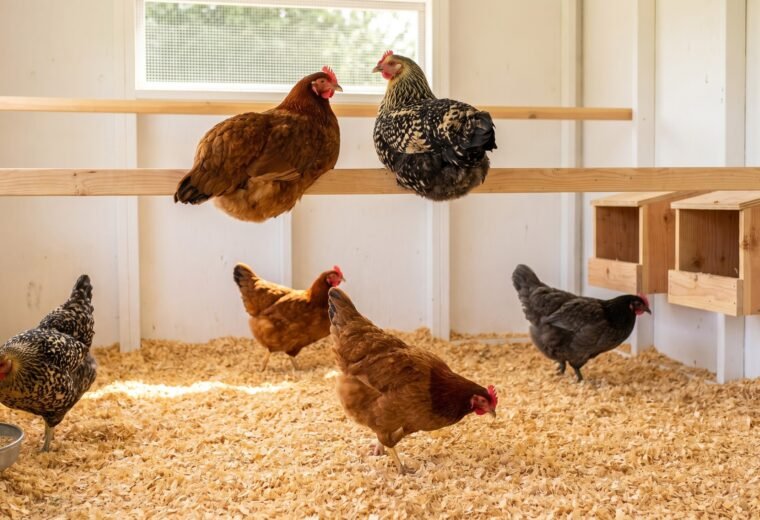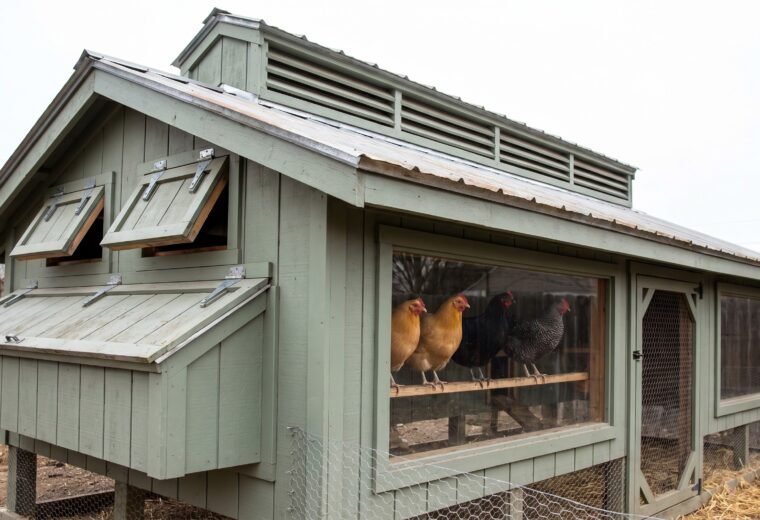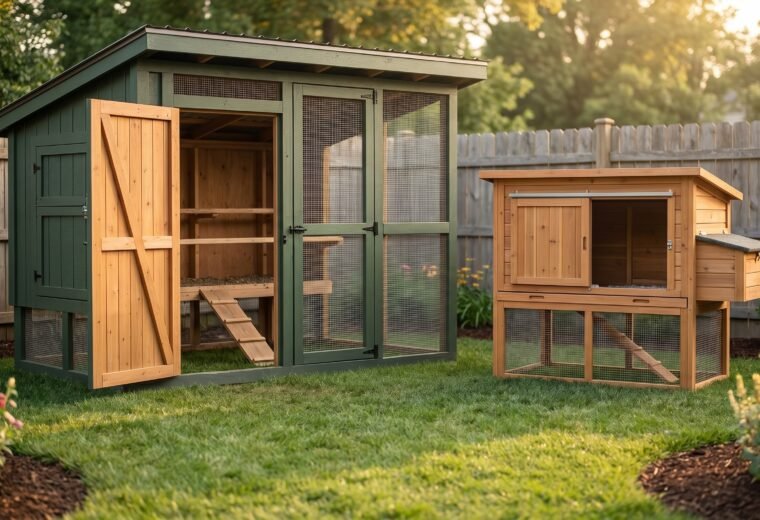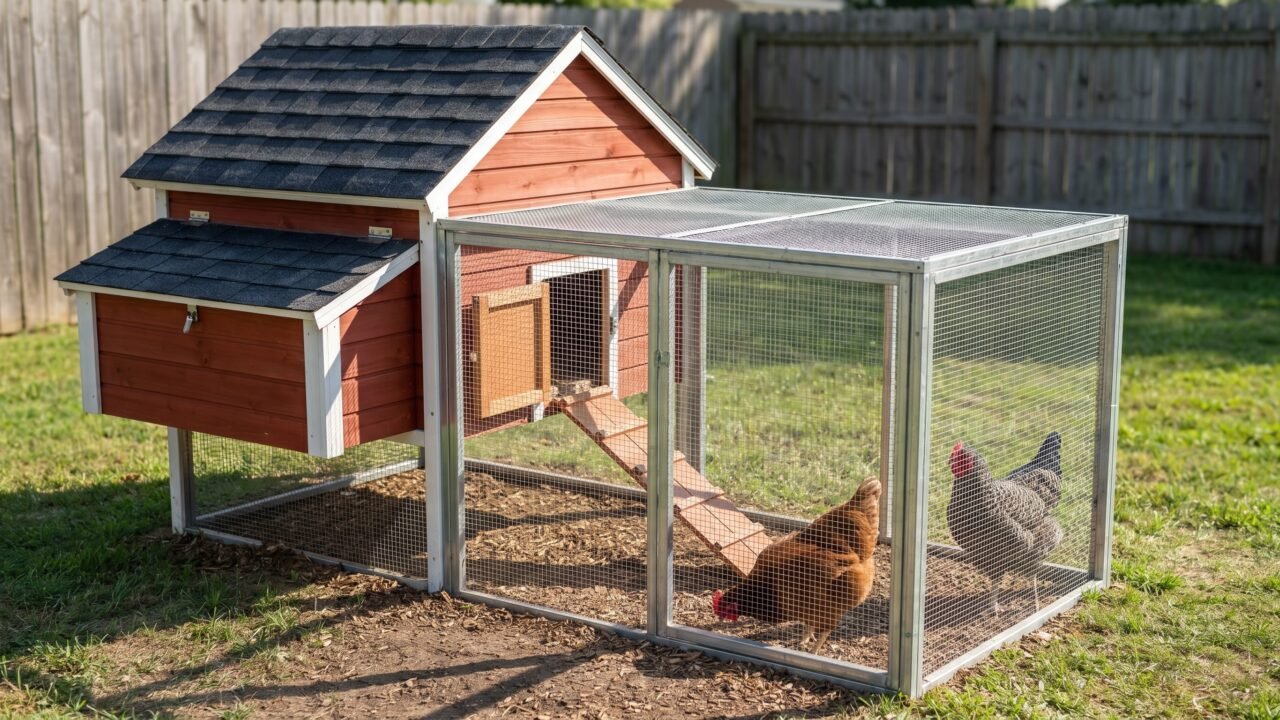
Four chickens eat through a surprising amount of space. Before you order a cute cedar combo unit, do the math: you need a minimum of 3-4 square feet per hen inside the coop and at least 10 square feet per hen in the attached run, according to the cooperative extension network. For a four-bird flock, that math lands at a coop of roughly 12-16 sq ft of floor space plus 40 sq ft of run - a footprint most off-the-shelf kits undercut. Getting the numbers right before you buy is the single most important decision in this purchase.
A combined coop-and-run (sold as one unit) makes sense for most backyard keepers. The attached run is covered, predators cannot dig straight in from the side, and the birds have safe outdoor access without you standing watch. But the combo market is flooded with undersized boxes marketed to twice the birds they comfortably hold. This guide cuts through that.
What does a combined coop-and-run setup actually give you?
A coop-with-run kit gives you safe, contained outdoor access for your flock without requiring you to supervise every hour. Birds roam under a covered, enclosed run during the day and lock into the weathertight coop section at night automatically. That daily-management benefit - no dusk herding required - is why this format dominates the backyard market, though the tradeoffs in material quality and fixed run size are real.
A few other things the format does well:
- The run roof blocks hawks. An uncovered run is an open invitation; a covered run removes aerial access entirely.
- The single-unit design means the coop and run share framing, so there are fewer joints for predators to probe.
- Cleanup is contained. Droppings accumulate in a defined footprint rather than across your yard.
- Zoning and HOA compliance is usually easier with a compact combined unit than with a sprawling separate run.
The tradeoffs are real, though. Most combo kits prioritize visual appeal over material quality. Run panels are often 1-inch hexagonal chicken wire, which raccoons can pull apart with their hands and weasels slip through with ease. And the labeled "capacity" printed on a box - "holds 6 chickens!" - frequently assumes commercial-density numbers that research does not support for healthy backyard keeping.
The other limitation is fixed run size. A separate, expandable run gives you room to grow; a built-in run is what it is. If your flock doubles, the attached run becomes the bottleneck.
How much space does a chicken coop with run need?
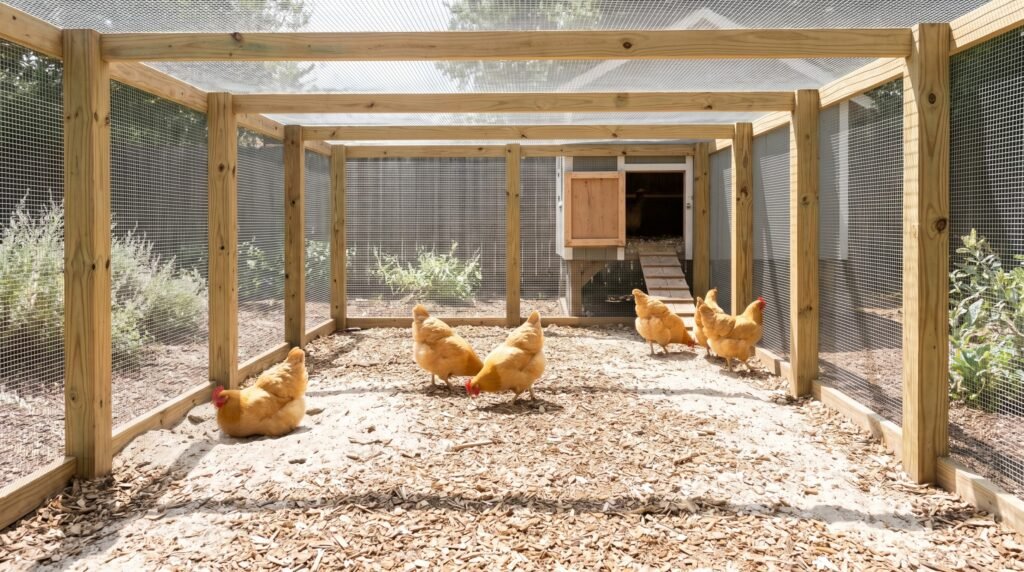
For standard laying breeds, plan on a minimum of 3-4 square feet per hen inside the coop and at least 10 square feet per hen in the attached run, per the USDA cooperative extension network. For a four-bird flock that is roughly 12-16 sq ft of coop floor plus 40 sq ft of run - a footprint most off-the-shelf kits undercut. Comfortable figures run 25-50% higher, and more is always better.
Two sources give us the most reliable baselines. The USDA-supported cooperative extension network (poultry.extension.org) states that laying hens need a minimum of 3-4 square feet per hen indoors and at least 10 square feet per hen in an outdoor run. University of Minnesota Extension puts the indoor figure at 3-5 sq ft per bird. NC State Extension puts the indoor minimum slightly lower at 2.5-3.5 sq ft, with 4-5 sq ft per bird outdoors as a floor - that lower outdoor figure reflects small, enclosed urban pens, and the extension notes that more is always better.
For roosts, the University of Maryland Extension specifies 8-10 inches of perch space per bird, with the bar set higher than the nest boxes so birds roost up rather than sleep in the nests. NC State Extension puts the minimum at 9-10 inches per bird. One nest box per four to five hens is the consensus from both UMD and UMN Extension, with each box about 12 inches wide - NC State notes that a 12-by-14-inch interior fits any standard breed.
The table below applies those ranges to common flock sizes. Use the "comfortable" column, not the "minimum," if your winters are cold or your birds spend more than eight hours a day in the run.
| Flock size | Coop floor (minimum) | Coop floor (comfortable) | Run (minimum) | Run (comfortable) | Nest boxes needed |
|---|---|---|---|---|---|
| 4 hens | 12 sq ft | 16-20 sq ft | 40 sq ft | 60+ sq ft | 1 |
| 6 hens | 18 sq ft | 24-30 sq ft | 60 sq ft | 90+ sq ft | 2 |
| 8 hens | 24 sq ft | 32-40 sq ft | 80 sq ft | 120+ sq ft | 2 |
| 12 hens | 36 sq ft | 48-60 sq ft | 120 sq ft | 180+ sq ft | 3 |
Bantams can get by on roughly 60-70% of these figures. Heavy breeds like Jersey Giants or Brahmas push toward the upper end. Our observations on flock behavior align with what extension research suggests: crowding is the fastest route to pecking, feather pulling, and suppressed laying under crowding stress - before any disease appears.
Once you know your breed and climate, the next step is running the full floor-space math - that is what the coop size per chicken breakdown is for.
Where do predators get into a combined coop-and-run unit?
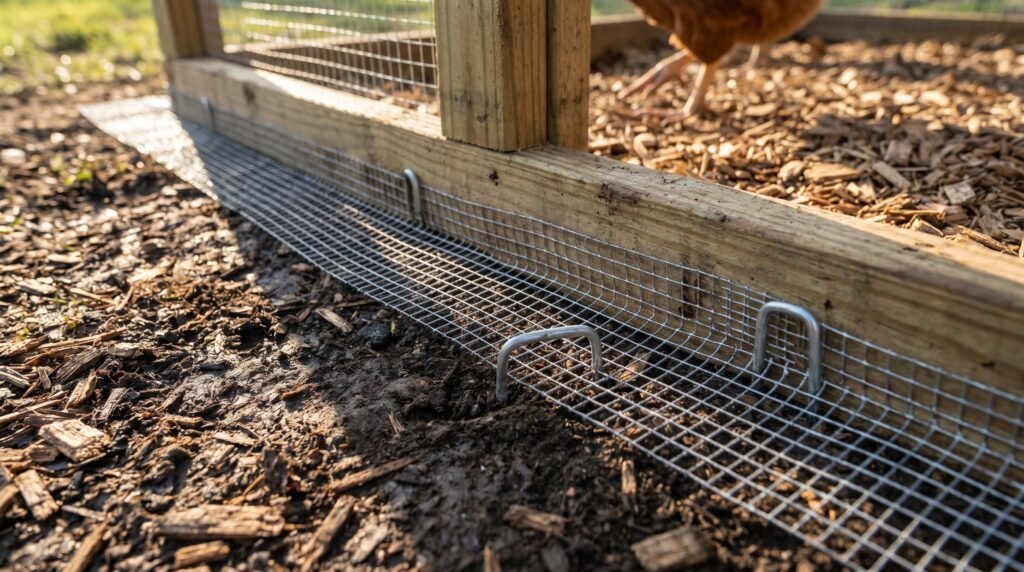
Most combo kits have four predictable weak points: the wire itself (cheap hexagonal chicken wire fails against raccoons and weasels), the ground line (diggers go straight under the run perimeter), the roof (uncovered runs invite hawks), and the latches (raccoons open simple barrel bolts readily). Knowing each weak point before you buy - or before you upgrade - is faster and cheaper than reacting after a loss.
Here is where to focus that attention, panel by panel.
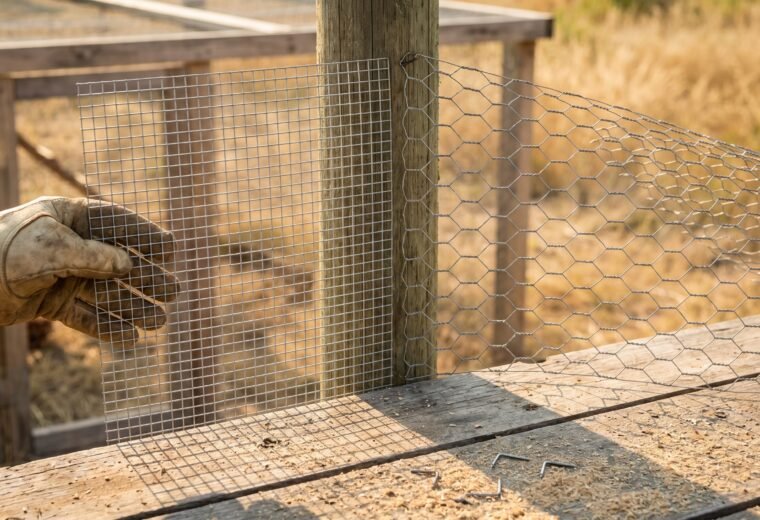
The wire itself. Standard hexagonal chicken wire fails at two jobs: raccoons grip and pull it apart, and the 1-inch openings let weasels through. UNH Cooperative Extension recommends mesh openings smaller than one inch across the run; Colorado State Extension specifies 1-by-2-inch welded wire (not 2-by-3-inch) as a minimum. Half-inch galvanized hardware cloth is the gold standard because it stops raccoon fingers, rat entry, and most weasel access. Quarter-inch hardware cloth adds protection against least weasels and young rats. Gauge selection, cost, and installation are the next practical decisions - the hardware cloth vs chicken wire page addresses those in sequence.
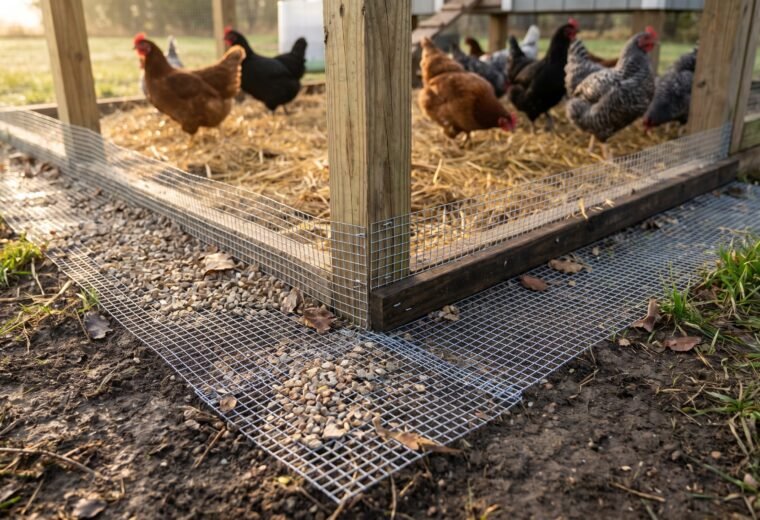
The ground line. Foxes, skunks, and rats dig. Virginia Tech Cooperative Extension recommends burying wire 1-2 feet underground around the run perimeter. An alternative that works on hard ground: bend wire outward from the base of the fence and lay it flat on the soil surface, extending at least 12 inches away from the fence - NC State Extension notes this "apron" approach stops most digging predators because they instinctively dig at the fence base, hit wire, and give up. Weigh it down with stakes or pavers.
The roof. A covered run prevents hawk attacks. UMD Extension states plainly that outside runs should be covered with mesh wire or netting to prevent aerial predators. A solid roof panel (common on smaller combo kits) also keeps the run drier, which matters for litter management. Open mesh roofing stops hawks but sheds rain less effectively.
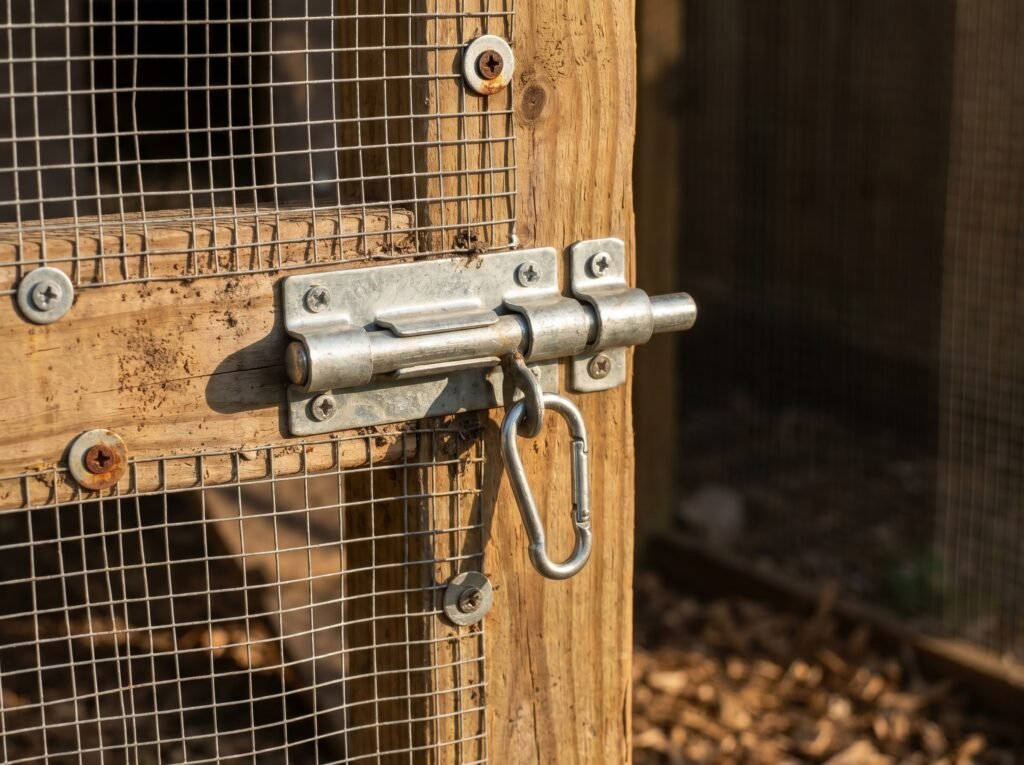
Hardware and latches. Raccoons are remarkably good at sliding simple barrel bolts and hook-and-eye latches. Every door and panel on the run needs a two-step latch - a carabiner through the bolt, a padlock, or a latch that requires two distinct hand motions to open. This is the weak point most keepers notice only after a loss.
Coop vents and windows. Any gap larger than half an inch is an entry point for a determined weasel. Screened vents are fine; screen-only windows are not. Cover all openings with hardware cloth, not decorative mesh.
Specific predator behaviors and the countermeasures that stop each one are covered in the predator-proof chicken run section.
When is the attached run not enough for your flock?
Watch for four behavioral signals: persistent feather picking, hens pressing into corners, grass stripped bare within two weeks of setup, and chronic wet litter despite regular bedding changes. Any one of these suggests the attached run has become a bottleneck. Two expansion paths - adding a separate hardware-cloth run or rotating birds with a chicken tractor - work with most combo kits without replacing the original unit.
Most combo kits are sized for the shipping photo, not for a flock that actually needs to stretch its legs. Do not wait until disease appears - any single signal above is an actionable threshold.
Two expansion options work with most combo kits. The first is attaching a separate hardware-cloth run using a shared panel or pop-door opening. The second is rotating the birds between the built-in run and a separate chicken tractor on pasture - the rotation model is laid out on the chicken tractor page. If your local zoning allows free ranging part of the day with close supervision, that also offloads pressure from the attached run without a construction project.
The built-in run matters most at night (when the birds are locked in the coop) and during bad weather. On dry days with a low predator-pressure yard, supervised ranging for even two to three hours relieves most crowding stress in an undersized run.
What should you look for in a coop-run combo for your flock size?
Evaluate any combo unit against three criteria: confirmed interior floor dimensions (not the capacity label), wire type on every panel (half-inch galvanized hardware cloth is the floor standard), and a covered run roof. The table below applies those criteria by flock size; the checkpoints column flags the deal-breakers most buyers miss at purchase.
Rather than naming specific retail products (which change season to season), the HenAcre team evaluates combo units against a consistent checklist. Here is how to apply it at purchase:
| Flock size | Minimum total footprint to look for | Wire to verify | Key checkpoints |
|---|---|---|---|
| 3-4 hens | Coop 12+ sq ft; run 40+ sq ft | 1/2-inch hardware cloth on all panels | Covered roof, two-step latches, apron or skirting at base, removable roost bar 9-10 in per bird |
| 5-6 hens | Coop 20+ sq ft; run 60+ sq ft | 1/2-inch hardware cloth; check coop vent screens | Two nest boxes min; walk-in or tall lean-to run height (5 ft+) for cleaning; two-step latches on every door |
| 7-10 hens | Coop 28+ sq ft; run 80-100+ sq ft | 1/2-inch or heavier gauge hardware cloth; galvanized | Modular run extension ports; solid roof on at least 50% of run; automatic door opener port; apron mandatory |
| 11-15 hens | Coop 44+ sq ft; run 120+ sq ft | Galvanized 1/2-inch; double-check corners and door frames | Likely better as a walk-in coop + separate run; factory combos rarely deliver this footprint at a practical price |
For flocks above ten birds, most off-the-shelf combo kits reach their ceiling. Purpose-built walk-in coops paired with a separate attached run almost always give you better material quality per dollar at that scale. That tradeoff - material quality per dollar versus convenience - is the subject of the walk-in vs compact coops page.
A few things worth checking on any unit, regardless of flock size:
- Roost bar placement: must be higher than the nest box lip, or hens will sleep in the nest and soil the eggs.
- Ventilation near the roofline: cross-ventilation prevents ammonia buildup without creating a floor-level draft on the birds. Ventilation sizing is the next detail to nail down - see coop ventilation.
- Access doors for cleaning: a single small egg door does not let you remove wet litter efficiently. Look for a full side panel or a hinged bottom.
- Material: cedar or fir frames painted with exterior-grade sealer outlast thin pine. Check for staples vs screws - screws hold the wire under predator pressure; staples do not.
FAQ
Can I keep a rooster in a coop-with-run setup?
Yes, if local ordinances allow it and your run is sized for the extra bird. Roosters do not lay, so factor one into your space math as a non-laying hen. They also add noise - relevant if neighbors are close. A rooster is never required for your hens to lay eggs; they produce eggs with or without him.
How much roof area should be solid vs mesh on the run?
At least one-third solid is practical in most climates so birds have a dry area during rain. An all-solid roof keeps litter drier but reduces light and airflow. All-mesh stops hawks but does nothing for rain. Most keepers land on solid over the coop end of the run and mesh further out, which gives birds a choice.
How do you verify build quality in a combo kit before buying?
Measure, do not trust labels. Ask the retailer or manufacturer for interior floor dimensions and wire gauge. Good indicators online: photos showing screw-and-washer fasteners (not staples) securing wire to framing, hardware cloth identified by gauge (19 gauge or heavier), and a covered run roof section. In person, push on each wire panel - galvanized hardware cloth barely flexes; hexagonal chicken wire deflects under light finger pressure and is a predator risk you should price in or walk away from.
What bedding works best in an attached run?
Sand drains well and composts poorly, making it low-maintenance for a covered run with limited space. Wood chips or straw break down faster and compost better but need more frequent turning in a small enclosed run. Climate and run size determine which surface works best - the chicken run flooring page works through each option.